DC Delegate Candidate Robert White Touts Hope, Discusses Dogecoin and National Guard's Local Role
Share this article

"We feel hope." — Robert White, DC Delegate Candidate (NBC Washington)This sentiment of hope, articulated by White, resonates deeply in a city that constantly grapples with its distinctive political status and evolving economic realities. For DMV residents, especially those living within the District's boundaries, understanding how their representatives view issues from local control over the National Guard to the future of finance is crucial for navigating the complex interplay between federal oversight and local autonomy.
The Delegate's Unique Position and Local Control
Washington, D.C.'s delegate to the U.S. House of Representatives holds a singular, often challenging, position. While they can introduce legislation, sit on committees, and advocate for the District's interests, they do not have a vote on the House floor. This unique status means that the delegate often acts as a vocal advocate, using their platform to push for greater local control and full congressional representation for D.C. residents. The issue of the D.C. National Guard is a prime example of this struggle for autonomy. Unlike state governors who command their National Guard units, the D.C. National Guard falls under the direct authority of the U.S. President. This arrangement has been a point of contention for decades, particularly during times of civil unrest or national emergencies when the Guard is deployed within the city. Local leaders, including Mayor Muriel Bowser and past delegates, have long argued for the Mayor to have the same authority over the D.C. National Guard as governors do over their state forces. They contend that this lack of local control can lead to delayed responses and a disconnect between the city's needs and the Guard's deployment. White's discussion on the National Guard likely taps into this long-standing debate. For residents, especially those who lived through significant events like the January 6th Capitol attack or the 2020 racial justice protests, the deployment and command structure of the Guard are not abstract political concepts but direct influences on their safety and civil liberties. Ensuring that the city's leadership has a clear, unhindered ability to respond to local crises is a cornerstone of the District's fight for self-determination.Dogecoin and the Evolving Digital Economy
On the other side of the coin, Robert White's mention of Dogecoin introduces a distinctly modern element into political discourse. Dogecoin, originally created as a meme-inspired cryptocurrency, has gained significant traction in recent years, drawing attention from both mainstream investors and enthusiasts. Its fluctuating value and high-profile endorsements from figures like Elon Musk have propelled it into public consciousness, making it a recognizable symbol of the broader cryptocurrency movement. Why would a D.C. delegate candidate bring up Dogecoin? The answer likely lies in the rapid growth of the digital economy and the increasing relevance of cryptocurrencies in everyday life. As digital assets become more prevalent, politicians are starting to consider their implications for local economies, financial regulation, and even campaign finance. For a delegate candidate, addressing Dogecoin might be a way to: * **Engage younger voters:** Many younger demographics are more familiar with and invested in cryptocurrencies. * **Signal forward-thinking policies:** Highlighting an interest in digital currencies could suggest a candidate is attuned to technological innovation and future economic trends. * **Explore new economic opportunities:** Could cryptocurrencies play a role in local commerce, or even in fostering financial inclusion for underserved communities in D.C.? While Dogecoin itself might seem like a niche topic, its inclusion in a political candidate's platform reflects a broader recognition that digital assets are no longer just for tech enthusiasts. They represent a new frontier in finance that could impact everything from how people pay for goods and services to how wealth is generated and distributed. For D.C. residents, a delegate who understands these emerging financial landscapes could be crucial in advocating for policies that protect consumers, encourage innovation, and ensure the District remains competitive in a rapidly changing global economy.Bridging the Traditional and the Transformative
White's decision to speak on both the National Guard and Dogecoin highlights a fascinating tension in modern politics: the need to address entrenched local issues while simultaneously preparing for future, technologically driven shifts. The National Guard debate represents a long-standing fight for basic democratic rights and local self-governance, a battle D.C. has waged for centuries. It's about ensuring the city has the tools to protect its residents and manage its own affairs without undue federal interference. Conversely, Dogecoin symbolizes a new era of digital finance, one that promises decentralization and new forms of economic empowerment but also presents regulatory challenges and potential risks. A candidate who can thoughtfully engage with both these realms demonstrates an awareness of both the historical struggles and the future possibilities that define D.C.'s unique identity. It suggests a holistic approach to leadership that doesn't shy away from complex, multi-faceted issues. The "hope" White speaks of could very well stem from the belief that D.C. can overcome its historical limitations and embrace a future where it is both fully self-governing and at the forefront of innovation. It's a hope for a D.C. that commands its own security forces, shapes its own economic destiny, and provides a model for how a modern city can thrive amidst both traditional political battles and technological revolutions. The delegate's role in this vision is to be the loudest voice for D.C. on the national stage, pushing for the legislative changes and policy considerations that will make this future a reality. For a deeper understanding of the D.C. National Guard's structure and operations, residents can visit the official D.C. National Guard website. Information on the role of the D.C. Delegate and local elections is available through the D.C. Board of Elections. Furthermore, the D.C. Council's legislative portal provides insights into ongoing efforts to achieve greater local control. In the heart of the DMV, where federal power meets local life, these discussions aren't just political talking points; they're direct reflections of the aspirations and challenges faced by everyday residents.📍 Local Resources
Provides information on voter registration, upcoming elections, candidate details, and polling locations for District residents.
Connect with the current DC Delegate's office for assistance with federal agencies, legislative inquiries, and constituent services.
Provides information on city services, local government initiatives, and contact information for various District agencies.
Explore more on this topic
Related Stories
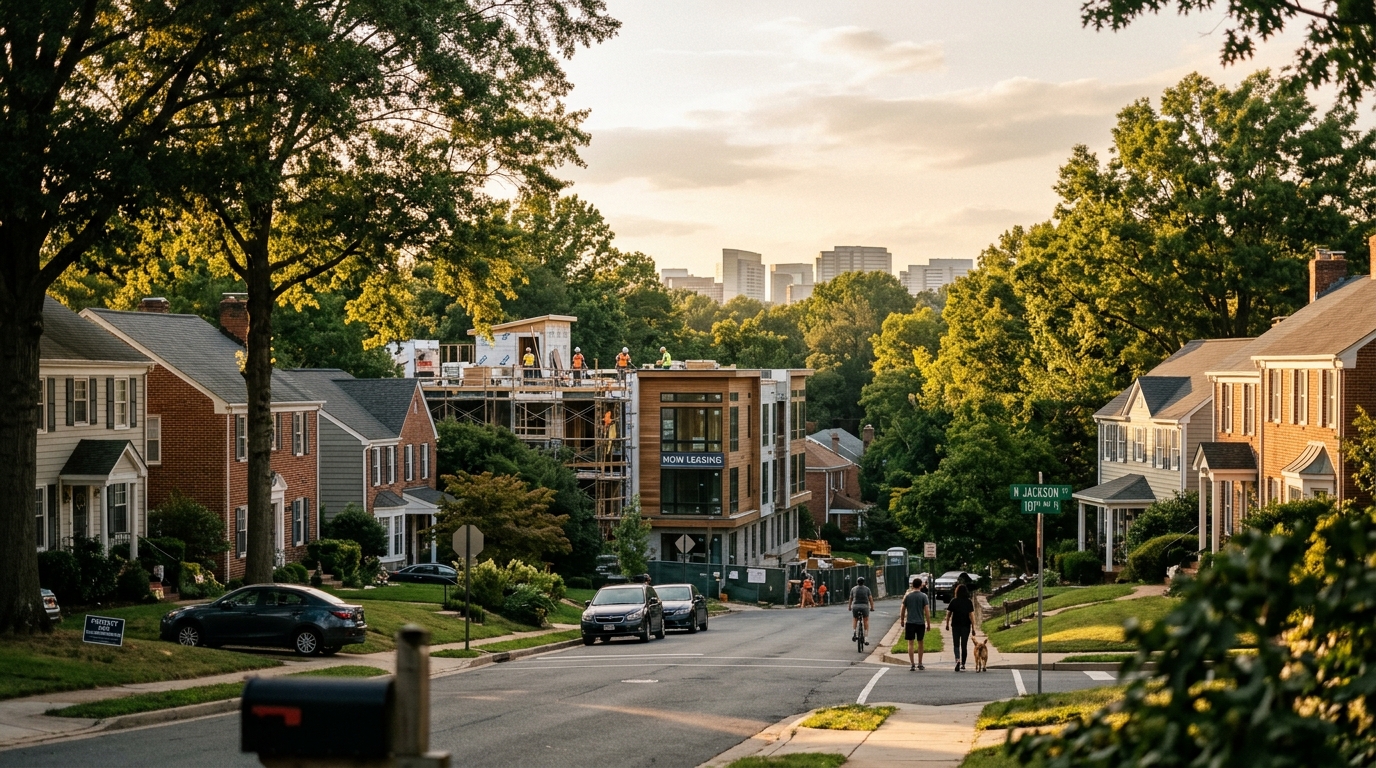
Arlington County Board Greenlights Controversial Residential Density Initiative
The Arlington County Board has approved a groundbreaking Residential Density Initiative, set to transform housing development and affordability across the county.

DC's Mayoral Race Heats Up: Democratic Socialist Poised to Lead After 12 Years
Washington, D.C. is on the cusp of a major political transition as a democratic socialist candidate emerges as the heavy favorite in the upcoming mayoral election. This marks the first time in 12 years the city will elect new leadership, signaling potential shifts in policy and governance for the nation's capital.

Maryland Voters Shatter Early Voting Record, Signaling Heightened Engagement
Maryland recently shattered its early voting record on the final day of the early voting period, signaling a robust and engaged electorate across the DMV. This unprecedented surge in participation highlights the growing importance of accessible voting options and could reshape future elections in the state.