Unaffiliated Voters Nearing Republican Numbers in Maryland, Shaking Up Political Landscape
Share this article
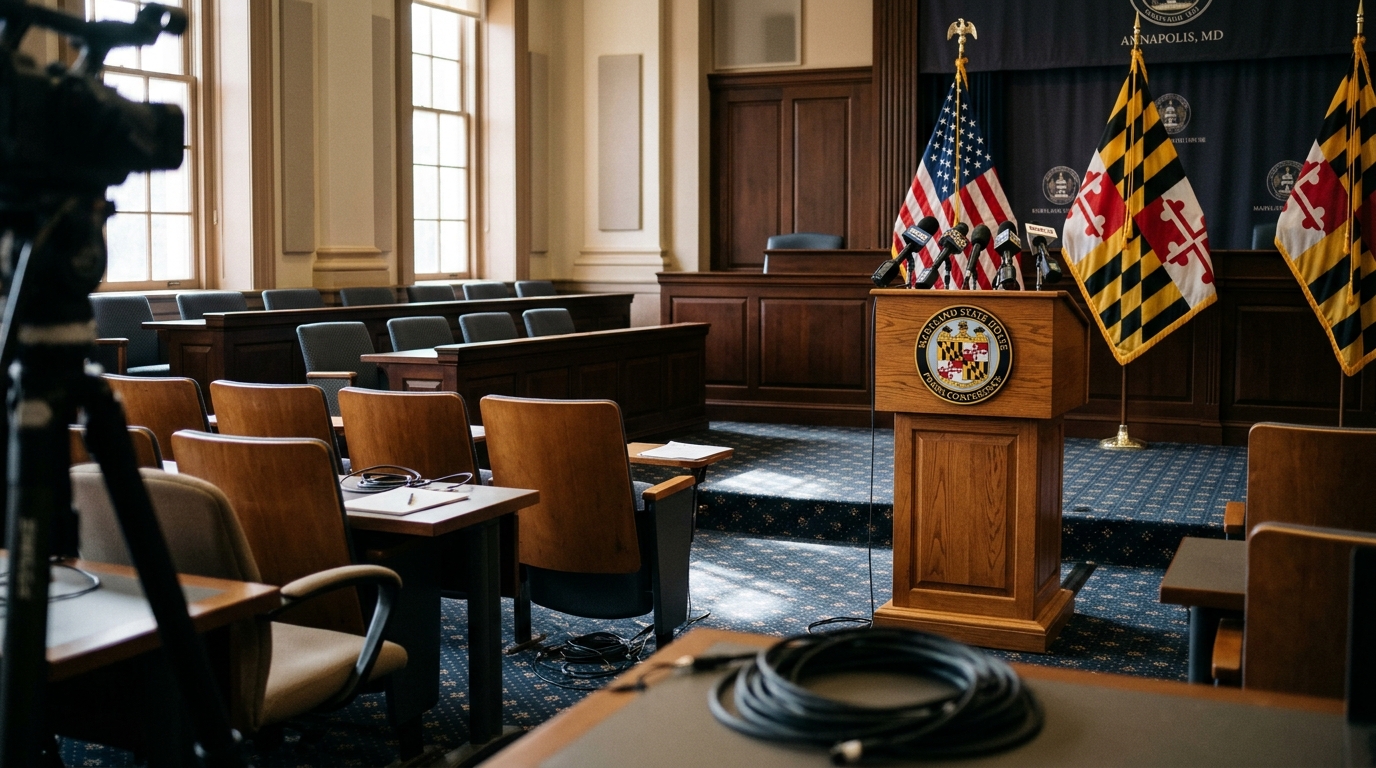
The political landscape in Maryland is quietly undergoing a significant shift, one that could redefine election strategies across the state, including right here in our DMV-adjacent counties. Just ahead of Tuesday's voting, the number of active unaffiliated voters in Maryland has edged incredibly close to surpassing registered Republicans statewide, a stark change from just a few years ago.
According to recent monthly figures released by the Maryland State Board of Elections, there were 1,014,876 active Republican voters and 1,012,957 active unaffiliated voters by the end of October [1]. That's a razor-thin difference of fewer than 2,000 voters. Each group now makes up roughly 23% of Maryland's approximately 4.3 million active voters, signaling a growing demographic that both major parties will need to court.
A Decade of Shifting Tides
This isn't a sudden blip; it's the culmination of a decade-long trend. Four years ago, before the 2022 governor's race, Republicans held a significant lead, outnumbering unaffiliated voters by nearly 155,000. That gap shrank to about 45,000 a year ago, and by the end of September, it was down to just 4,100 [1]. The growth in unaffiliated registration has been remarkable: since October 2022, this group has expanded by about 167,000 voters, a nearly 20% increase. Over the same period, Republicans added only about 14,000 voters to their ranks.
Meanwhile, Democrats, while still the dominant force with about 2.24 million active voters (just over half the total), have seen their numbers stall. Active Democratic voters peaked around 2.29 million in November 2020 and are down about 20,000 since 2022, despite a modest gain of 13,000 over the past year [1]. This long-term trend, going back to 2011, shows unaffiliated voters nearly doubling, while Democrats grew by 14% and Republicans by 9%.
Local Impact Across the Old Line State
The rise of the unaffiliated isn't uniform, but it's widespread. Every one of Maryland's 24 voting jurisdictions—its 23 counties and Baltimore City—has seen an increase in unaffiliated voters since the last gubernatorial election [1]. This growth is particularly notable in key DMV areas.
In five jurisdictions, unaffiliated voters now officially outnumber Republicans. These include our own Montgomery County, along with Prince George's, Howard, and Charles counties, and Baltimore City. Charles County is the newest addition to this list. Back in 2022, Republicans there had a lead of about 1,200 voters, but now unaffiliated voters hold a lead of roughly 4,700 [1]. This shift highlights a growing desire among voters to distance themselves from traditional party affiliations, opting instead for individual candidate assessments.
Even in the 19 jurisdictions where Republicans still outnumber unaffiliated voters, the gap is rapidly closing. In Baltimore County, for instance, the difference shrank from about 29,300 to around 8,900. Anne Arundel County saw its gap more than halved, now sitting at about 15,000 [1]. These tightening margins suggest that even historically red areas are experiencing a growing independent streak among their residents.
Democrats, while still the largest group in many areas, saw voter losses in 20 of the 24 jurisdictions. The biggest drops occurred in their strongholds like Prince George's County, Baltimore City, and Montgomery County, though these were small, typically 1% to 2% losses. Democrats still constitute the majority of voters in these areas.
What This Means for DMV Residents and Future Elections
For residents across the Maryland portion of the DMV, particularly in places like Montgomery and Howard counties, this trend means a potentially more dynamic and less predictable political landscape. Candidates in upcoming local and state elections won't just be battling for party-line votes; they'll need to actively engage and appeal to a sizable and growing bloc of voters who aren't beholden to a party platform. This could lead to more nuanced campaign messaging, a greater focus on individual issues rather than party loyalty, and potentially more competitive races in areas traditionally considered safe for one party.
The data, compiled by Skipjack—an elections data site maintained by Derek Willis, a lecturer at the University of Maryland's Philip Merrill College of Journalism—is based on official figures from the Maryland State Board of Elections. It paints a clear picture: Maryland's electorate is becoming increasingly diverse in its political leanings, moving away from a strictly two-party system.
As we look ahead to future elections, both local and statewide, the growing influence of unaffiliated voters will be a crucial factor. Their willingness to cross party lines and vote based on individual candidate merits or specific issues could reshape how campaigns are run and who ultimately wins. Expect to see candidates put more effort into direct outreach and policy discussions, rather than simply relying on party affiliation to carry them through.
📍 Local Resources
Official source for voter registration, election information, and state election laws.
Local information on voter registration, polling places, and election results specific to Montgomery County.
Local information on voter registration, polling places, and election results specific to Howard County.
Explore more on this topic
Related Stories

Fairfax County Sees Steady Turnout for Crucial 2026 Election Day
Fairfax County is reporting a steady but manageable voter turnout for Election Day 2026, with local officials noting a smooth process at polling places across the county as residents cast ballots in a crucial election.
Maryland Voters to Chart New Course for Congressional Districts
Maryland voters are set to decide the future of congressional redistricting, a move that empowers citizens to directly shape how district lines are drawn across the state. This pivotal ballot question will impact representation for DMV residents and redefine the democratic process in Maryland.
Immigration and Gas Prices Emerge as Key Motivators for Maryland Voters
As election season heats up, Maryland voters are reportedly focused on two key issues: the cost of gas and the complexities of immigration. These concerns are shaping choices at the ballot box across the Old Line State, from daily commutes to community demographics.