Potomac River Declared Fully Recovered After January Sewer Line Collapse
Share this article

A Region Holds Its Breath: The January Incident
Back in January, the Potomac Interceptor, a critical piece of infrastructure carrying wastewater from parts of Northern Virginia and Maryland to DC Water's Blue Plains Advanced Wastewater Treatment Plant, suffered a significant collapse. This led to an overflow of wastewater directly into the Potomac River, raising immediate alarms across the region. Health advisories were quickly issued, urging residents to avoid contact with the affected waters. The incident underscored just how interconnected our urban systems are with our natural environment, and how quickly an infrastructure failure can impact beloved local landmarks.Six Months of Daily Scrutiny
DC Water didn't waste any time. Immediately after the collapse, crews began daily water sampling, collecting specimens at up to ten locations both upstream and downstream from the overflow site. The primary focus of this initial, intensive monitoring was E. coli, a common bacterial indicator of water quality. For more than half a year, these daily checks provided crucial data, helping officials understand the immediate impact and track the river's recovery.Beyond Bacteria: Expanded Testing Confirms All Clear
To get a truly broad picture of the Potomac's recovery, DC Water expanded its testing in August. This additional phase went beyond just E. coli, looking into other critical indicators of water health. Samples were collected five times at six different locations in Maryland, both upstream and downstream of where the overflow occurred. These comprehensive tests analyzed oxygen levels, nutrient concentrations, and the presence of various metals—all factors that can significantly affect water quality and the delicate aquatic life within the river. The findings from this expanded testing were overwhelmingly positive. All results fell within the normal range for the Potomac River, providing strong evidence that the January overflow caused no lasting harm. This robust monitoring effort, detailed on DC Water’s Potomac Interceptor water quality monitoring page, gives a clear picture of the river's resilience.What This Means for DMV Residents
The confirmation of the Potomac River's return to normal is excellent news for countless DMV residents. From families enjoying riverside parks in Arlington and Montgomery County to recreational boaters, anglers, and kayakers, the health of the Potomac directly impacts quality of life. Knowing that the river has rebounded means these activities can continue with confidence. It also reaffirms the effectiveness of the rapid response and ongoing monitoring efforts by agencies like DC Water and local environmental protection departments, which are crucial for safeguarding our natural resources. Residents interested in long-term river health can explore resources from organizations like the Potomac Conservancy, which advocates for the river's protection.📍 Local Resources
For questions about water quality, wastewater services, or to report issues.
A local non-profit dedicated to protecting and restoring the Potomac River and its lands.
Provides information on environmental protection, water quality, and recreation in the District.
Explore more on this topic
Related Stories

Alexandria to Install Historic Marker Recognizing Lynchings Near City Hall
The Virginia Board of Historic Resources has approved a new marker near Alexandria City Hall to recognize the lynchings of Joseph McCoy and Benjamin Thomas, marking a significant step in confronting the city's racial history.

'No Kings' Movement Plans Early Voting Rallies in Arlington
Activists from the "No Kings" movement are planning get-out-the-vote rallies at Arlington's early voting locations next week, aiming to energize voters and express opposition to President Donald Trump. These demonstrations are part of a nationwide effort to encourage civic participation during the critical early voting period.
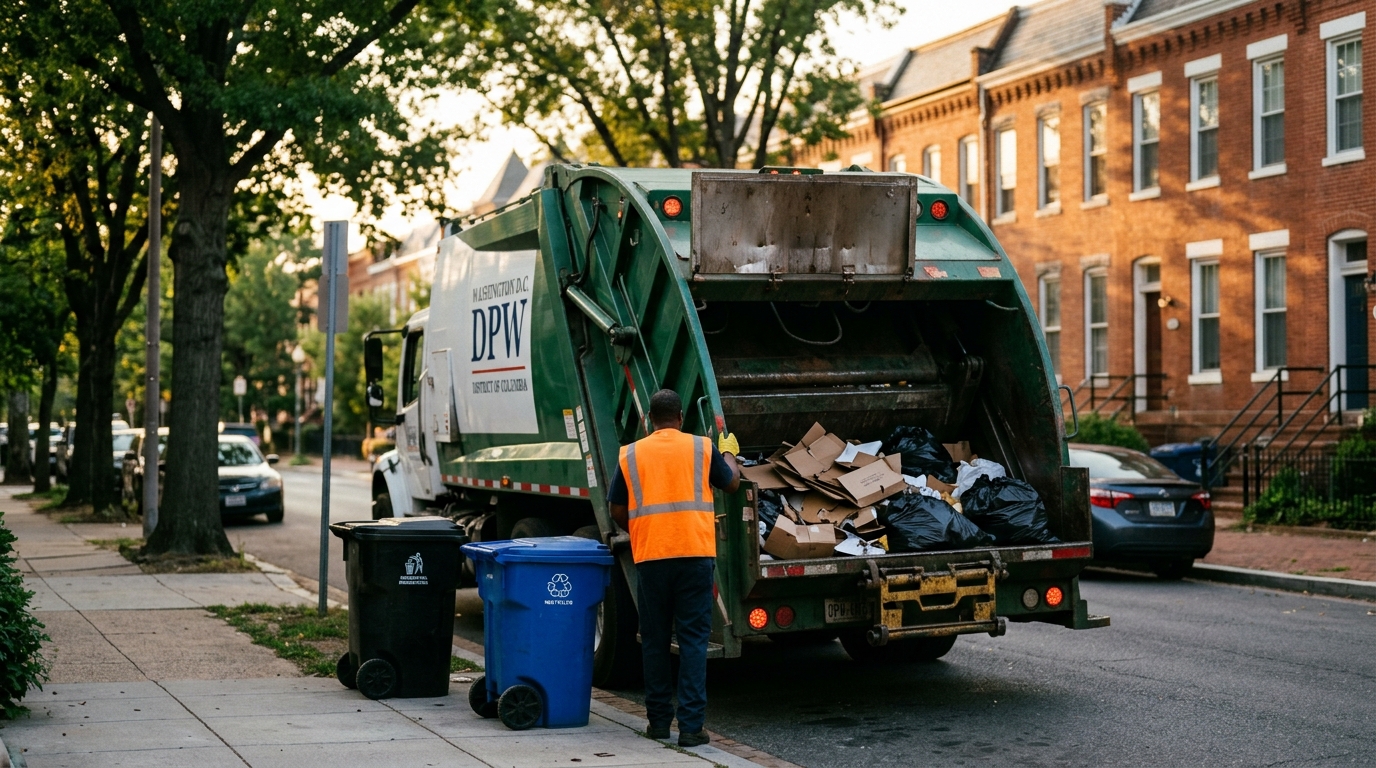
DC Residents Question Recycling Program as Trucks Seen Mixing Waste Streams
DC residents are growing concerned as multiple reports suggest that trash and recycling are frequently being collected by the same Department of Public Works trucks. This observation has led to questions about the city's commitment to recycling and the effectiveness of current waste management efforts.