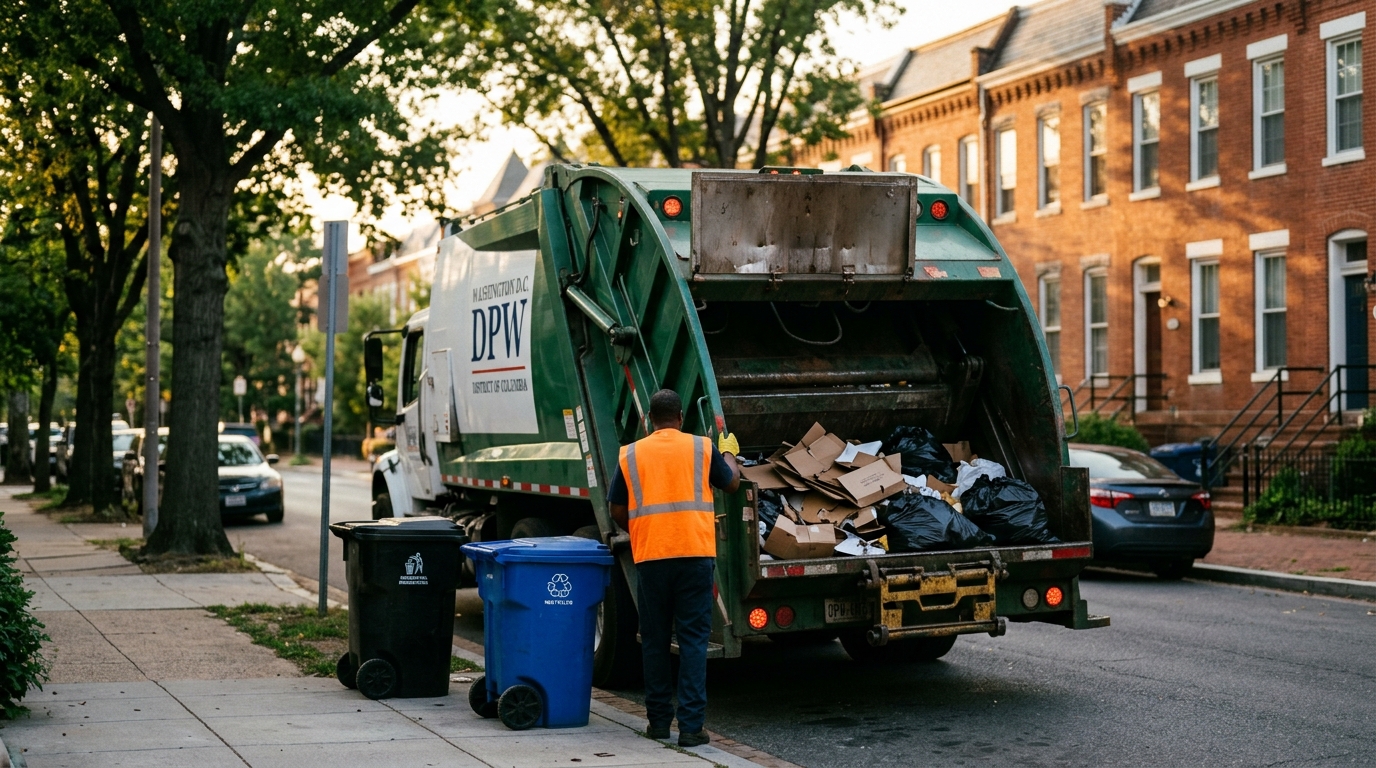
The sight of a Department of Public Works (DPW) truck hauling away both trash and recycling in the same load is sparking concern and confusion among Washington, D.C., residents. For many, the effort to meticulously sort plastics, paper, and glass feels futile if it all ends up commingled on its way to disposal. The recurring observation has prompted questions about the future of recycling efforts across the District. A recent submission to local blog Popville highlighted the issue, with a reader noting the inconsistency in collection practices. "I am wondering whether anyone else has noticed that it is often (but not always) true that the trash and recycling in DC are going into the same truck?" the concerned resident wrote. This isn't an isolated incident, according to the submission, which points out that while separate pickups do occur, the mixing of waste streams is a frequent sight in various DC neighborhoods.
"I am wondering whether anyone else has noticed that it is often (but not always) true that the trash and recycling in DC are going into the same truck?" — Concerned Resident (Popville.com)
### The Core Concern: What Happens After Pickup? The central question for many residents is straightforward: if recycling and trash are combined in the same vehicle, does it all just end up in a landfill? The District's recycling program relies heavily on residents separating materials at the curb. DPW's official guidelines outline specific items accepted in blue recycling bins, from plastic bottles and jugs to cardboard and metal cans. The integrity of this system is undermined if these sorted materials are then immediately merged with general waste.
Residents are questioning if their efforts to sort recycling are wasted when collection trucks appear to combine trash and recyclable materials.
This isn't just about aesthetics; it has real implications for the District's environmental goals. Effective recycling reduces the volume of waste sent to landfills, conserves natural resources, and lessens greenhouse gas emissions. If collected recyclables are contaminated by trash, they may be rejected by processing facilities and diverted to landfills anyway, regardless of initial sorting efforts. ### Community Questions About DPW Resources The Popville submission also raised practical questions about the Department of Public Works' operational capacity. "Does DPW not have enough trucks (or workers) to pick up both? Has DC given up on recycling?" the reader inquired. These questions resonate with residents who observe a city grappling with various service delivery challenges. The logistics of waste collection are complex, requiring a sufficient fleet of specialized vehicles and trained personnel. A shortage of either could lead to operational compromises, such as using multi-purpose trucks or consolidating loads to maintain collection schedules. However, such practices, if they are indeed occurring systematically, directly contradict the city's stated commitment to environmental sustainability and undermine public trust in municipal services. The District government's environmental policies often emphasize reducing waste and increasing recycling rates, making these observations particularly jarring for engaged citizens. For residents dedicated to reducing their environmental footprint, seeing their sorted recyclables mixed with general waste can be disheartening. It can lead to cynicism about city programs and a feeling that individual efforts are meaningless. This erosion of trust can have long-term consequences for public participation in other environmental initiatives. ### Looking Ahead: What's Next for DC's Recycling? The widespread nature of these observations suggests a need for clarity from DPW regarding its collection practices and resource allocation. Residents deserve to understand whether these instances are isolated operational challenges, a symptom of broader resource constraints, or indicative of a policy shift. Ensuring transparency is key to maintaining public confidence and encouraging continued participation in vital environmental programs. As Washington, D.C., continues to grow, efficient and transparent waste management will remain a critical service. Residents who are committed to a cleaner, greener District will be watching closely for how DPW addresses these concerns and whether their recycling efforts truly make a difference.
📍 Local Resources
DC Department of Public Works (DPW)
Official information on waste collection, recycling guidelines, and residential services in Washington, D.C.