Tech
Goddard Scientists Prepare for Historic Roman Telescope Launch This Weekend
Share this article
Advertisement
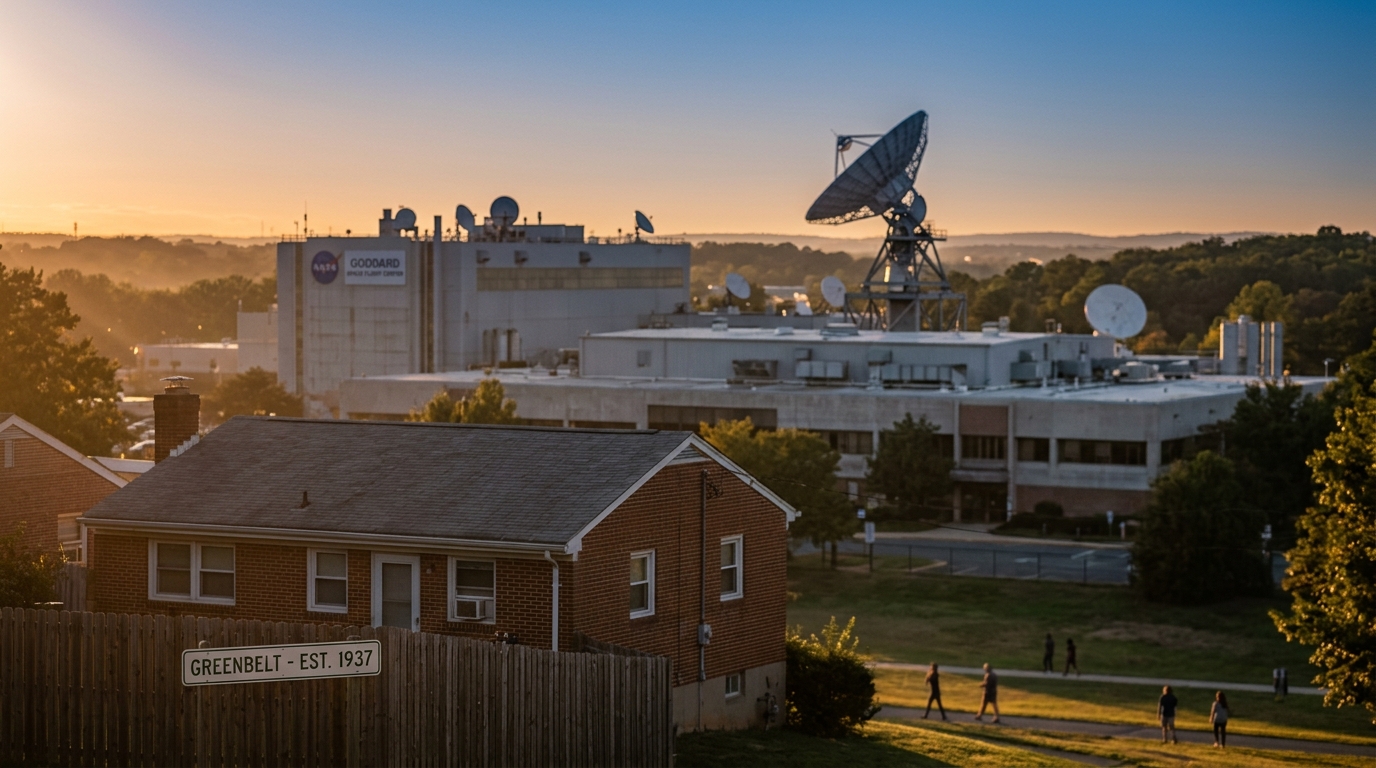
This weekend, eyes across the DMV and beyond will turn skyward as NASA prepares to launch the Nancy Grace Roman Space Telescope, a mission poised to redefine our understanding of the cosmos. For many here in the Washington metropolitan area, particularly those at the Goddard Space Flight Center in Greenbelt, Maryland, this isn't just another launch; it's the culmination of years of dedicated work by local scientists and engineers who have poured their expertise into this ambitious project. The Roman Space Telescope is designed to tackle some of the universe's most profound mysteries, from the enigmatic forces of dark energy and dark matter to the vast, unexplored realms of exoplanets. It’s a mission that carries the weight of scientific curiosity and the hope of groundbreaking discoveries, with a significant part of its development rooted right here in our backyard.
Unlocking Cosmic Secrets: Dark Energy, Dark Matter, and Exoplanets
At its core, the Nancy Grace Roman Space Telescope has a clear, two-fold mission, according to Matthew Bolcar, the Roman mission's Optical Systems Lead at NASA Goddard. "The two big things it was designed for was to study dark energy and dark matter; these are two fundamental aspects of the universe that we don’t really understand that well," Bolcar told WTOP. These invisible forces are believed to shape the universe's expansion and structure, yet remain largely elusive to scientists. Beyond these cosmic enigmas, Roman will also embark on a comprehensive survey of exoplanets — planets orbiting stars beyond our sun. This search isn't just about finding new worlds; it’s about understanding our own place in the universe."Small rocky planets like Earth and Mars all the way up to big gas giants like Jupiter and Neptune, that’s something that you know that will detect a whole new range of these planets to understand how common they are and how common solar systems like ours are out there." — Matthew Bolcar, Optical Systems Lead at NASA Goddard (WTOP)
Goddard's Imprint on a Flagship Mission
The involvement of the Goddard Space Flight Center in Greenbelt is central to the Roman mission's success. Many scientists, engineers, and technicians from the facility have dedicated years to preparing the telescope for its journey. Bolcar, for instance, has been instrumental in ensuring the optical systems are ready for liftoff, a critical component for any space telescope. For the team at Goddard, this isn't just another project; it’s a mission of paramount importance. Bolcar himself considers it a "flagship mission," drawing comparisons to iconic predecessors like the Hubble Space Telescope and the James Webb Space Telescope. These missions haven't just expanded our knowledge; they've fundamentally shifted our cosmic perspective. Roman is expected to continue this tradition, potentially marking a new era in astrophysics.The Nancy Grace Roman Space Telescope is equipped with "star glasses" that can dim the glare of nearby stars in real-time, allowing it to reveal orbiting planets and debris disks previously hidden from view.
Cutting-Edge Technology for Unprecedented Vision
What makes the Roman Space Telescope so revolutionary? Its design incorporates several innovative technologies that push the boundaries of space observation. According to a NASA press release, the telescope is equipped with "star glasses." These aren't your typical eyewear; they're advanced internal mirrors and filters capable of shapeshifting in real-time. This dynamic capability allows the telescope to dim the blinding glare of nearby stars, making it possible to detect faint orbiting planets and debris disks that would otherwise be obscured. Another groundbreaking feature is its "cosmic time-lapse" capability. The telescope will repeatedly photograph the same wide swaths of space, creating high-resolution time-lapses of the universe in motion. Imagine watching galaxies evolve, stars form, and planets migrate over cosmic timescales, all captured with unprecedented detail. This will provide astronomers with a dynamic view of celestial events, offering insights into processes that unfold over millions of years.A Legacy Honored: Nancy Grace Roman
The telescope bears the name of Dr. Nancy Grace Roman, a trailblazing figure in space exploration who passed away in 2018. Known affectionately as the "mother" of the Hubble Space Telescope, Roman was NASA’s first chief of astronomy. Her pioneering vision and relentless advocacy were instrumental in laying the groundwork for many of the space-based observatories we rely on today. Naming this new flagship mission after her is a fitting tribute to her enduring legacy and her profound impact on the field of astrophysics. As the Nancy Grace Roman Space Telescope prepares for its journey, the excitement is palpable among the scientific community and space enthusiasts alike. For DMV residents, this launch represents a direct connection to a monumental scientific endeavor, showcasing the intellectual prowess and technological innovation fostered right here in our region at institutions like Goddard Space Flight Center. What new wonders will Roman unveil? Only time, and its powerful gaze, will tell, but the world will be watching as it embarks on its mission to change our understanding of the universe.Advertisement
Explore more on this topic
Related Stories

Tech
Virginia Drivers Can Now Add State IDs to Apple Wallet, Enhancing Convenience for DMV Residents
Tech
about 1 month ago3 min read

Tech
Waymo Begins Mapping Northern Virginia, Paving the Way for Autonomous Vehicles
Arlington County·Tech
Waymo, the autonomous driving company backed by Google, has started mapping operations in Northern Virginia, a crucial step toward potentially introducing self-driving vehicles to the DMV. This initiative involves specialized cars collecting extensive data to create detailed digital maps, laying the groundwork for future driverless transportation services in the region.
4 months ago5 min read

Tech
WMATA Board Charts New Course for Metro with Train Automation Plan
Montgomery County·Tech
The WMATA board has approved a plan to bring automated trains to the Metro system, signaling a major technological shift for commuters across Washington, D.C., Maryland, and Virginia. This move aims to enhance efficiency and reliability, promising a new era for one of the nation's busiest transit networks.
5 months ago3 min read