Elections
Arlington County
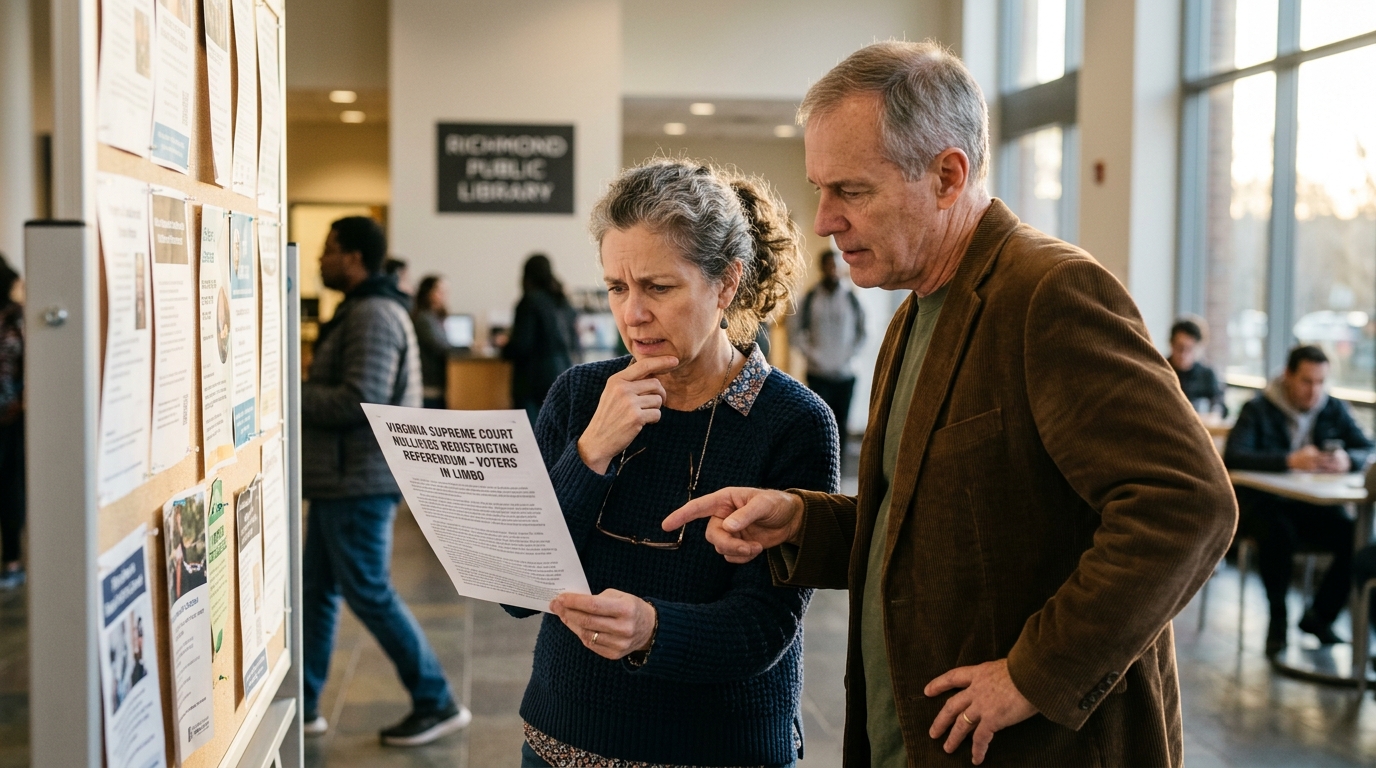
Virginia Supreme Court Nullifies Redistricting Referendum, Leaving Voters in Limbo
Share this article
Advertisement
The electoral landscape in Virginia just got a bit more complicated for residents, as the state's Supreme Court has thrown out a recent referendum concerning the contentious process of redistricting. This decision highlights a broader struggle across the nation where the redrawing of political maps is often less about fair representation and more about partisan advantage. The news, initially reported by NPR [1], points to a growing concern among voting experts and advocates: while much of the focus in these "redistricting wars" is on which political party gains an edge, it's the everyday voter who ultimately pays the price.
Understanding the Redistricting Battle
At its core, redistricting is the process of redrawing electoral district boundaries for congressional, state legislative, and local races. This happens every ten years, following the decennial U.S. Census, to account for population shifts and ensure that each district has roughly the same number of people. In theory, it's a critical mechanism for ensuring equal representation. In practice, however, it frequently devolves into a highly politicized battle, often referred to as gerrymandering, where lines are drawn to favor one party over another or to protect incumbents. The stakes are incredibly high. These maps determine which communities are grouped together, which voices are amplified, and which political outcomes are more likely for the next decade. When the process becomes overly partisan, it can lead to districts that are not only oddly shaped but also uncompetitive, effectively deciding election outcomes before a single vote is cast.While the focus of redistricting battles often lands on political party gains, voting experts and advocates say it's voters who ultimately bear the cost.
Virginia's Referendum Derailed
Virginia has been no stranger to these battles. The April referendum mentioned in the report was likely an attempt to introduce a new method or criteria for how the state's electoral maps would be drawn, perhaps aiming for a more independent commission or specific fairness metrics. Such referendums are designed to give citizens a direct say in how their government operates, bypassing legislative impasses or partisan maneuvering. However, the Virginia Supreme Court's decision to nullify this April referendum means that avenue for public input or procedural change is now closed [1]. For many, this decision likely feels like a step backward in the quest for a more transparent and equitable redistricting process. It effectively sends the process back to other, potentially more politicized, channels, such as the state legislature or further legal challenges. The specifics of the referendum and the court's reasoning for nullification were not immediately detailed in the report, but the impact on the ongoing redistricting efforts in the Commonwealth is clear: uncertainty.Voters Caught in the Crossfire
When redistricting becomes a contentious legal and political fight, the average Virginian can get lost in the shuffle. "Voters are caught in the middle," NPR reports [1], and they "will pay a cost." This cost isn't just financial; it's a cost to civic engagement and faith in the democratic process. Imagine living in a community where your district lines suddenly shift, putting you in a different congressional or state legislative district than your neighbors across the street. This can lead to significant confusion about who your representatives are, where your polling place is, and which local issues are most relevant to your district. Beyond logistical headaches, the deeper cost lies in the potential for disenfranchisement. When districts are drawn to be overwhelmingly safe for one political party, it can make voters feel like their individual vote doesn't matter, leading to apathy and lower turnout. Furthermore, splitting communities can dilute their collective voice on issues important to them. Whether it's advocating for better school funding in Fairfax County or infrastructure improvements in Loudoun, a community divided across multiple districts may find it harder to lobby effectively.The Stakes Beyond Party Lines for Virginia
While the report notes that "much of the focus of the ongoing redistricting war has been on which political party will come out on top" [1], the implications for Virginia residents go far beyond who holds power in Richmond or Washington. Fairly drawn maps lead to more competitive elections, which in turn can incentivize politicians to be more responsive to a broader range of constituents and to work across the aisle. When districts are gerrymandered, politicians often face their toughest challenges in primary elections, pushing them to appeal only to their party's base rather than the general electorate. This can lead to increased polarization and a less effective legislative body, impacting everything from state budgets to local zoning laws. The Virginia Supreme Court's intervention means that the state's redistricting process remains in a state of flux, with the ultimate shape of its political maps still very much in question.What's Next for Virginia Voters?
The nullification of the April referendum by the Virginia Supreme Court means that the path forward for redistricting in the Commonwealth is now less clear. The process will likely revert to other mechanisms, possibly involving the General Assembly, or could face further legal challenges. For residents across Virginia, from the bustling streets of Arlington to the historic towns of the Shenandoah Valley, staying informed about these developments is crucial. Voters should keep an eye on announcements from the Virginia Department of Elections and theAdvertisement
Explore more on this topic
Related Stories

Elections
Alexandria Voters Show Strong Support as Virginia Approves Three Constitutional Amendments
Alexandria·Elections
Virginia voters have approved three constitutional amendments, with Alexandria residents showing particularly strong support, outpacing statewide margins in the unofficial election results from Tuesday, November 3.
15 days ago4 min read

Elections
Wes Moore 2028 Buzz Heats Up: What Maryland Governor's National Profile Means for the DMV
Anne Arundel County·Elections
Speculation about Maryland Governor Wes Moore's potential 2028 presidential bid is intensifying after his recent reelection, raising questions about what his national profile could mean for the state and the DMV region.
15 days ago5 min read

Elections
Fairfax County Proposes Major Polling Site and Boundary Shifts for 2027 Elections
Fairfax County·Elections
Fairfax County officials are proposing significant changes to voting precincts and polling sites for the 2027 elections, aiming to streamline the process and adapt to the county's growth. These adjustments could mean new voting locations and redrawn district lines for thousands of residents.
15 days ago4 min read