Supreme Court Grapples with 'Geofence' Warrants After Virginia Robbery Case
Share this article

The Case at Hand: A Virginia Robbery
At the center of the Supreme Court's deliberations is a specific criminal investigation originating in our own backyard. Following an armed robbery in Virginia, law enforcement sought and obtained a geofence warrant. This warrant compelled a tech company, likely Google, to hand over anonymized location data for all devices that were within a designated geographical area—a "geofence"—around the time of the crime. Once received, investigators could then attempt to narrow down the pool of devices and, potentially, identify suspects. While the details of the Virginia robbery itself remain under wraps in the Supreme Court's public filings, the legal challenge it presents is anything but minor.What Are Geofence Warrants?
Geofence warrants are essentially digital dragnet requests. Instead of targeting a specific individual, they target a specific location and time, asking tech companies for information on *everyone* who was there. Companies like Google routinely collect precise location data from users' smartphones, often linked to their Google accounts, even when apps aren't actively in use. When police get a geofence warrant, they ask for this aggregated, anonymized data for a defined area and timeframe. They then sift through it, looking for patterns or individuals who might be relevant to a crime.Privacy vs. Public Safety: The Core Debate
The Supreme Court's task is to balance the undeniable need for law enforcement to investigate serious crimes against the fundamental right to privacy enshrined in the Fourth Amendment of the U.S. Constitution. This amendment protects people from unreasonable searches and seizures, generally requiring a warrant based on probable cause for specific individuals or places. Geofence warrants challenge this traditional framework by initially collecting data on many individuals without individual probable cause. Legal scholars and privacy advocates contend that this approach is akin to searching every house on a block because a crime happened in the neighborhood. They argue it flips the presumption of innocence on its head, treating everyone in a vicinity as a potential suspect until proven otherwise. On the other hand, law enforcement agencies often argue that these warrants are crucial tools for solving tough cases, especially when traditional leads are scarce, and that safeguards are in place to minimize privacy intrusions.What This Means for DMV Residents
For those of us living and working across D.C., Maryland, and Virginia, the Supreme Court's eventual ruling will have profound implications. A decision upholding geofence warrants could empower law enforcement with a powerful, albeit broad, surveillance tool, potentially making our digital movements more accessible to investigators. Conversely, a ruling that restricts or bans these warrants could bolster digital privacy rights, requiring police to meet a higher bar before requesting such extensive data. This isn't just about criminals; it's about the everyday digital lives of millions. As our lives become increasingly intertwined with smartphones and location-tracking technology, the lines between public safety and personal privacy will continue to be drawn by courts like the Supreme Court. The Court's grappling with this complex issue underscores the ongoing challenge of applying centuries-old constitutional principles to rapidly evolving technology. DMV residents should keep a close eye on this case, as the outcome could redefine our expectations of privacy in the digital age. We'll be watching for the Court's decision, which will likely shape law enforcement practices for years to come.📍 Local Resources
Advocates for civil liberties and rights, including digital privacy, for Virginians. Provides legal resources and information.
A national organization defending digital privacy, free speech, and innovation. Offers extensive resources and analysis on tech policy and legal issues.
Provides free legal services to low-income individuals in D.C. on civil matters, which can include issues related to privacy and constitutional rights.
Explore more on this topic
Related Stories

Fairfax County Public Schools' Federal Funding Lawsuit Revived by Appeals Court
An appeals court has revived Fairfax County Public Schools' lawsuit against the U.S. Department of Education, challenging the withholding of federal funds over the district's policies supporting transgender students. This decision sends the case back to a lower court, marking a critical step for FCPS in its fight to restore millions in federal aid.
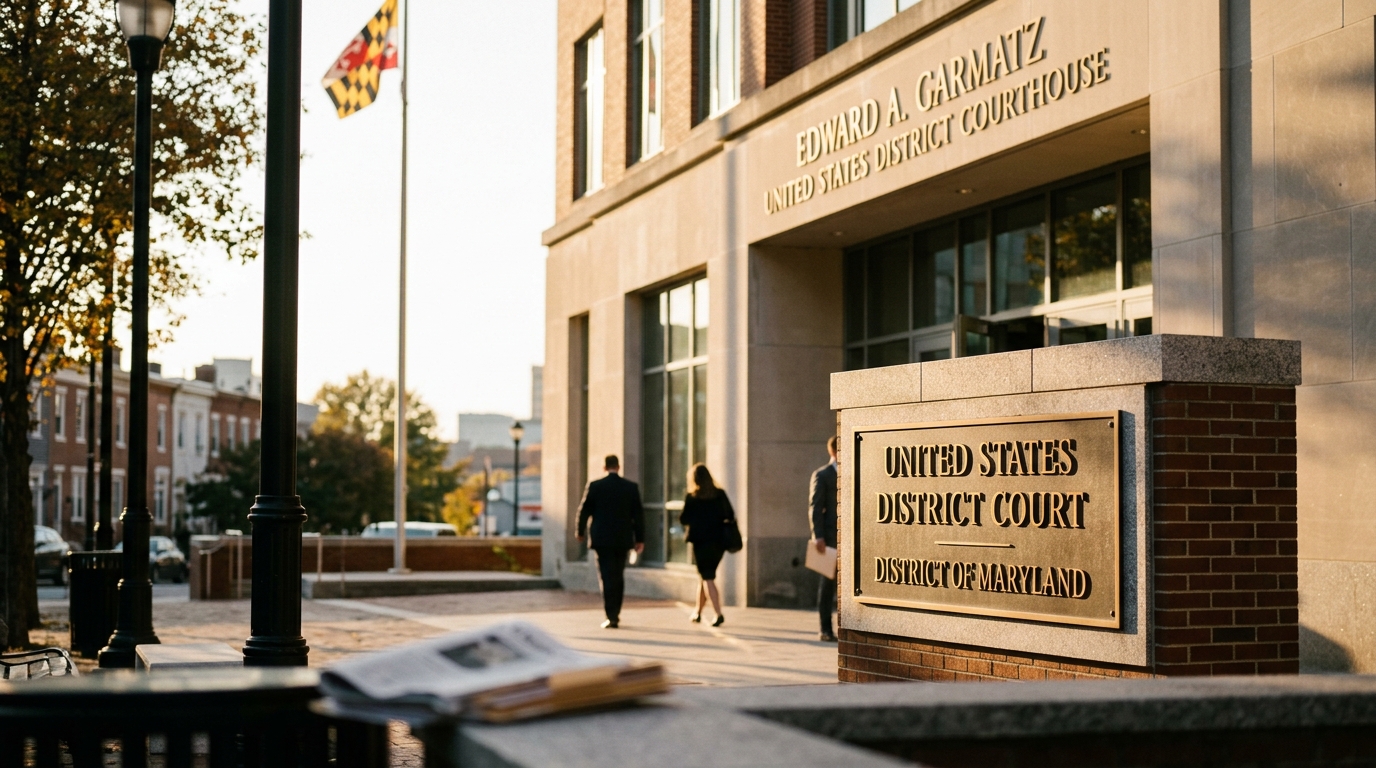
Federal Judge Rejects Maryland Attorney General's Bid for ICE Records on Baltimore Facility
A federal judge has rejected the Maryland Attorney General's bid to obtain records from an ICE detention facility in Baltimore, marking a setback for state-level transparency efforts into federal immigration operations within Maryland.
D.C. Council Member Trayon White Seeks Acquittal in Federal Bribery Case After Mistrial
A federal judge will decide whether to acquit D.C. Council member Trayon White in his bribery case after a mistrial, or allow prosecutors to pursue a retrial. The Ward 8 representative's legal team argues for dismissal, while prosecutors point to recorded evidence.