Supreme Court Steps Back into Battle Over Elon Musk's DOGE Records, Raising Transparency Questions in Washington
Share this article
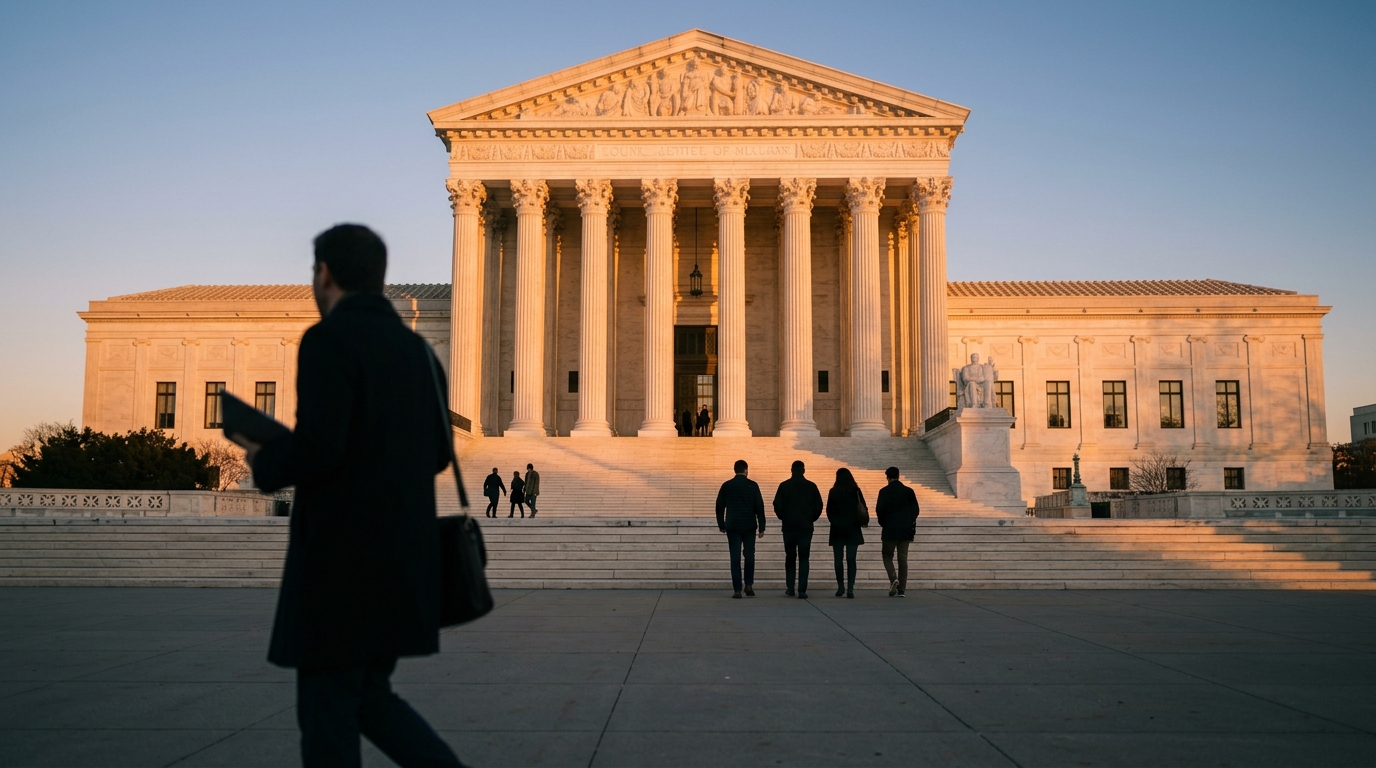
A Battle Over Transparency: Agency vs. Advisor
At the heart of the dispute is a fundamental disagreement about the nature of DOGE itself. Citizens for Responsibility and Ethics in Washington (CREW), a prominent government watchdog, argues that DOGE functions as a federal agency and, as such, should be subject to the Freedom of Information Act (FOIA). FOIA, enacted in 1966, generally provides the public with the right to request access to records from any federal agency, reflecting a core tenet of democratic governance: an informed citizenry. Details on FOIA are readily available from the U.S. Department of Justice. The Trump administration, however, strongly contends that DOGE falls outside FOIA's reach. They classify it as a presidential advisory body, a category often exempt from the same transparency requirements as traditional federal agencies. This distinction is crucial, as the administration argues that subjecting such advisory bodies to "intrusive discovery" would undermine the autonomy and confidentiality essential for presidential advisors to function effectively [1].The Legal Tug-of-War: A Second Intervention
The Supreme Court's decision to intervene marks its second engagement with CREW's case. Last year, in June 2025, the high court had already stepped in, reining in a district court's order. At that time, the conservative majority concluded that U.S. District Judge Christopher Cooper had ruled too broadly when he ordered the government to hand over various DOGE-related documents to CREW [1]. Despite the Supreme Court's prior guidance, Judge Cooper again sided with CREW, ordering an expedited processing of their records request. An appeals court panel subsequently upheld Cooper's ruling, agreeing with the watchdog group. The administration, however, maintains that the appeals court panel disregarded the Supreme Court's earlier directive. Justice Department attorneys argue that the lower court's decision failed to adequately consider separation-of-powers concerns and improperly intruded upon the "autonomy and confidentiality" of presidential advisors [1]. They also expressed concern that the appeals court had "impermissibly authorized" the plaintiffs to depose Amy Gleason, who served as DOGE's acting administrator. CREW, on the other hand, insists that the appeals court fully complied with the Supreme Court's previous order. The group asserts a strong public right to understand how DOGE operated and contributed to the administration's goals. They point to public statements, including those from the President, as evidence that DOGE wielded significant independent authority across the federal government [1]."Undisputed facts in the public record — including the President’s statements — confirmed that (DOGE) was wielding enormous independent authority across the federal government." — CREW Attorneys (WTOP)This back-and-forth illustrates the complex legal interpretations surrounding FOIA and the executive branch. The Supreme Court's re-entry suggests they believe significant legal principles are still at stake, requiring their ultimate review.
What is DOGE and Why Does it Matter?
Elon Musk's Department of Government Efficiency, or DOGE, was established with the stated aim of overhauling government operations. The exact scope and influence of DOGE are precisely what CREW is trying to uncover through its FOIA requests. In a city where federal agencies are often seen as bureaucratic behemoths, the idea of a dedicated body focused on "efficiency" naturally draws attention. The case isn't just about a single entity; it's about the broader implications for executive branch operations. If bodies like DOGE can operate with significant influence over federal policy and administration without being fully subject to FOIA, it could create new avenues for government action that are shielded from public scrutiny. This directly impacts the ability of citizens, journalists, and other watchdogs to hold power accountable. The public's access to government information is a cornerstone of American democracy, as outlined by the National Archives and Records Administration.Implications for Federal Oversight and D.C. Residents
For Washington, D.C., and the broader DMV region, this Supreme Court case has tangible implications. Our area is home to hundreds of thousands of federal employees, and the efficiency—or lack thereof—of government operations directly impacts their daily work lives and the services they deliver. A ruling that broadens exemptions for presidential advisory bodies could mean less transparency around significant policy shifts and administrative changes that affect federal agencies and, by extension, the local economy and community. Residents here often interact with federal services, from transportation initiatives to public health programs. The transparency of the federal government, therefore, isn't an abstract concept; it affects everything from how Metro funding decisions are made to how local businesses interact with federal regulations. This case is a critical test of how much the public will be allowed to see behind the curtain of federal decision-making, particularly when those decisions come from new, less traditional entities. The ongoing debate around government accountability is a perennial topic for groups like the Government Executive, a publication widely read by federal workers. The Supreme Court's decision to take up this case for a second time underscores the complexity and importance of defining the boundaries of government transparency. As arguments proceed, all eyes in the DMV will be on the high court, awaiting a ruling that could redefine access to information about how our government operates.📍 Local Resources
A non-partisan government watchdog organization dedicated to promoting ethics and accountability in government. Offers resources on government transparency and FOIA.
Provides comprehensive information about the Freedom of Information Act, including how to make a FOIA request and understand your rights to government records.
Explore more on this topic
Related Stories
Maryland Voters in the Dark on Judicial Elections? One Advocate Wants Brighter Transparency
A Maryland advocate is pushing for greater transparency in judicial elections, arguing that voters are often left "in the dark" when selecting Circuit Court judges. This issue affects how justice is administered across the state.

Navigating the Labyrinth: What Self-Representation Could Mean for a Loudoun County Murder Trial
A Loudoun County murder trial could see the defendant, a husband accused in the case, representing himself. This decision creates complex challenges for the local court, prosecution, and the defendant, requiring specific judicial workarounds.

Baltimore Judge Hopes Two-Month Sentence Deters Mortgage Fraud Across the City
A Baltimore judge has sentenced Alexander Schultz to two months for mortgage fraud, explicitly stating the hope that this punishment will deter future financial crimes in the city's real estate market. The ruling highlights the judiciary's commitment to safeguarding housing integrity and underscores the severe consequences of fraudulent activities.