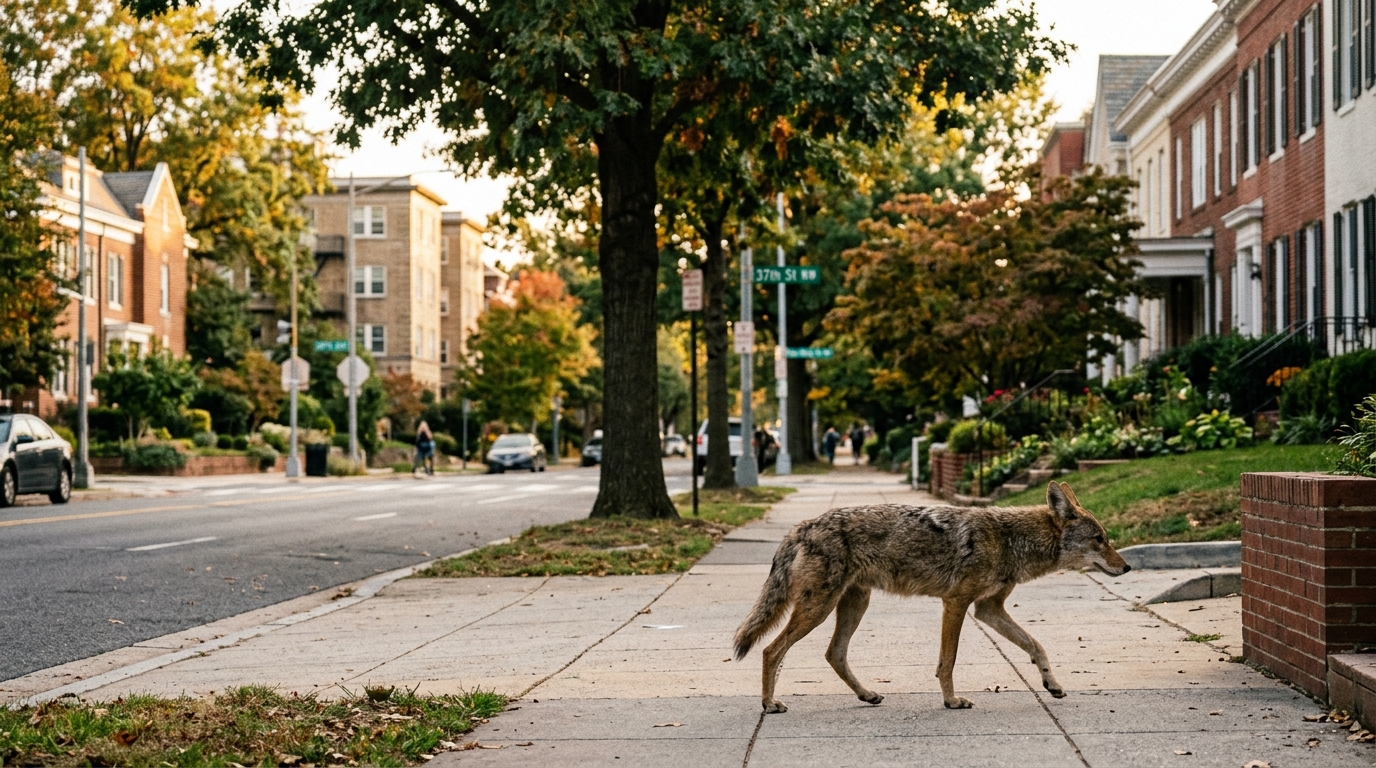
A recent wildlife sighting near 37th Street and Van Ness Street NW has sparked local curiosity and concern, as a lean, mangy-looking canid left residents wondering if they had encountered a coyote or a fox. The appearance of the animal, coupled with its presence in a residential area somewhat removed from Rock Creek Park, has prompted discussions about urban wildlife in the nation's capital. The creature, captured in a photograph shared by a local resident, showed signs of distress, appearing thin and with patchy fur, which often indicates health issues like mange. This particular sighting highlights the ongoing presence of wild animals in Washington, D.C.'s urban landscape and the challenges both humans and wildlife face in coexisting. ## A Familiar Yet Unsettling Sight While seeing a fox or even a coyote isn't entirely new for D.C. residents, the condition of this animal raised immediate concern. The observer noted the animal's "mangy" appearance on a local blog, suggesting a potential parasitic infection that can cause significant discomfort and hair loss. Mange, often caused by microscopic mites, can weaken an animal, making it more susceptible to other illnesses and making foraging for food more difficult. The location — 37th and Van Ness NW — is primarily residential, characterized by homes and tree-lined streets, though still within a reasonable distance of larger green spaces. While not directly adjacent to the sprawling wilderness of Rock Creek Park, urban wildlife corridors often connect these areas, allowing animals to move through neighborhoods in search of food and shelter.
Urban wildlife sightings, while exciting, often come with a reminder of the delicate balance between human development and natural habitats.
## Distinguishing D.C.'s Canids For many, telling the difference between a coyote and a fox can be tricky, especially with juvenile animals or those in poor health. Red foxes, with their distinctive reddish-orange fur, white-tipped tails, and slender build, are a common sight across the DMV. Coyotes, on the other hand, are typically larger, with a more wolf-like appearance, grayish-brown fur, and a bushier, often downward-pointing tail. Their snout is usually broader than a fox's. "I'm leaning toward juvenile coyote, but this far from Rock Creek?" the resident who submitted the photo questioned, highlighting the common perception that coyotes are more confined to larger, wilder parks in their report. However, coyotes have been expanding their range across North America for decades, adapting remarkably well to urban and suburban environments. They're often found in green spaces, even smaller ones, and can travel through neighborhoods in search of food. According to the District Department of Energy and Environment (DOEE), both red foxes and coyotes are native to the D.C. area and play important roles in the local ecosystem. Foxes are often seen at dawn and dusk, while coyotes can be active at any time, though they are often more nocturnal in urban settings to avoid human interaction. ## When Wildlife Needs Help The concern for the animal's health is paramount. A mangy animal is not only suffering but can also pose a minor risk to domestic pets if direct contact occurs, though transmission of mange to humans is rare. Residents who encounter sick or injured wildlife should always exercise caution and avoid direct contact. The Humane Rescue Alliance (HRA), which partners with the D.C. Animal Care and Control Agency, is often the first point of contact for such situations. They have trained professionals who can assess the animal's condition and determine the appropriate course of action, whether it's capture for treatment or monitoring. It's crucial not to attempt to feed or approach distressed wildlife, as this can exacerbate the situation for both the animal and the public. ## Coexisting with D.C.'s Wild Neighbors The sighting at 37th and Van Ness serves as a vivid reminder that the DMV is a shared habitat. As urban development continues, the lines between human and wild spaces become increasingly blurred. Understanding the behaviors and needs of local wildlife is crucial for minimizing conflicts and ensuring the well-being of both residents and animals. For those living in areas where coyotes and foxes are present, simple steps can help prevent unwanted encounters. Securing trash cans, avoiding leaving pet food outdoors, and keeping cats indoors, especially at night, can reduce attractions for these opportunistic foragers. For dog owners, keeping pets on leashes in natural areas and supervising them closely in yards is always recommended. Moving forward, residents should continue to report unusual or distressed wildlife sightings to local animal control authorities. These reports not only help individual animals but also provide valuable data to wildlife management agencies like the National Park Service, which oversees Rock Creek Park, and DOEE, helping them monitor populations and address emerging issues. The community's vigilance and responsible actions are key to fostering a healthy coexistence with D.C.'s wild neighbors.
📍 Local Resources
Humane Rescue Alliance (HRA) - Wildlife Services
Provides assistance for injured or sick wild animals in Washington, D.C.