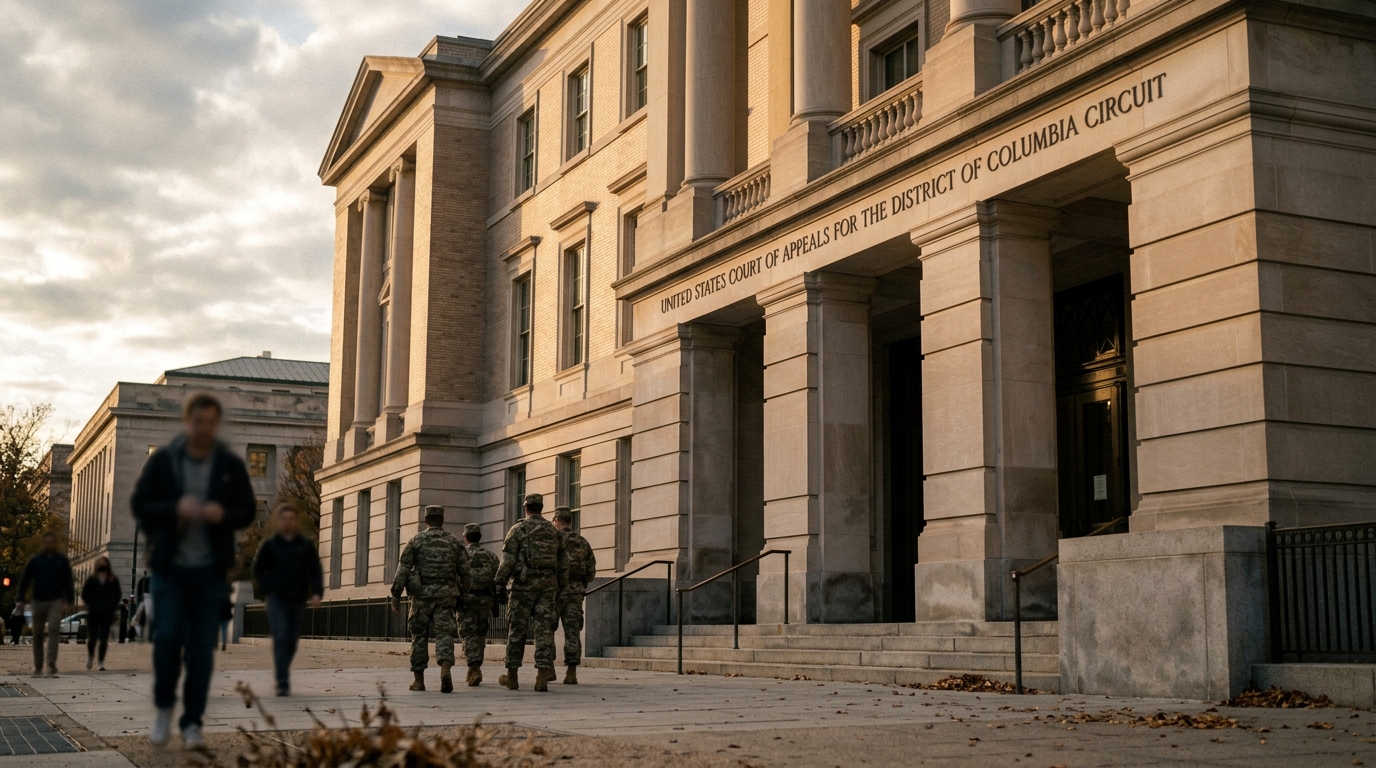
Stepping into the hallowed halls of the U.S. Court of Appeals for the D.C. Circuit, District of Columbia Attorney General Brian L. Schwalb didn't mince words. "This is not normal, or legal, and we cannot become numb to it," he declared, echoing a sentiment that has resonated deeply across Washington, DC, for over a year. The high-stakes legal battle centers on the federal government's continued deployment of National Guard troops across the District, a move the OAG argues is a blatant violation of federal law and the U.S. Constitution. The scene at the D.C. Circuit hearing was a pivotal moment in a lawsuit initiated by the Office of the Attorney General (OAG) aimed at ending what it calls an "illegal deployment" of armed soldiers on the streets of the nation's capital. For many residents, the sight of uniformed troops, often from outside the District, has become an unsettling backdrop to daily life, from bustling commercial corridors like Georgia Avenue to the quiet streets near schools and ballot boxes. This ongoing presence, Attorney General Schwalb emphasized, undermines the fundamental principles of civilian law enforcement and the District's hard-won rights to self-governance [1].
"For over a year, thousands of armed soldiers who are not from here and have limited law enforcement training have occupied our streets, spreading fear and confusion by patrolling near our schools, deploying next to ballot boxes, and marching through our neighborhoods."
### The Heart of the Matter: A Legal Showdown Over Civilian Control The core of the OAG's argument is straightforward: the U.S. military, including the National Guard when federalized for domestic law enforcement, simply shouldn't be policing American streets. This principle is a cornerstone of American democracy, ensuring that law enforcement remains squarely in the hands of trained civilian authorities accountable to the communities they serve. Attorney General Schwalb articulated this clearly, stating, "It violates the law and the principles on which this country was founded to have the U.S. military policing the streets of any American community, including the District of Columbia" [1]. The lawsuit isn't just about a philosophical disagreement; it's about the practical realities of governance and public safety in the District. The OAG alleges three key violations by the federal government:
1. **Illegal Deployment:** Using the D.C. National Guard for local law enforcement duties, which falls outside their appropriate scope.
2. **Unauthorized Policing:** Allowing National Guard troops from other states to police the District without the explicit consent of the District's government.
3. **Illegal Federal Command:** Asserting federal command and control over National Guard troops that are technically in "state militia status," blurring critical lines of authority and accountability [1]. These allegations strike at the very heart of the District's unique status and its long struggle for self-determination. Unlike states, the District lacks full autonomy over its National Guard, which falls under direct federal command. However, the OAG contends that even within this framework, there are clear legal boundaries that the federal government has overstepped. ### A Year of Unease on Our Streets For more than a year, the presence of these armed troops has been a constant, visible reminder of the federal government's contentious role in the District. Residents have reported seeing National Guard members in various parts of the city, often in situations that typically involve local police. This isn't just about optics; it's about the psychological and social impact on a community. The sight of armed soldiers, particularly those "who are not from here and have limited law enforcement training," can be deeply unsettling. It can erode trust between residents and law enforcement, create a climate of fear, and disrupt the normal functioning of civic life. The OAG's argument highlights that this militarized presence is fundamentally different from community policing by local, accountable police forces like the Metropolitan Police Department. The goal of the lawsuit is not to diminish public safety but to ensure that law enforcement is carried out by those with the proper legal authority and training for civilian interaction, fostering trust rather than apprehension. ### The Road to the Appeals Court: A Legal Timeline This week's oral arguments before the D.C. Circuit didn't just appear out of nowhere; they represent the latest chapter in a protracted legal saga. The OAG's lawsuit has been making its way through the federal court system, seeking to reclaim the District's authority over its own streets and its residents' sense of normalcy. The journey began with a significant victory for the District. On November 20, 2025, U.S. District Judge Jia Cobb issued a ruling that largely sided with the OAG. Judge Cobb found that the federal government's deployment of National Guard troops to the District was indeed illegal and granted the OAG's request for a preliminary injunction. This was a monumental decision, affirming the District's position that the federal government had overstepped its bounds oag.dc.gov. However, the federal government quickly appealed this decision to the D.C. Circuit. Crucially, the D.C. Circuit temporarily stayed Judge Cobb's order, meaning the National Guard deployment could continue while the appellate court considered the federal government's arguments. This temporary stay prolonged the very situation the OAG sought to end, keeping armed troops on District streets and maintaining the legal limbo that has characterized this dispute. Today's oral arguments were the next critical step in determining whether Judge Cobb's initial ruling will be upheld or overturned, with profound implications for the District's future. ### Challenging Federal Overreach: OAG's Core Arguments The OAG's lawsuit isn't merely a procedural challenge; it's a fundamental defense of the District's right to self-governance, enshrined in the Home Rule Act. This landmark legislation, passed by Congress in 1973, granted DC residents a greater degree of control over their local government, allowing them to elect a mayor and city council dc.gov. The OAG argues that the federal deployment of the National Guard for local policing undermines this very principle. The claim that the federal government is "illegally deploying the D.C. National Guard in the District to do local law enforcement" directly challenges the traditional separation of military and civilian functions. The National Guard, while a military force, has a dual status, serving both federal and state missions. When in "state militia status," as the OAG alleges these troops are, their command and control typically reside with state (or, in DC's unique case, local) authorities. Federalizing them for routine local policing without proper authorization or the District's consent, the OAG argues, bypasses the legitimate authority of the local government. Furthermore, the deployment of "National Guard troops from other states to police the District without the District’s consent" adds another layer of complexity and concern. It introduces external forces, unfamiliar with local nuances and without direct accountability to the District's elected officials or residents, into sensitive law enforcement roles. This practice, the OAG contends, further erodes the District's ability to manage its own public safety and maintain local control over its streets. The final key argument, "illegally asserting federal command and control over National Guard troops that are in state militia status," highlights the delicate balance of power. Even when the National Guard is called upon for domestic support, there are specific legal frameworks governing their deployment and chain of command. The OAG is asserting that the federal government has crossed these lines, effectively federalizing troops designated for local control without the necessary legal justification, thereby infringing on the District's limited but crucial sovereign powers. ### Why it Matters for DC's Self-Governance This lawsuit transcends the immediate issue of troop deployment; it's a battle for the soul of Washington, DC's self-governance. For decades, the District has fought for full autonomy, seeking to shed its status as a federal ward and gain the same rights and responsibilities as states. The Home Rule Act was a significant step, but the federal government still retains ultimate authority over many aspects of District life, including the National Guard. The OAG's case is a direct challenge to this enduring federal oversight, particularly when it manifests as military personnel policing civilian streets. It underscores the District's argument that its elected officials, accountable to its residents, should have the primary say in how law and order are maintained within its borders. A victory for the OAG in the D.C. Circuit would not only end the current deployment but could also set an important precedent for future federal-District interactions, reinforcing the principles of local control and civilian governance. Conversely, a ruling against the OAG could further entrench federal power and diminish the District's aspirations for greater self-determination. The decision from the U.S. Court of Appeals for the D.C. Circuit will undoubtedly be a landmark moment for the District, shaping its relationship with the federal government for years to come cadc.uscourts.gov. ### What Comes Next for DC Residents The D.C. Circuit Court of Appeals has heard the arguments, and now the District waits for its decision. This ruling will determine the immediate future of the National Guard's presence in Washington, DC, and could have lasting implications for the balance of power between the federal government and the District. For residents, this means continuing to watch closely as their elected legal representatives fight for local control and the democratic principle that military forces should not police civilian communities. The outcome could reinforce the District's ability to govern itself or prolong a situation that many find unsettling and contrary to the spirit of a free and self-governing city.
📍 Local Resources
DC Office of the Attorney General (OAG)
Information on the OAG's legal actions, consumer protection, and services for District residents.