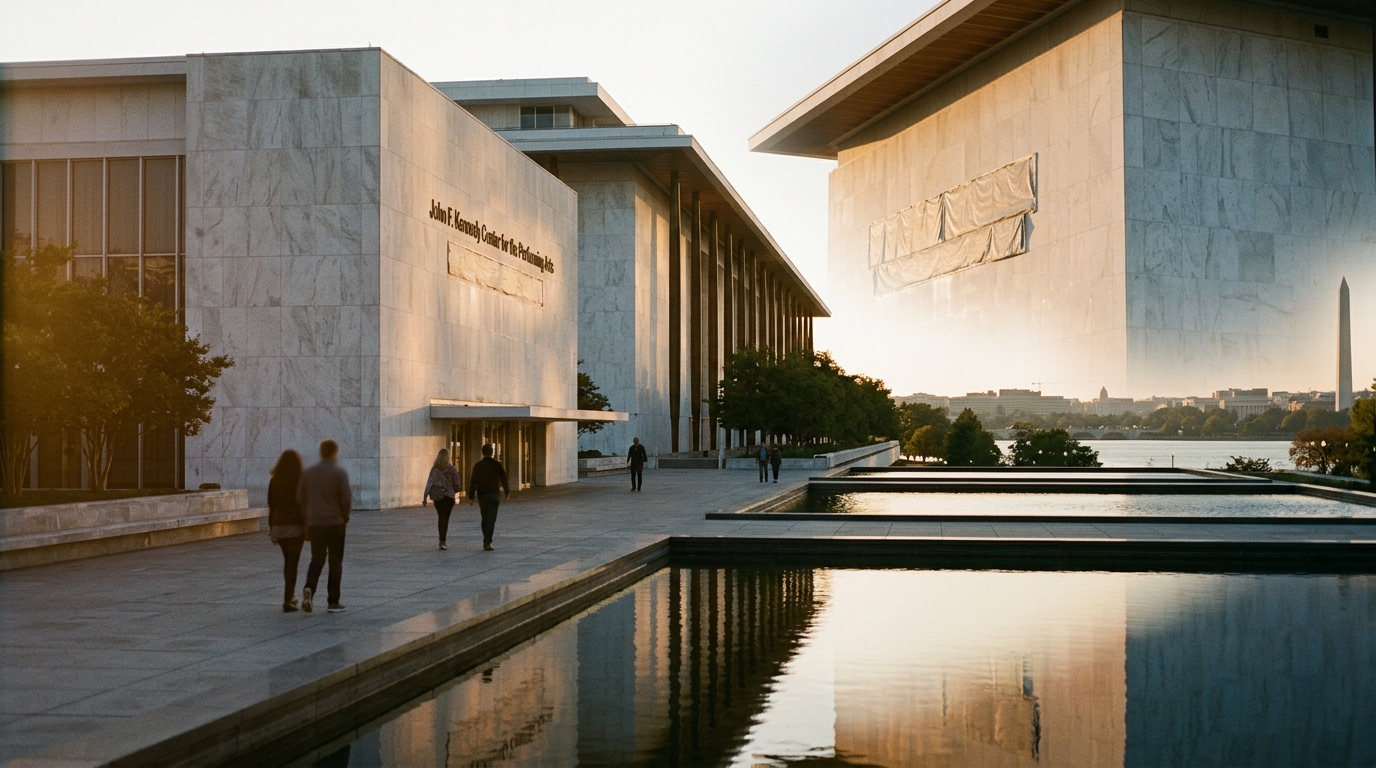
The John F. Kennedy Center for the Performing Arts, a crown jewel of Washington D.C.'s cultural landscape, is reportedly facing a dire financial crisis, warning that it could declare bankruptcy if the name of former President Donald Trump is not reinstated. These alarming reports suggest a direct link between the center's financial health and the controversial removal of Trump's name from a prominent space within the institution. For decades, the Kennedy Center has stood as a beacon of artistic excellence and a national memorial to President Kennedy. Its iconic presence along the Potomac River in Foggy Bottom has hosted countless performances, galas, and national events, drawing visitors and performers from across the globe. But now, according to
reports circulating in local media, the institution finds itself in a precarious financial position, with its very future seemingly tied to a political decision made years prior. ### The Heart of the Matter: A Name and a Crisis The core of the issue, as the reports suggest, revolves around the center's financial stability following the removal of former President Trump's name. While the specific details of *which* space or *when* the name was removed are not explicitly outlined in the initial reports, the implication is clear: the center's leadership believes this action has had a significant, detrimental impact on its funding and overall financial viability, pushing it toward the brink of bankruptcy. This situation highlights the complex interplay between public funding, private donations, and political optics that often define major cultural institutions in the nation's capital. The Kennedy Center operates under a unique model, combining federal appropriations with substantial private fundraising and ticket sales. This blend allows it to maintain world-class programming and outreach initiatives. However, any disruption to this delicate balance, particularly in the realm of major donor relations, can send ripples through its budget. The current reports suggest that the removal of a former president's name may have alienated key donors or impacted the center's ability to attract necessary financial support, leading to the current crisis.
Reports indicate the Kennedy Center warns of bankruptcy unless former President Trump's name is reinstated.
### The Kennedy Center's Enduring Legacy Since its opening in 1971, the Kennedy Center has served as the nation's performing arts center, hosting the National Symphony Orchestra, Washington National Opera, and various theatrical and dance companies. It's a key employer in the D.C. area, providing jobs for artists, administrators, and technical staff, and a major destination for tourists and locals alike. The idea of this institution facing bankruptcy is not just a financial concern; it's a potential blow to the cultural fabric of the entire DMV region and the nation. The center's mission extends beyond performances. It's also a living memorial, dedicated to President Kennedy's vision of supporting the arts and fostering cultural understanding. Its educational programs reach thousands of students annually, and its free daily performances offer accessible arts experiences to the public. A severe financial downturn, let alone bankruptcy, would undoubtedly jeopardize these vital community programs and significantly diminish the cultural offerings available to residents of Washington D.C., Maryland, and Virginia. ### Political Undertones and Funding Challenges The reported connection between the center's financial woes and a former president's name underscores the highly politicized environment in which federal cultural institutions often operate. Decisions regarding recognition and naming rights, especially for controversial figures, can have far-reaching consequences, impacting not only public perception but also crucial funding streams. The Kennedy Center relies on a mix of federal appropriations, granted by Congress, and private donations, which are often influenced by the political climate and donor affiliations. Understanding the center's funding structure is key to grasping the gravity of these reports. While federal funds typically cover maintenance and operations for the memorial aspects, programming and artistic endeavors heavily depend on philanthropic support. If a significant portion of potential donors are deterred by a particular decision, it can leave a substantial hole in the budget. This situation could reignite debates about the autonomy of cultural institutions versus their reliance on political goodwill and private contributions. The
Kennedy Center's official website outlines its diverse programming and mission, reflecting the breadth of its operations that would be at risk. ### What This Means for DMV Residents For residents across the DMV, these reports are certainly concerning. The Kennedy Center is more than just a building; it's a place where world-class talent performs, where children discover the magic of theater, and where the community gathers to celebrate arts and culture. Its potential bankruptcy would mean fewer shows, job losses for many in the local arts sector, and a significant void in the region's vibrant cultural scene. The ripple effect could be felt by local businesses that benefit from the center's visitors, from restaurants in Foggy Bottom to hotels across the city. The situation also raises questions about the future of federal support for the arts. If a premier institution like the Kennedy Center faces such a challenge, it could signal broader vulnerabilities for other cultural organizations that rely on a mix of public and private funding. Discussions around federal appropriations for the arts, often a contentious topic in Congress, could intensify as a result of these developments. Organizations like the
National Endowment for the Arts play a crucial role in supporting artistic endeavors nationwide, and the health of major institutions like the Kennedy Center is often seen as a barometer for the broader arts ecosystem. As these reports continue to circulate, the attention will undoubtedly turn to the Kennedy Center's leadership and, potentially, to Congress. The coming weeks and months will likely reveal more about the specific financial challenges at hand and the potential paths forward to avert a crisis that could severely impact one of the nation's most cherished cultural landmarks. Residents and arts patrons should keep a close eye on any official statements or legislative discussions that emerge regarding the future of this pivotal D.C. institution.