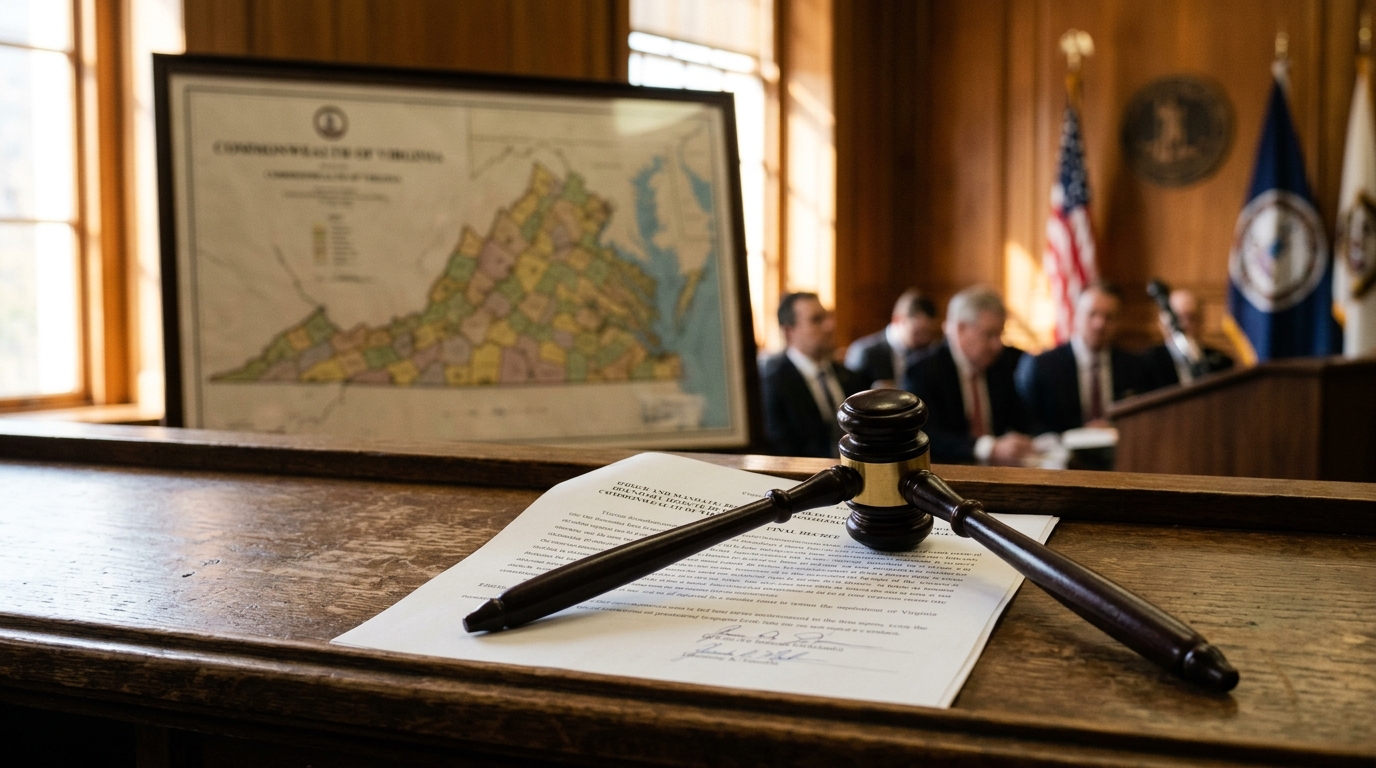
A judicial decision has thrown a significant curveball into Virginia's electoral landscape, with a judge blocking the implementation of the state's new congressional map. This unexpected move comes on the heels of a recent referendum, creating uncertainty about how the Old Dominion will be divided into districts for future federal elections
[1]. For voters across the Commonwealth, especially those in Northern Virginia who are part of the broader DMV community, this means a period of limbo for their representation in Washington. ### The Court's Intervention The judge's order effectively pauses the use of the newly drawn congressional boundaries, which were presumably intended to shape Virginia's representation in the U.S. House of Representatives. While the specific details of the court's reasoning or the referendum's content weren't immediately clear from available reports
asatunews.co.id reports the blocking occurred "after referendum," indicating a potential connection between the public vote and the legal challenge. Such judicial interventions are not uncommon in the highly contentious process of redistricting, where political parties and advocacy groups often scrutinize maps for fairness and constitutional compliance.
A judge has blocked the implementation of Virginia's new congressional map, creating uncertainty for future federal elections.
Redistricting, the process of redrawing electoral district boundaries, occurs every ten years after the U.S. Census. It's a critical exercise that directly impacts how communities are represented in Congress. In Virginia, this process has historically been a complex dance between political factions, aiming to create districts that reflect population shifts while adhering to strict legal standards like the "one person, one vote" principle. More information on Virginia's governmental processes can be found on the
official Virginia state government portal. ### What This Means for Virginia Voters For residents, particularly those in populous areas like Fairfax, Loudoun, and Prince William counties, a blocked map introduces a layer of uncertainty. Congressional districts determine who represents you in the U.S. House of Representatives, influencing everything from federal funding for local projects to national policy debates. When a map is challenged or blocked, it can delay election preparations, voter education efforts, and even candidate filings. The process of drawing these maps is overseen by various state bodies. The
Virginia Department of Elections provides comprehensive resources on voting, elections, and district information, which will be crucial for voters to follow as this situation develops. An unclear map means voters might not know which district they reside in, or who their potential representatives will be, until the legal issues are resolved. ### The Road Ahead With the map currently on hold, the next steps are likely to involve further legal proceedings. The court could require the state to redraw the map, or it might offer specific directives for amendments. This could lead to a protracted legal battle, potentially pushing decisions closer to upcoming election cycles. Virginia's legislative bodies and electoral commissions will need to navigate this judicial roadblock carefully to ensure fair and timely elections. Understanding the legislative framework for such decisions is key. The
Virginia Legislative Information System offers insight into the state's laws and how they are enacted and challenged. The outcome of this legal challenge will not only define Virginia's congressional districts for the next decade but also set a precedent for future redistricting efforts in the Commonwealth. Virginia residents should stay tuned for updates from state election officials and local news outlets. The path forward will undoubtedly involve careful consideration of the court's order and potential revisions to the map, all with the goal of ensuring that every vote counts and every community is fairly represented.