House Oversight Chair Targets D.C. Courts, Alleges 'Activist' Jury Nullification Efforts
Share this article
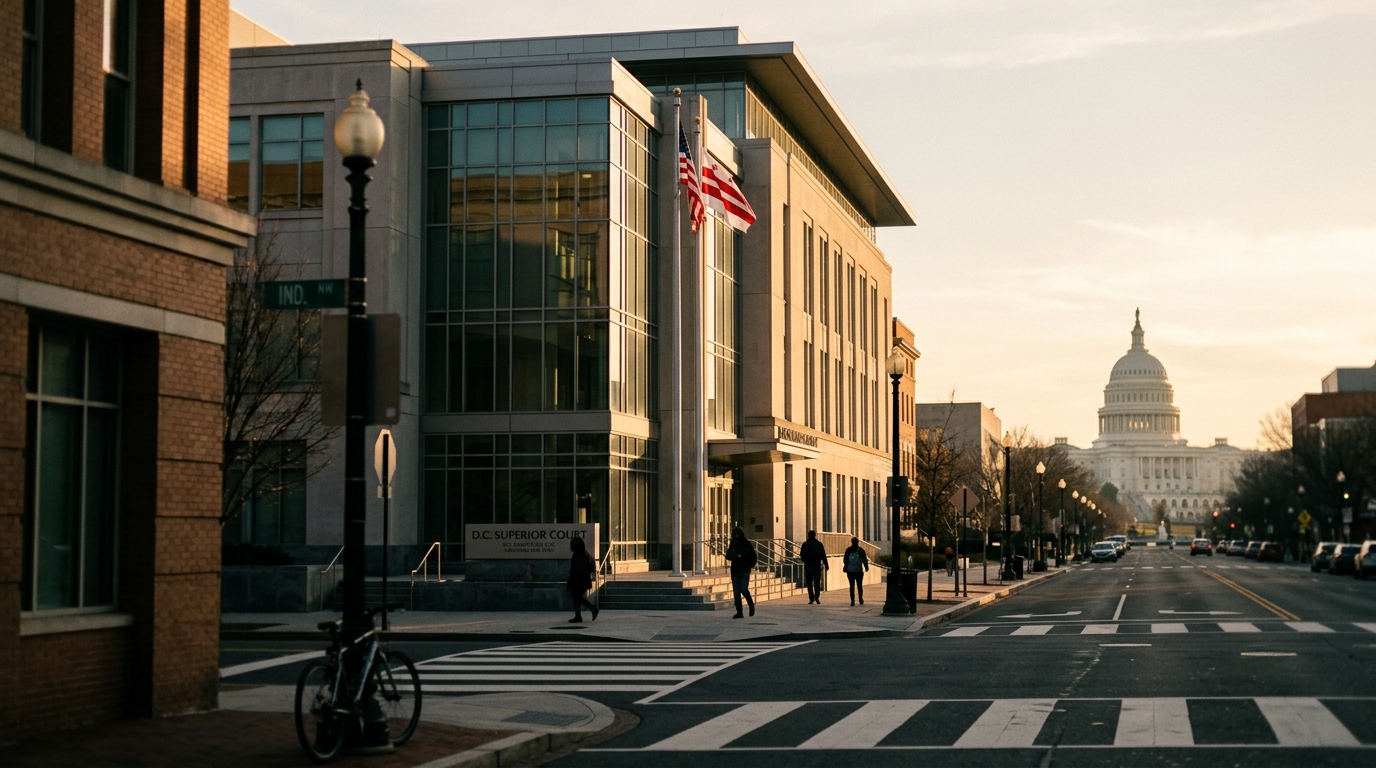
What is Jury Nullification and Why is it Controversial?
Jury nullification is a rare but powerful aspect of the American legal system. It occurs when a jury, believing a defendant is guilty under the law, nonetheless chooses to acquit them because they disagree with the law itself, the way it's being applied, or the severity of the potential punishment. While judges typically do not inform juries of their power to nullify, and lawyers are generally prohibited from arguing for it, it remains an inherent power of the jury. The practice gained prominence during the Prohibition era, when juries sometimes refused to convict individuals for alcohol-related offenses, and during the Civil Rights movement, when juries occasionally acquitted activists protesting segregation laws. More recently, it has been discussed in cases involving non-violent drug offenses or politically charged demonstrations. The controversy stems from the tension between a jury's role to apply the law as given and its historical role as a safeguard against unjust laws or overzealous prosecution. Critics argue that promoting jury nullification undermines the rule of law and introduces personal biases into the judicial process, potentially leading to arbitrary justice. Proponents, however, view it as a crucial check on government power and a way for community values to be reflected in legal outcomes. Legal scholars often debate the ethical boundaries and proper understanding of this power, as explored by institutions like Cornell Law School's Legal Information Institute."The House Oversight Committee chair said the panel launched an investigation into 'politicized jury nullification initiatives by left-wing activist groups' in D.C." — Rep. James Comer, House Oversight Committee Chair (The Washington Post)
The Oversight Committee's Allegations
Representative Comer's announcement, reported by The Washington Post, specifically points to "left-wing activist groups" as the alleged instigators of these initiatives in D.C. courts. While the committee's statement didn't detail which groups or specific instances prompted the investigation, the implication is that these organizations are attempting to sway D.C. juries to acquit defendants in cases where the jurors might sympathize with the defendants' political or social causes, regardless of the evidence presented. The House Oversight Committee, whose mission includes ensuring the efficiency, effectiveness, and accountability of the federal government and all its agencies, often extends its purview to matters concerning the District of Columbia due to Congress's unique constitutional authority over the capital. Information on the committee's work can be found on its official website. This broad oversight power allows Congress to delve into D.C.'s local governance, including its judicial system, in ways it cannot for states.Implications for D.C. Residents and the Local Judiciary
For residents of Washington, D.C., this investigation carries significant weight. The District's unique status means that Congress holds ultimate authority over its local affairs, a relationship that often sparks debates about "home rule" and local self-determination. This probe could be seen as another instance of federal intervention into D.C.'s local processes. The D.C. Superior Court and the D.C. Court of Appeals operate as the District's local judicial system, handling everything from traffic violations to serious felonies, much like state courts. Any federal investigation into the integrity of these courts' jury processes directly impacts how justice is administered for D.C. residents. It could potentially lead to calls for new policies regarding jury selection, juror education, or even legislative changes affecting the local courts. The day-to-day operations of the D.C. Courts are crucial for maintaining order and resolving disputes in the city, and a federal inquiry into their fundamental processes could introduce uncertainty and political tension. Furthermore, the investigation itself, regardless of its findings, casts a shadow over the impartiality of D.C. juries. If the committee finds evidence supporting its claims, it could fuel arguments for federal intervention in D.C.'s judicial appointments or oversight, further eroding the District's limited autonomy. Conversely, if the investigation finds no substantial evidence of widespread politicized jury nullification, it could be viewed by some as an overreach of congressional power.The Broader Political Context
This investigation doesn't happen in a vacuum. Washington, D.C., is a city with a predominantly progressive electorate, and its courts frequently handle cases involving political protests, demonstrations, and other matters that can draw significant public and ideological interest. The phrase "left-wing activist groups" used by Comer immediately frames the inquiry within a broader national political debate. Federal lawmakers from both sides of the aisle have, at various times, expressed concerns or sought to exert influence over D.C.'s local governance, particularly when local policies diverge significantly from national political trends. This investigation into jury practices could be interpreted as part of a larger effort to scrutinize or influence the political and legal environment in the capital city. The outcome of this investigation could have lasting effects on the relationship between Congress and the District of Columbia. It will test the boundaries of federal oversight and the resilience of D.C.'s judicial independence. As the House Oversight Committee proceeds, residents and legal observers will be watching closely to see what, if any, evidence emerges and what recommendations or actions the committee might propose. The potential for this probe to reshape public perception of D.C.'s justice system, and indeed its future, is significant.Explore more on this topic
Related Stories
Supreme Court Steps Back into Battle Over Elon Musk's DOGE Records, Raising Transparency Questions in Washington
The Supreme Court is once again stepping into a legal battle over government transparency, agreeing to hear arguments in a watchdog lawsuit seeking public records from Elon Musk's Department of Government Efficiency (DOGE). This decision could redefine how much the public knows about federal operations in Washington, D.C.
Maryland Voters in the Dark on Judicial Elections? One Advocate Wants Brighter Transparency
A Maryland advocate is pushing for greater transparency in judicial elections, arguing that voters are often left "in the dark" when selecting Circuit Court judges. This issue affects how justice is administered across the state.
Navigating the Labyrinth: What Self-Representation Could Mean for a Loudoun County Murder Trial
A Loudoun County murder trial could see the defendant, a husband accused in the case, representing himself. This decision creates complex challenges for the local court, prosecution, and the defendant, requiring specific judicial workarounds.