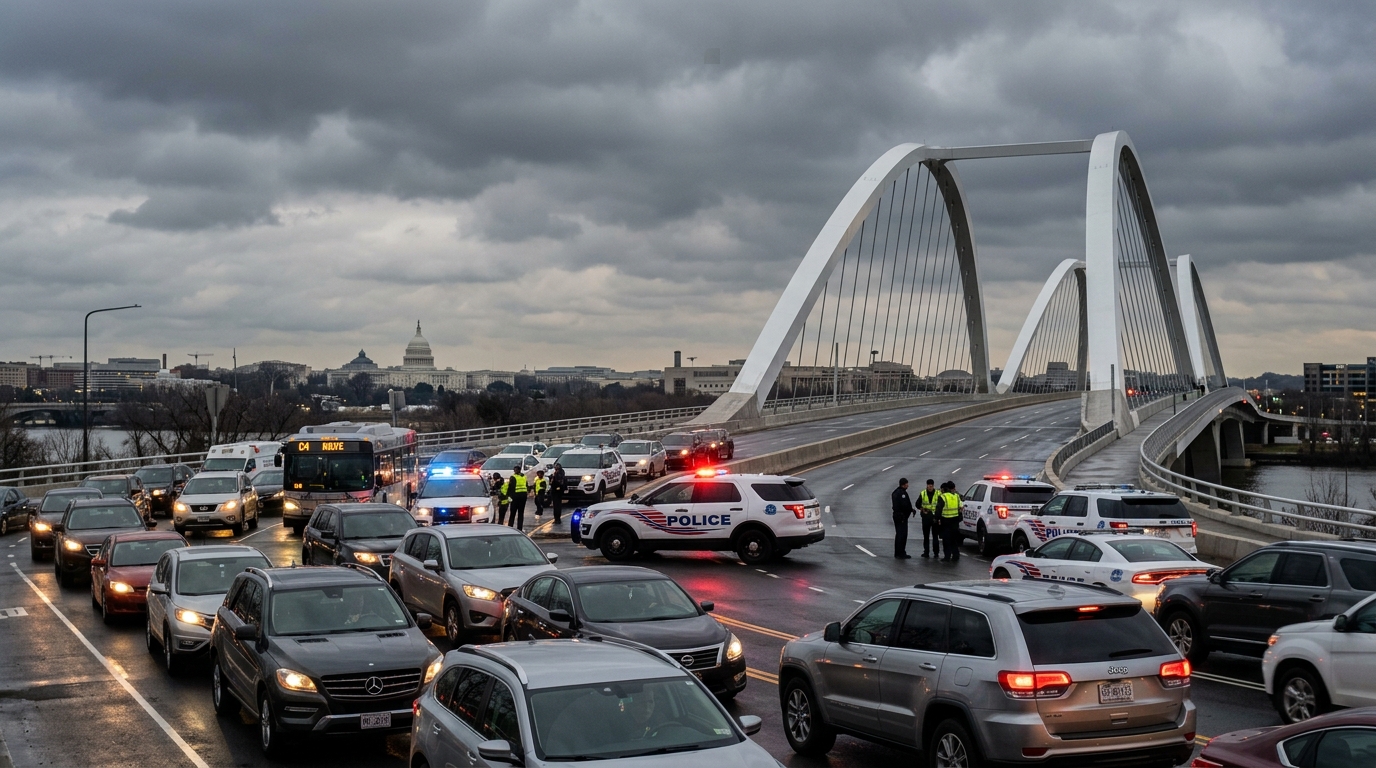
Commuters navigating the bustling Anacostia and Southwest D.C. corridors faced significant delays and detours recently when the Frederick Douglass Memorial Bridge was entirely shut down. The closure came as District police responded to an active situation involving a person on the bridge, bringing traffic to a standstill across a vital artery for the nation's capital. The incident, which occurred at an unspecified time, prompted an immediate and comprehensive response from law enforcement. Authorities confirmed the presence of an individual on the bridge, leading to the swift decision to close the entire structure to ensure public safety and allow first responders to manage the situation [1]. Details regarding the individual's condition or the precise nature of the situation remain limited, as police focused on resolving the event safely.
The Frederick Douglass Bridge, a crucial link in D.C.'s transportation network, was fully closed as police responded to an individual on the structure.
### Immediate Traffic Impact on DC Commuters For thousands of DMV residents who rely on the Frederick Douglass Bridge daily, the closure meant instant gridlock and a scramble for alternative routes. This bridge, officially designated as DC's largest infrastructure project in recent history, connects Ward 8's Anacostia neighborhood with Southwest D.C. and Nationals Park, making it a critical thoroughfare. Its shutdown has a ripple effect, forcing drivers onto already congested roads like the 11th Street Bridges and the South Capitol Street Bridge, exacerbating rush hour woes or disrupting midday travel. Local residents and workers in Navy Yard and Anacostia likely experienced significant delays, impacting everything from school pickups to business operations. The suddenness of such closures often leaves drivers frustrated, highlighting the delicate balance of urban infrastructure and emergency response. Commuters are always encouraged to check real-time traffic updates from sources like the DC Department of Transportation (DDOT) or WMATA's service alerts during such events. ### Police Response and Public Safety When a person is reported on a bridge in a potentially distressed state, police protocols prioritize the safety of the individual, first responders, and the public. The Metropolitan Police Department (MPD) typically deploys specialized units trained in crisis intervention and de-escalation techniques. Their primary goal is to establish communication with the individual and bring them to safety without further incident. The full closure of the bridge, as reported, is a standard safety measure in these scenarios. It creates a secure perimeter, prevents distractions, and allows emergency personnel unobstructed access. While inconvenient for drivers, these measures are essential to manage high-stress situations effectively and mitigate potential risks to everyone involved. The MPD's commitment to public safety is paramount in these delicate operations, often involving hours of careful negotiation and tactical planning. ### Understanding the Community Impact Beyond traffic snarls, incidents like this can underscore the broader community's challenges, including mental health crises. While the specific reasons for the individual being on the bridge were not disclosed, such situations often prompt discussions about accessible mental health resources and support systems within the DMV area. Ensuring that individuals in distress have immediate access to help is a crucial part of community well-being. The Frederick Douglass Bridge stands not just as a piece of infrastructure but as a gateway between communities. Its temporary closure, though disruptive, serves as a stark reminder of the complex human elements that can intersect with daily urban life.
📍 Local Resources
DC Department of Behavioral Health (DBH)
Provides mental health and substance abuse services, including crisis intervention and support.
📍 Location: 1200 First Street NE, Washington, DC 20002
🕐 Hours: 24/7 Access Helpline
National Suicide Prevention Lifeline (988)
A national network of local crisis centers that provides free and confidential emotional support to people in suicidal crisis or emotional distress 24 hours a day, 7 days a week.
For DMV residents, staying informed during such dynamic situations is key. Always monitor local news outlets, traffic apps, and official government social media channels for real-time updates. While the immediate situation on the Frederick Douglass Bridge has passed, the incident serves as a reminder of the critical role emergency services play in maintaining public safety and the collective responsibility we share in supporting our community's well-being.