Community
Birders Sound Alarm Over Hundreds of Lost Trees at DC's East Potomac Park
Share this article
Advertisement
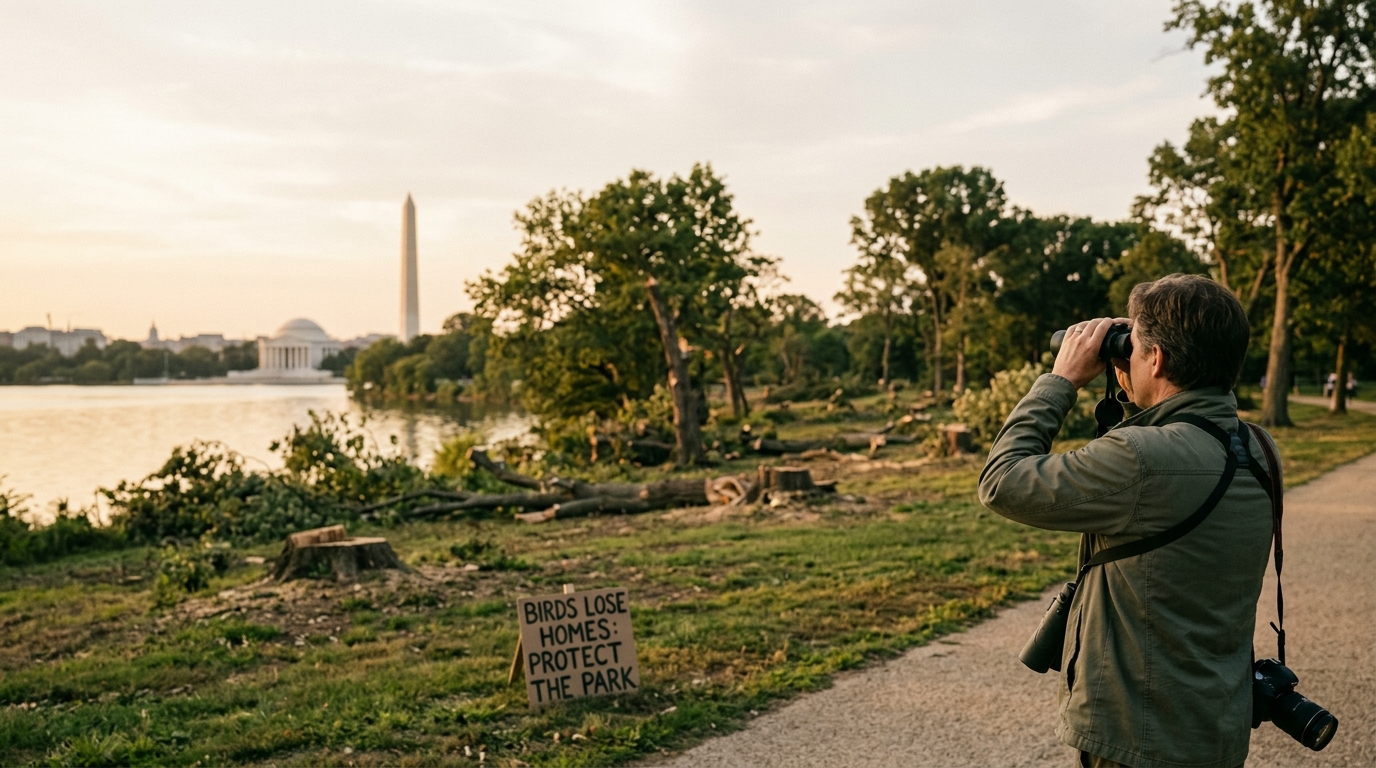
A familiar hush has fallen over parts of East Potomac Park, but it's not the peaceful quiet usually sought by nature lovers. Instead, it's a silence punctuated by the growing worry of local birders, who are raising concerns about the long-term ecological impact after hundreds of trees were lost within the beloved Washington, DC green space. This significant reduction in tree cover has sparked fears for the park's vibrant bird populations and its role as a critical migratory stopover. East Potomac Park, a slender peninsula stretching into the Potomac River, has long been a haven for both residents and a diverse array of avian species. Its mature trees provide essential habitat, shelter, and foraging grounds, making it a hotspot for birdwatching enthusiasts across the DMV. The recent loss of hundreds of these trees, however, threatens to disrupt this delicate ecosystem, leaving birders to question what this means for the future of the park's wildlife and its natural beauty. ## A Vital Habitat Under Threat For many, East Potomac Park isn't just a place for a jog or a round of golf; it's a living classroom and a quiet escape. It’s particularly celebrated by the local birding community, who regularly flock there to spot everything from common backyard birds to rarer migratory visitors. The park's unique location and diverse tree species create an ideal environment for birds navigating the Atlantic Flyway, offering crucial rest stops and sustenance during their arduous journeys. The removal or loss of such a large number of trees directly impacts this vital habitat. Trees provide nesting sites, protection from predators, and a rich source of insects and seeds for birds. Without them, local and migratory species face increased exposure and reduced food availability, potentially leading to declines in population or forcing birds to seek less suitable habitats elsewhere.
Hundreds of trees lost at East Potomac Park could have significant long-term impacts on local and migratory bird populations.
## Birders Voice Deep Concerns The community of birdwatchers isn't just observing the changes; they're actively expressing their deep concerns. The long-term effects of this habitat reduction are at the forefront of their minds. When trees disappear, so does the intricate web of life they support, from the smallest insects to the largest raptors. This ripple effect can be devastating for an ecosystem that relies on a balanced natural structure. "It's not just about losing a few trees; it's about losing the homes, the food sources, and the safe havens for countless birds," one long-time birder, who frequently visits East Potomac Park, noted, reflecting a sentiment shared by many in the community. The fear is that the park, once a reliable sanctuary, could see a significant drop in its avian diversity, diminishing its appeal to both birds and the people who cherish them. ## The Role of Urban Green Spaces East Potomac Park is managed by the National Park Service (NPS National Capital Area), and its health is integral to the broader urban ecosystem of Washington, DC. Urban green spaces like this park play a critical role in maintaining biodiversity, improving air quality, and mitigating the urban heat island effect. The presence of a robust tree canopy is essential for these functions, providing shade and releasing oxygen, benefiting human residents as much as wildlife. The loss of trees in such a prominent location also raises broader questions about tree management practices in urban parks and the need for transparent communication with the public. Residents who enjoy the park for its natural beauty and recreational opportunities are keen to understand the reasons behind the tree loss and what, if any, plans are in place for restoration or mitigation. For residents across Washington, DC, the situation at East Potomac Park isn't just a concern for birders; it's a stark reminder of the delicate balance between urban development and natural preservation. This federal park serves as a green lung for the city, and changes to its landscape have broad implications for quality of life, environmental health, and the recreational opportunities available to thousands of people daily. Protecting these vital green spaces ensures that future generations can continue to enjoy the natural heritage of the nation's capital. Looking ahead, the birding community, along with other environmental advocates, will undoubtedly be watching closely to see how the National Park Service addresses these concerns. Efforts to replant trees, restore habitat, and provide clear communication about park management decisions will be crucial in rebuilding trust and ensuring East Potomac Park remains a vibrant ecological treasure for all. Residents interested in supporting local conservation efforts or learning more about the park's future can connect with local environmental groups and the National Park Service directly. 📍 Local Resources
DC Audubon Society
Dedicated to conserving and restoring natural ecosystems, focusing on birds, other wildlife, and their habitats in the Washington, DC area.
🌐 Website: dcaudubon.org
📍 Location: P.O. Box 70388, Washington, DC 20024
National Park Service - National Mall and Memorial Parks (East Potomac Park)
Official information regarding the management and preservation of East Potomac Park and other national park sites in DC.
📞 Phone: (202) 426-6841
🌐 Website: nps.gov/nama/east-potomac-park
📍 Location: 900 Ohio Dr SW, Washington, DC 20024
Casey Trees
A DC-based nonprofit working to restore, enhance, and protect the tree canopy of the nation's capital.
Advertisement
Explore more on this topic
Related Stories
Community
Maryland Secures $8.9 Million for Massive Statewide Tree Planting Initiative
Montgomery County·Community
about 1 hour ago4 min read

Community
New ACPS Superintendent Jharrett Bryantt Prepares for Alexandria's "Hard Choices"
Alexandria·Community
Jharrett Bryantt is set to become the new Superintendent of Alexandria City Public Schools (ACPS) on February 1, 2027, bringing with him a reputation for tackling "hard choices" in educational leadership.
about 6 hours ago4 min read
Community
Maryland Priest Steps Up to Care for 31 Children of Deported Parents
Community
A Maryland priest has committed to caring for 31 children whose parents have been deported, highlighting the critical role of community support for vulnerable families in the DMV.
about 6 hours ago4 min read