Federal
Arlington County
White House Gunfire Incident Raises Alarms Over Evolving Security Threats in the Nation's Capital
Share this article
Advertisement
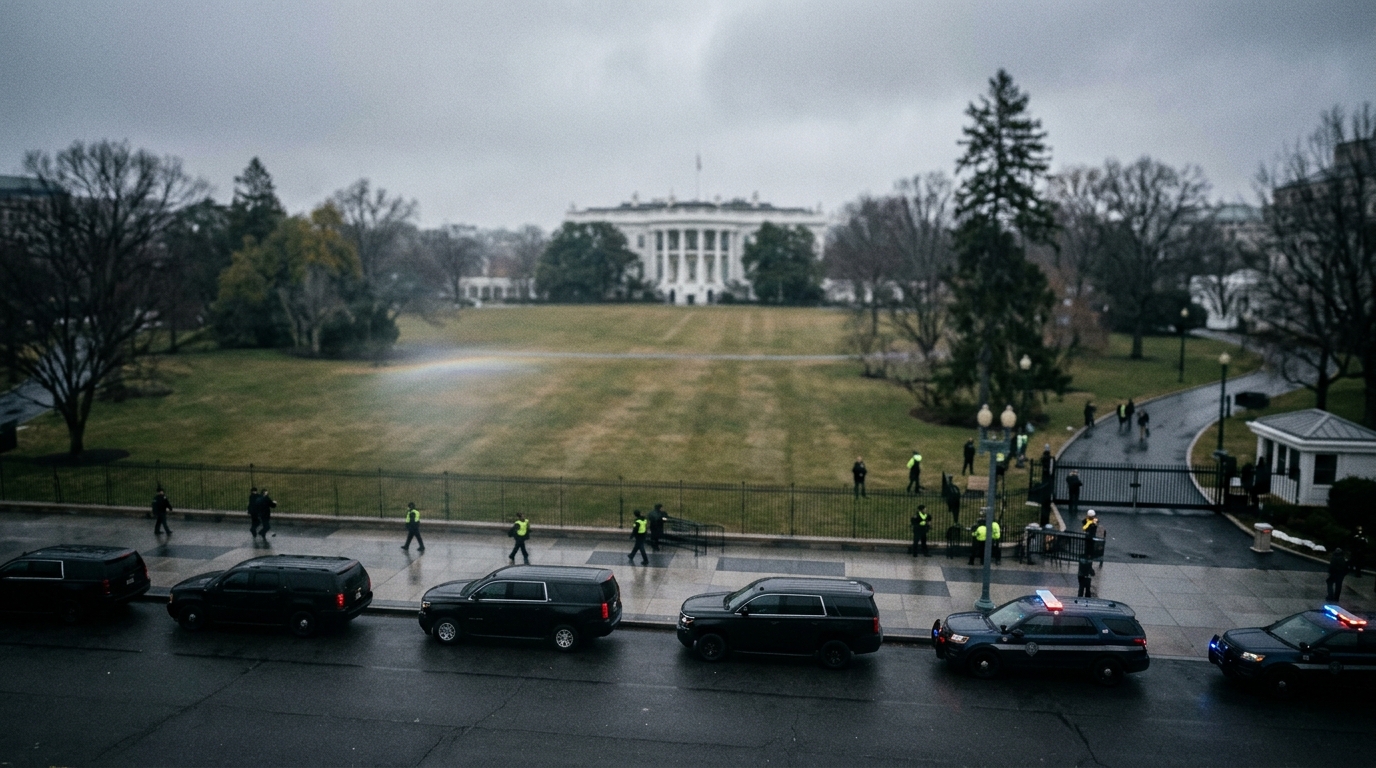
The sound of gunfire near the White House recently sent a jolt through Washington, D.C., forcing a renewed, urgent look at the evolving security landscape surrounding the nation's most iconic address. While details surrounding the specific incident remain under wraps, the very occurrence has prompted experts to highlight a "dangerous new security reality" for the capital region, suggesting that the threats facing federal facilities are becoming increasingly complex and unpredictable. This isn't just about a single incident; it's about what it signifies for the protection of federal buildings, high-profile individuals, and the thousands of DMV residents who live and work in the shadow of these institutions every day. The event underscores a growing concern among security analysts about the challenges federal law enforcement agencies, like the Secret Service and the U.S. Park Police, face in an environment where threats can emerge quickly and from unexpected directions.
A New Era of Threats for Federal Facilities
For decades, the security posture around the White House and other federal buildings in the District has been robust, designed to deter and respond to a range of known threats. However, recent events, including this gunfire incident, suggest a shift. The "dangerous new security reality" described by WTOP's J.J. Green points to a confluence of factors, including increased polarization, the proliferation of readily available firearms, and the psychological impact of repeated national security incidents (WTOP). This isn't just about preventing large-scale attacks. It's also about managing sporadic, often isolated, acts that can still cause significant disruption and fear. The Secret Service, responsible for protecting the President and the White House complex, constantly adapts its strategies. But the sheer volume and variety of potential threats mean that every incident, no matter how small, becomes a critical test of readiness and response.The incident near the White House underscores a "dangerous new security reality" for federal law enforcement and residents alike.
Impact on Downtown D.C. and Federal Operations
When an incident like gunfire occurs near the White House, it doesn't just impact the immediate security perimeter; it ripples across downtown D.C. streets. Nearby businesses often face temporary closures, metro stations might be bypassed, and traffic patterns can be dramatically altered as law enforcement secures the area. For those who commute into the city for work, or live in neighborhoods like Foggy Bottom or Penn Quarter, these events are a stark reminder of the unique vulnerabilities that come with living in a global capital. The response to such incidents involves a coordinated effort from multiple agencies. The U.S. Secret Service takes the lead in White House security, often supported by the U.S. Park Police, the Metropolitan Police Department (MPD), and other federal and local partners. Their rapid deployment and communication are crucial in containing situations and ensuring public safety.What This Means for DMV Residents
For residents across the DMV — from Arlington to Silver Spring, and throughout the District — the implications of heightened security threats are tangible. It means a continued, visible security presence around federal buildings and landmarks. It might mean more frequent security drills, road closures, or public alerts. While these measures are designed to protect, they also contribute to a pervasive sense of vigilance that has become part of daily life in the capital region. This incident also highlights the psychological toll on a community that has, over the years, witnessed numerous security scares, protests, and even attacks. The constant awareness of potential threats can lead to increased stress and anxiety, making community resilience and access to support services even more vital.📍 Local Resources
DC Homeland Security and Emergency Management Agency (HSEMA)
Provides guidance and resources for D.C. residents on emergency preparedness and public safety during incidents.
📞 Phone: (202) 727-6161
🌐 Website: hsema.dc.gov
📍 Location: 2720 Martin Luther King Jr Ave SE, Washington, DC 20032
Metropolitan Police Department (MPD) Non-Emergency Line
For reporting non-urgent suspicious activity or seeking information during security incidents not requiring immediate 911 response.
📞 Phone: (202) 727-9099
🌐 Website: mpdc.dc.gov
DC Crisis and Emergency Services (Department of Behavioral Health)
Provides mental health support and crisis intervention for residents experiencing stress or anxiety related to community events.
Looking Ahead: Adapting to a Changing Landscape
The gunfire incident at the White House serves as a stark reminder that security in the nation's capital is a constant, evolving challenge. Federal and local agencies will undoubtedly continue to review and adapt their protocols in response to such events. For DMV residents, staying informed about public safety alerts from official channels like AlertDC and understanding local emergency procedures remains paramount. As the region navigates this "dangerous new security reality," vigilance, community preparedness, and ongoing dialogue between residents and law enforcement will be key to maintaining safety and resilience in the heart of the nation. What this incident ultimately means for long-term security changes around the White House and other federal landmarks is something we'll be watching closely in the coming months.Advertisement