White House Ballroom Construction Gets Green Light From Appeals Court, Legal Battle Continues in Washington, DC
Share this article
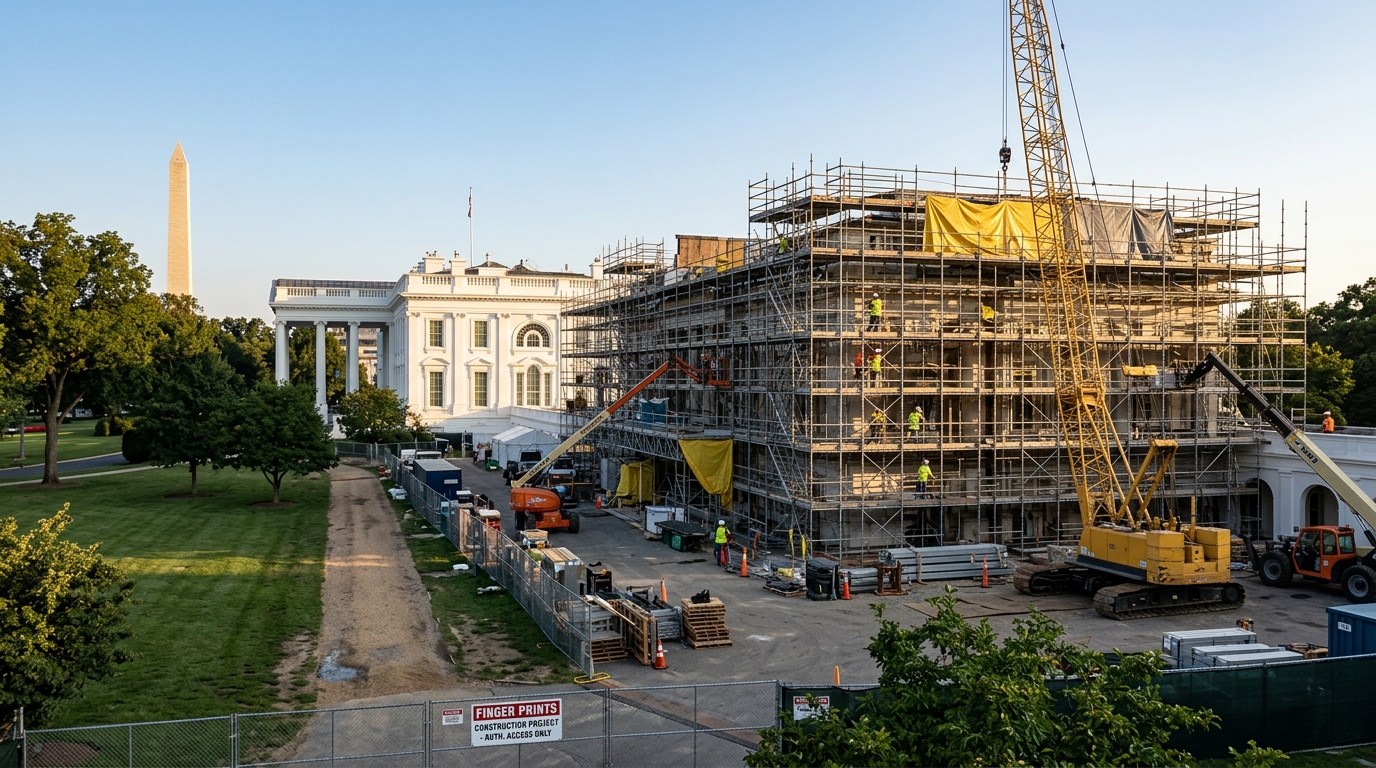
In a significant development for the nation's capital, the construction of a new ballroom at the White House is permitted to continue for now, following a ruling by a Washington, DC appeals court. The decision provides a temporary reprieve for the estimated $300 million project, which has been embroiled in a legal challenge over whether it requires explicit congressional approval [1].
The ongoing legal dispute centers on the extent of executive authority regarding renovations and new construction within the White House complex, particularly for projects of substantial cost. Critics argue that such a large-scale undertaking should fall under congressional oversight, ensuring transparency and accountability for taxpayer funds.
Appeals Court Decision Offers Temporary Clarity
The ruling from the DC appeals court on April 11, 2026, overturns a lower court's decision that had previously halted the project, asserting the need for congressional sign-off [1]. This appellate decision allows workers to resume or continue their efforts on the ballroom, which is being built where the historic East Wing once stood. While the immediate impact is a continuation of construction, the legal battle itself is far from over, with the Trump administration actively challenging the lower court's initial ruling.
The White House, located at 1600 Pennsylvania Avenue NW, is not just a residence but a symbol of American democracy and the seat of presidential power. Renovations and expansions, while often necessary for modernization and security, frequently draw scrutiny, especially when they involve considerable public expense. The General Services Administration (GSA) typically oversees federal building projects, including those within the White House complex, but the scale and nature of this ballroom project have elevated it to a matter of constitutional interpretation regarding the separation of powers.
The Cost and Controversy
At an estimated cost of $300 million, the White House ballroom project represents a significant investment of federal resources [1]. Such a figure naturally raises questions about fiscal responsibility and the prioritization of government spending. For residents across the DMV, federal spending decisions directly impact the local economy, from construction jobs to the broader ripple effects on businesses catering to federal employees and contractors.
The legal challenge highlights a recurring tension between the executive branch's prerogative to manage its official residence and workspace, and the legislative branch's constitutional role in controlling the national purse. Understanding the intricate balance of power is crucial, particularly in Washington, DC, where the federal government's presence is omnipresent.
The White House complex has undergone numerous renovations and additions throughout its history, each often accompanied by public debate. From the reconstruction after the War of 1812 to more recent modernizations, maintaining the historic integrity while adapting to contemporary needs is a constant challenge. This current ballroom project, however, is unique in the level of judicial intervention it has attracted, transforming a construction endeavor into a high-stakes legal and political contest.
Implications for Future Federal Projects
The outcome of this legal dispute could set a precedent for future large-scale federal construction projects, particularly those initiated by the executive branch without explicit legislative appropriations. If the appeals court's temporary decision is ultimately upheld, it could empower future administrations to proceed with significant renovations without direct congressional approval, potentially limiting the checks and balances inherent in the U.S. system of government. Conversely, if the lower court's requirement for congressional approval is eventually reinstated, it would reinforce the legislature's oversight capacity over major federal expenditures.
The case is likely to continue its path through the judicial system, potentially reaching the Supreme Court given the constitutional questions at stake. For residents and observers in the DMV, this legal saga is more than just a debate over a building; it's a window into the ongoing dynamics of power within the federal government, playing out on one of the nation's most iconic stages. The decisions made in these courtrooms will ultimately shape not only the physical landscape of the White House but also the operational precedents for federal governance for years to come.
For more information on the federal judiciary, visit the United States Courts official website. Details regarding federal budget and appropriations can often be found through the Library of Congress's Congress.gov portal.