Virginia Governor Spanberger Enacts Minimum Wage Hike to $15, Bolstering Northern Virginia's Workforce
Share this article
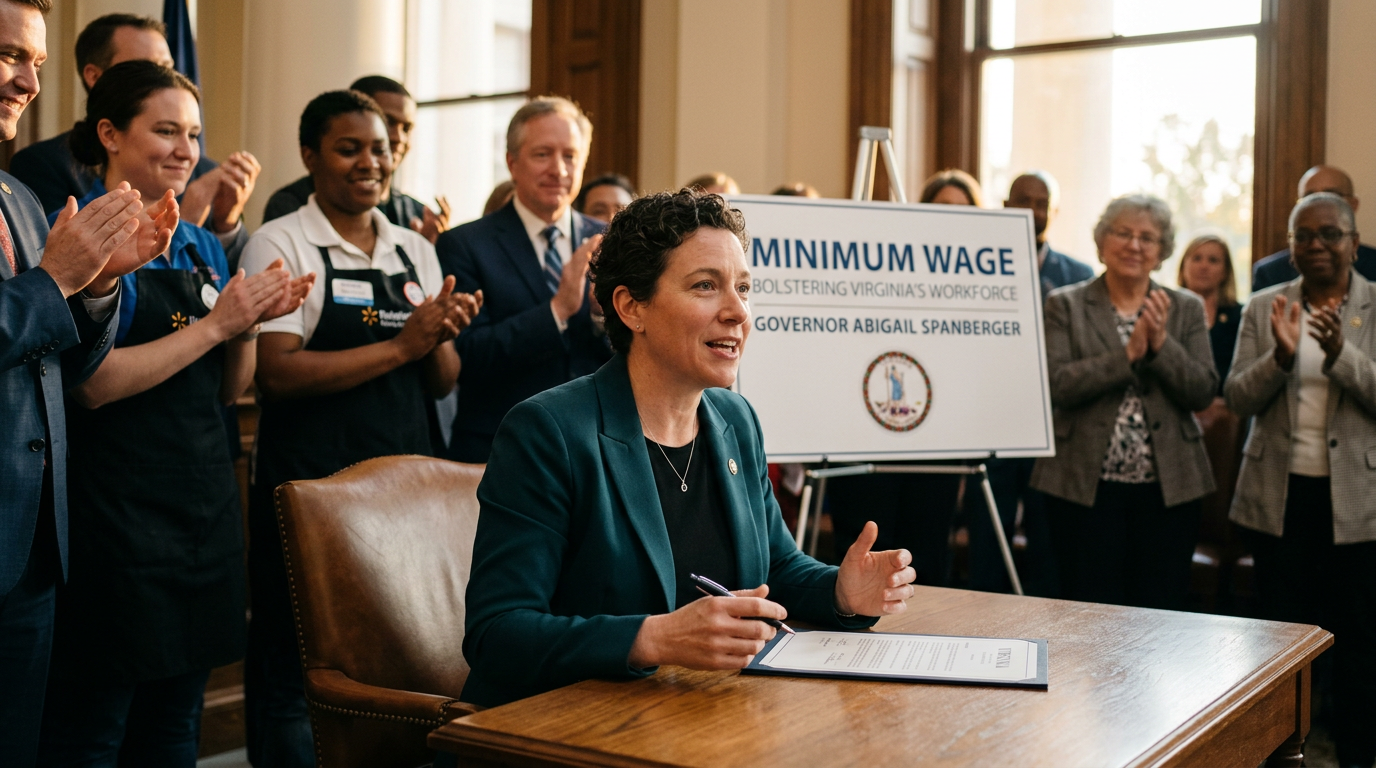
Virginia Governor Abigail Spanberger has recently signed landmark legislation that will incrementally raise the state's minimum wage to $15 per hour, a move poised to significantly impact workers and businesses across the Commonwealth, particularly within the economically vibrant Northern Virginia region [1]. The new law aims to provide stronger wages for Virginians and enhance connections to career opportunities, addressing long-standing concerns about economic equity and workforce development.
A Gradual Path to $15 Per Hour
The legislation, signed into law by Governor Spanberger, outlines a phased approach to reaching the $15 per hour minimum wage threshold [1]. While the specific incremental schedule was not detailed in the announcement, the commitment to a gradual increase is designed to allow businesses time to adapt to the new labor costs. This strategic implementation acknowledges the diverse economic landscapes within Virginia, from the bustling urban centers of Arlington and Fairfax to the more rural communities further south and west.
For many residents in the Washington metropolitan area's Virginia suburbs, where the cost of living is among the highest in the nation, this wage increase is expected to offer tangible relief. According to data from the Virginia Department of Housing and Community Development, areas like Arlington County and the City of Alexandria consistently rank high in housing and transportation costs. A higher minimum wage can help bridge the gap between earnings and essential expenses for entry-level workers and those in service industries.
Economic Impact on Northern Virginia
Northern Virginia, a critical economic engine for the Commonwealth, is home to a vast array of industries, from federal contractors and technology firms to a robust service sector encompassing retail, hospitality, and healthcare. The incremental increase to $15 per hour will directly affect thousands of employees in these sectors. Businesses, especially small and medium-sized enterprises (SMEs) in areas like Loudoun County and Prince William County, will need to adjust their operational budgets and potentially their pricing strategies.
Proponents of the wage hike argue that it will stimulate local economies by increasing consumer spending power. Workers with more disposable income are likely to spend it within their communities, supporting local businesses. Additionally, a higher wage could reduce employee turnover, as improved compensation often leads to greater job satisfaction and loyalty. This could, in turn, lower recruitment and training costs for employers, a significant benefit in a competitive labor market.
Beyond Wages: Career Opportunities
A key aspect of the legislation, as highlighted by Governor Spanberger, is not just securing stronger wages but also connecting more Virginians with career opportunities [1]. This suggests a broader vision that goes beyond simply raising hourly pay, potentially encompassing workforce development programs, job training initiatives, and partnerships between educational institutions and industries. The Virginia Department of Labor and Industry plays a crucial role in overseeing labor standards and could be instrumental in implementing programs that align with the legislation's goals.
For residents seeking to enter the workforce or transition to better-paying roles, the promise of enhanced career opportunities could mean increased access to vocational training, apprenticeships, and skills development programs that are responsive to the evolving needs of Virginia's economy. This focus is particularly relevant in the DMV region, which boasts a highly skilled workforce but also faces challenges in ensuring equitable access to high-demand jobs.
Virginia's Wage in Regional Context
With this legislative action, Virginia continues to align its minimum wage policies more closely with its neighboring jurisdictions in the DMV. Washington, D.C., currently has one of the highest minimum wages in the nation, while Maryland has also committed to incrementally raising its minimum wage. This regional convergence can help prevent wage arbitrage, where businesses might otherwise seek to relocate to areas with lower labor costs, and ensures a more level playing field for workers across the metropolitan area.
The move reflects a growing trend nationwide to address income inequality and ensure that full-time employment can provide a living wage. As the legislation rolls out, local governments, businesses, and community organizations will be instrumental in supporting its successful implementation, ensuring both economic stability for employers and improved livelihoods for Virginia's workforce.
📍 Local Resources
Provides information on wage laws, workplace safety, and workforce development programs for employees and employers in Virginia.
Offers job search assistance, unemployment benefits, and workforce information services to job seekers and employers across Virginia.
Explore more on this topic
Related Stories
Councilmember Janeese Lewis George Urges Caution on Waymo Legislation, Citing DC's Jobs Crisis
Ward 4 Councilmember Janeese Lewis George has urged the DC Council to pump the brakes on Waymo legislation this year, warning that rushing autonomous vehicle laws could worsen the city's "jobs crisis" by displacing workers. She emphasizes the need to prioritize safety and worker support alongside technological advancement.

Ousted Board of Appeals Chair Sues Howard County Council, Office of Law
Howard County's ousted Board of Appeals chair has filed a lawsuit against the County Council and the Office of Law, initiating a significant legal challenge within the local government structure. This action highlights internal administrative disputes and brings the county's appointment and oversight processes into public scrutiny.