'Don't Fairfax Me': Virginia Redistricting Fuels Rural-Urban Divide and 'Fairfaxphobia'
Share this article
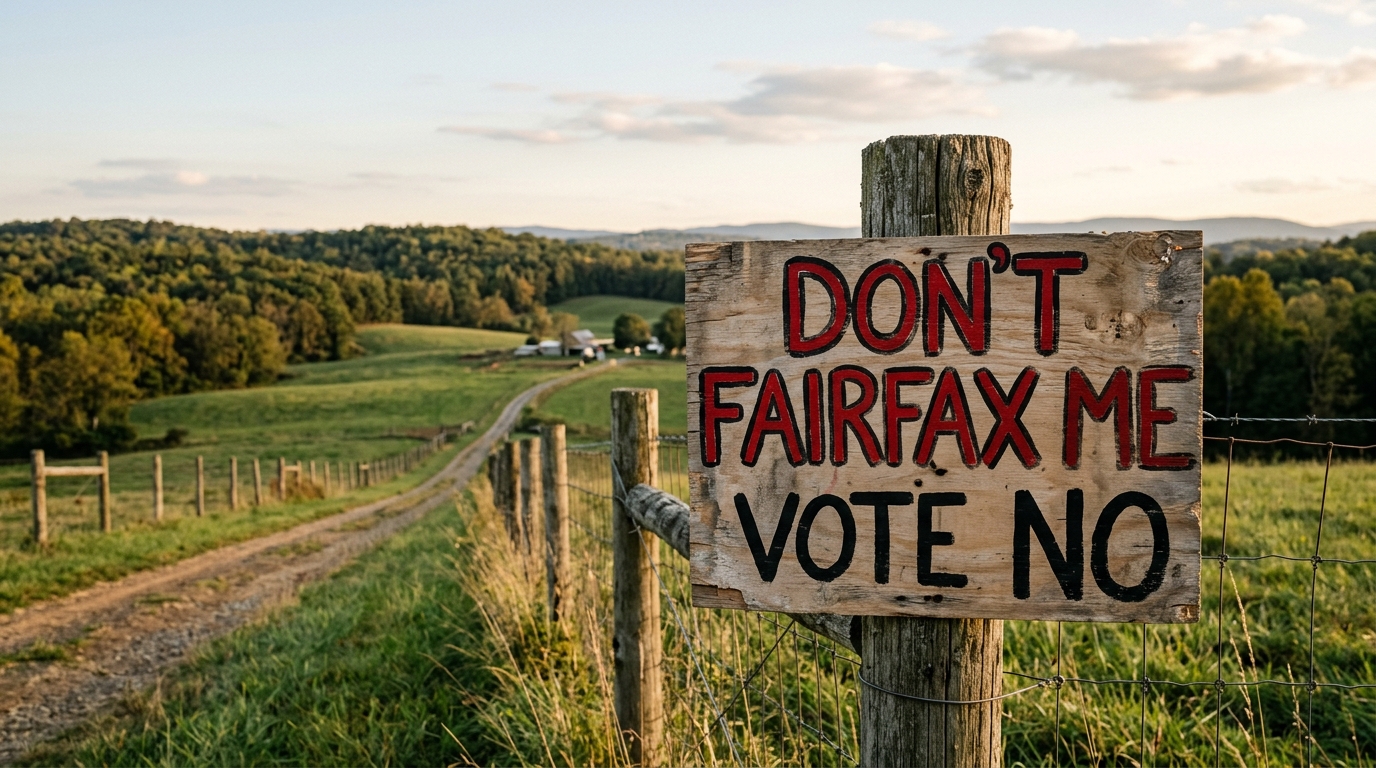
A contentious debate over redistricting in Virginia is manifesting in a striking phenomenon dubbed "Fairfaxphobia," as signs bearing messages like "Don't Fairfax Me" and "Vote No" have begun to emerge across the Commonwealth's more rural areas. This public display underscores a growing tension between the densely populated, often politically liberal Northern Virginia region, particularly Fairfax County, and the state's more conservative, agricultural communities.
The sentiment, as reported by FFXnow, citing Cardinal News, highlights a deep-seated concern among some rural Virginians about the perceived influence of Fairfax County's political and social values on their way of life. Redistricting, the process of redrawing electoral district boundaries, often after a census, is a highly charged political exercise that can reshape legislative power for a decade. In Virginia, this process is particularly sensitive, given the stark demographic and ideological differences across the state.
The Roots of 'Fairfaxphobia' in Virginia's Political Landscape
The term "Fairfaxphobia" encapsulates a fear that redistricting efforts might dilute rural representation or force rural districts to align with suburban or urban areas, thereby shifting their political leanings. Fairfax County, with its diverse population and significant economic power, is often seen as a bellwether for Northern Virginia's progressive politics. Its growth and influence have long been a point of friction with other parts of the state that hold different political priorities and cultural values.
This sentiment is not entirely new, but the visible signs and social media discussions, including those involving figures like Del. Wren, indicate an intensification of this regional divide. The current redistricting cycle, mandated by the Virginia Constitution, aims to ensure fair and equal representation, but the method and outcomes are always subject to intense scrutiny and political maneuvering. The Virginia General Assembly plays a crucial role in this process, often leading to impassioned debates on the floor.
Redistricting's Impact on Representation and Identity
For residents in rural Virginia, the fear is that new district lines could merge their communities with more urbanized areas, diminishing the electoral power of their specific concerns, such as agricultural policies, land use, and rural economic development. Conversely, residents of Fairfax County and other Northern Virginia localities seek districts that accurately reflect their growing populations and diverse needs, including transportation infrastructure, education funding, and economic innovation.
The process of redrawing these lines directly impacts who represents various communities in the House of Delegates and the Senate of Virginia, ultimately influencing legislation passed in Richmond. Understanding the Virginia Department of Elections' guidelines for this complex process is crucial for all residents.
Navigating the Urban-Rural Divide in the DMV
The "Fairfaxphobia" phenomenon highlights a broader challenge within the DMV region and indeed across many states: how to balance the diverse interests of urban, suburban, and rural populations within a single political framework. Fairfax County itself is a microcosm of this diversity, ranging from bustling urban centers like Tysons Corner to more suburban and semi-rural areas on its fringes. However, its overall political leanings and demographic trends often contrast sharply with other regions of the Commonwealth.
"Signs that say, ‘Don’t Fairfax Me’ and ‘Vote No’ started appearing in rural parts of Virginia, Cardinal News reported. And on social media, Del. Wren […]" — (FFXnow)
The debate is not merely about lines on a map; it's about power, identity, and the future direction of Virginia. As the redistricting process unfolds, community leaders, activists, and elected officials will continue to grapple with these fundamental questions, seeking to ensure that all voices are heard and fairly represented, even amidst such palpable regional tensions. For more context on Fairfax County's demographics and governance, residents can visit the Fairfax County government website.
The outcome of this redistricting cycle will undoubtedly shape Virginia's political landscape for the next decade, with lasting implications for residents from the Blue Ridge Mountains to the shores of the Chesapeake Bay, and particularly for those navigating the complex urban-rural dynamic that "Fairfaxphobia" so vividly illustrates.