Arts
Governor Spanberger to Veto Collective Bargaining Bill, Citing Bipartisan Concerns
Share this article
Advertisement
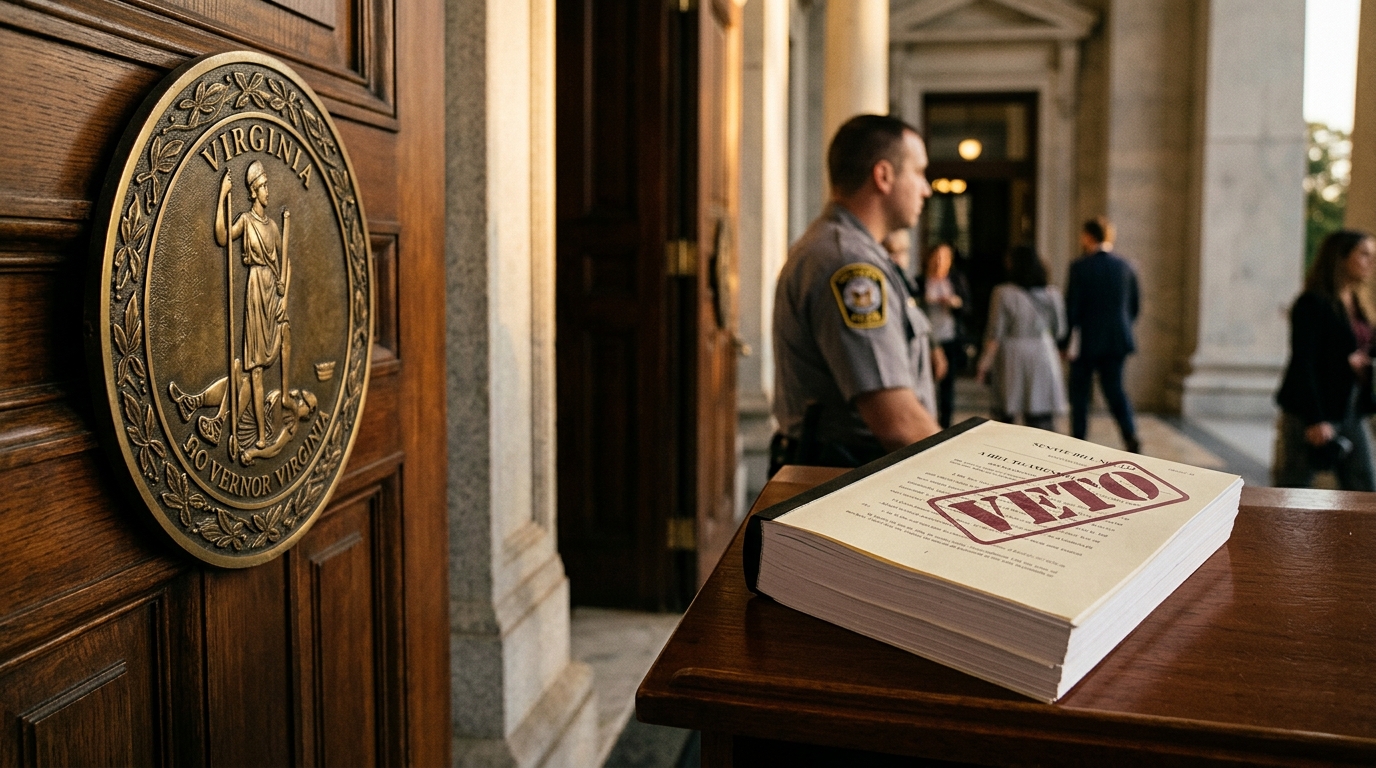
Virginia Governor Abigail Spanberger intends to veto a collective bargaining bill that recently passed through the General Assembly, a move she says is driven by bipartisan concerns regarding the legislation [1]. This decision marks a significant development in the ongoing debate over labor rights and public sector employment in the Commonwealth. The announcement signals a potential roadblock for advocates of expanded collective bargaining powers for state employees, and it highlights the complex political landscape surrounding labor legislation in Virginia. While the specific details of the "bipartisan concerns" were not immediately elaborated upon in the initial report, the Governor's stance indicates a broad spectrum of opposition to the bill's current form.
A Shifting Landscape for Virginia Labor
For decades, Virginia was one of the few states with a near-total ban on collective bargaining for public sector employees. That began to change in 2020 when the General Assembly passed legislation reversing a 1970s Supreme Court of Virginia ruling. This landmark bill gave local governments the *option* to authorize collective bargaining for their employees. Since then, several cities and counties across the Commonwealth, including those in Northern Virginia, have moved to establish collective bargaining agreements, impacting police officers, firefighters, and other municipal workers. However, extending these rights to *state* employees involves a different set of considerations and legislative hurdles. A bill at the state level would affect a vast workforce across numerous agencies, from those maintaining Virginia's extensive highway system to those working in state hospitals and administrative offices. The push for such a bill reflects a broader national trend toward strengthening worker protections and empowering labor unions.Governor Spanberger's intended veto stems from "bipartisan concerns," indicating a broad range of opposition to the collective bargaining bill.
The Governor's Role in Virginia's Legislative Process
In Virginia, once a bill passes both the House of Delegates and the Senate, it goes to the Governor's desk. The Governor has several options: sign the bill into law, amend it with recommendations (which the General Assembly can then accept or reject), or veto it. A veto sends the bill back to the General Assembly, which can then attempt to override the veto with a two-thirds majority vote in both chambers. Overriding a gubernatorial veto is a high bar, especially when "bipartisan concerns" are cited, suggesting that support for the bill might not be strong enough to overcome the Governor's opposition. Governor Spanberger, like her predecessors, plays a crucial role in shaping the final legislative outcomes in Richmond. Her decision to veto a bill, particularly one addressing such a fundamental aspect of labor relations, reflects a careful weighing of various stakeholder interests and political considerations. This isn't just about a single piece of legislation; it's about setting a precedent for how Virginia approaches its public workforce.What "Bipartisan Concerns" Could Mean
While the precise nature of the bipartisan concerns cited by Governor Spanberger remains to be detailed, such broad opposition often stems from a mix of fiscal, administrative, and philosophical viewpoints. On one hand, some legislators might worry about the potential financial impact on the state budget, including increased wage and benefit costs, or the administrative complexities of negotiating with multiple employee groups. Concerns could also arise regarding how collective bargaining might affect the efficiency and management of state agencies. From a different perspective, some lawmakers might hold philosophical objections to the expansion of union powers in the public sector, viewing it as potentially undermining the state's authority or creating an uneven playing field. The term "bipartisan" suggests that these concerns aren't confined to a single political party but rather represent a cross-section of views from both sides of the aisle. The fact that the Governor is highlighting this broad consensus could be an attempt to demonstrate the widespread nature of the opposition and to garner support for her veto.Impact on Virginia's Public Sector Employees
For the thousands of Virginians who work for the state, this veto means the immediate future of expanded collective bargaining rights remains uncertain. Many public sector employees have long sought the ability to negotiate wages, benefits, and working conditions through union representation, believing it would lead to fairer treatment and better outcomes. The 2020 law was a step in that direction for local workers, fueling hopes for similar protections at the state level. The Governor's decision will likely disappoint labor unions and employee advocacy groups who championed the bill. It also signals that future attempts to pass similar legislation will need to address a wider range of concerns to gain the necessary support for passage and gubernatorial approval. Public sector unions, like the Service Employees International Union (SEIU), have been actively organizing and advocating for these rights across the state, and this veto will undoubtedly influence their strategies moving forward.Looking Ahead: The Path for Collective Bargaining
With Governor Spanberger's announced intention to veto, the collective bargaining bill's journey through the General Assembly is likely at an end for this session. The General Assembly will have the opportunity to attempt an override, but given the "bipartisan concerns," such an effort would face an uphill battle. The debate over collective bargaining for state employees isn't going away. It's a conversation that has grown in prominence in Virginia and across the nation, driven by evolving labor dynamics and a renewed focus on worker rights. Expect labor groups to continue their advocacy, potentially refining future legislation to address the concerns raised by the Governor and other lawmakers. For residents in Northern Virginia and across the Commonwealth, this decision underscores the careful balance of powers in state governance and the persistent push and pull between labor interests and legislative priorities.📍 Local Resources
Virginia General Assembly - Legislative Information System
Track legislation, find your representatives, and review bill statuses.
🌐 Website: lis.virginia.gov
Office of the Governor of Virginia
Contact the Governor's office with your comments or concerns on state issues.
📞 Phone: (804) 786-2211
🌐 Website: governor.virginia.gov
📍 Location: State Capitol, Richmond, VA 23219
Virginia Department of Human Resource Management (DHRM)
Provides policies and resources for state employees in Virginia.
📞 Phone: (804) 225-2131
🌐 Website: dhrm.virginia.gov
Advertisement