Politics
Arlington County
Virginia Cracks Down: Falsely Claiming Service Dogs Now Illegal in the Commonwealth
Share this article
Advertisement
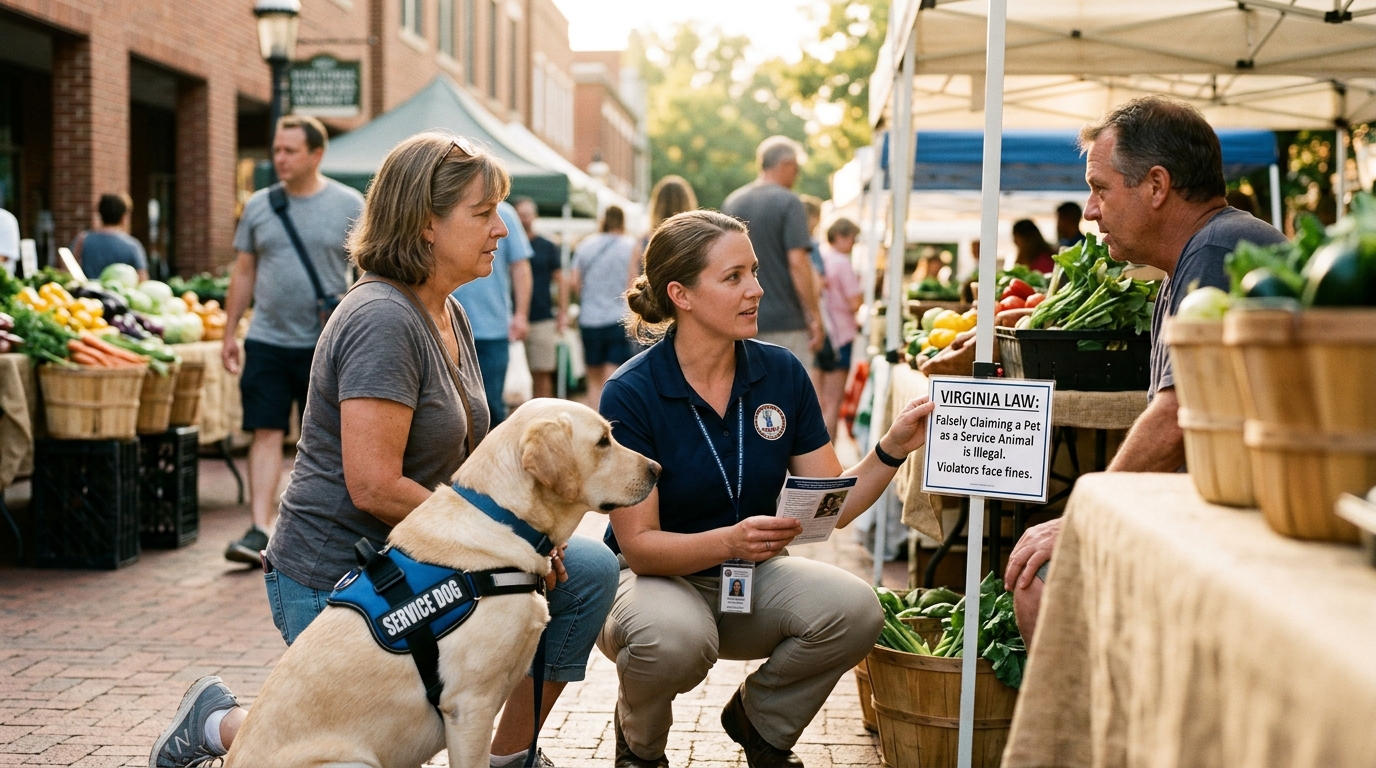
Imagine navigating your day with a crucial companion, a highly trained animal that provides essential assistance, only to face skepticism or outright hostility because others have abused the system. For years, people relying on legitimate service animals have contended with public misunderstanding and access challenges, often stemming from individuals falsely presenting pets as service dogs. Now, the Commonwealth of Virginia is taking a definitive stand to protect these vital partnerships. According to [1], it is now illegal in Virginia to falsely claim to have a service dog. This significant legislative update aims to reinforce the rights of individuals with disabilities and their genuine service animals, affecting businesses and residents across Northern Virginia and the wider Commonwealth. The new measure underscores a commitment to improving accessibility and trust in public spaces for those who truly depend on assistance animals.
Understanding Service Animals vs. Pets
The distinction between a service animal and a pet, or even an emotional support animal, is crucial. Under the Americans with Disabilities Act (ADA), a service animal is specifically defined as a dog (or miniature horse, in some cases) individually trained to do work or perform tasks for people with disabilities. These tasks can range from guiding the visually impaired, alerting the hearing impaired, pulling wheelchairs, to retrieving items or reminding a person to take medication. This training is rigorous and specific to the individual's disability. Emotional support animals, while providing comfort, do not have the same public access rights as service animals because they are not trained to perform specific tasks. Misrepresenting these animals as service dogs can create confusion and erode public trust, making it harder for legitimate service animal teams to go about their daily lives without challenge. Businesses, in particular, have often found themselves in a difficult position, trying to balance accommodating patrons with disabilities and preventing abuse of service animal regulations.The new Virginia law aims to safeguard the rights of individuals with disabilities and their legitimate service animals, ensuring greater clarity and respect in public spaces.
Why This Law Matters for Virginians
The impact of fraudulent service dog claims extends beyond mere inconvenience. When individuals bring untrained or ill-behaved pets into public places under the guise of being service animals, it can lead to disruptions, property damage, and even aggressive incidents. These situations often result in businesses becoming wary, sometimes inadvertently creating barriers for legitimate service dog teams. For a person relying on a service animal for their independence, being questioned or denied access due to someone else's deception is not just frustrating; it can be deeply isolating and discriminatory. This new law provides a legal framework for businesses, particularly those in high-traffic areas like Arlington, Alexandria, and Fairfax, to confidently uphold service animal policies without fear of legal reprisal from those making false claims. It empowers them to ask the two permissible questions under ADA guidelines: "Is the dog a service animal required because of a disability?" and "What work or task has the dog been trained to perform?" This clarity is invaluable for restaurants, retail stores, and transportation services throughout the DMV area.What This Means for Northern Virginia Residents
For residents across Northern Virginia, from Loudoun County to Prince William County, this law brings both responsibilities and protections. Individuals with disabilities who rely on service animals can expect a more respectful and understanding environment in public. It aims to reduce the instances where they might be unfairly scrutinized or challenged. On the other hand, those who might have previously considered passing off a pet as a service animal should be aware of the legal consequences. While the specific penalties for falsely claiming a service dog are not detailed in the initial report, such laws typically carry fines and could potentially involve other legal repercussions. The intent is not to punish pet owners, but to deter fraudulent behavior that undermines the rights and safety of people with disabilities. The new law aligns Virginia with a growing number of states taking similar actions to protect the integrity of service animal programs. Details on the full text of the legislation and its enforcement can often be found through the Virginia Law Library or the official Virginia state website. This legislative move is a step towards fostering a more inclusive and accessible Virginia. It's a reminder that true accessibility requires not only laws but also public understanding and respect for the tools and companions that enable individuals with disabilities to participate fully in community life. Residents and business owners alike should familiarize themselves with the updated regulations to ensure compliance and support a truly accessible environment.📍 Local Resources
Virginia Department for Aging and Rehabilitative Services (DARS)
Advertisement