Politics
Arlington County
Virginia Democrats Push for Return of Robert E. Lee Interpretive Materials to Arlington House
Share this article
Advertisement
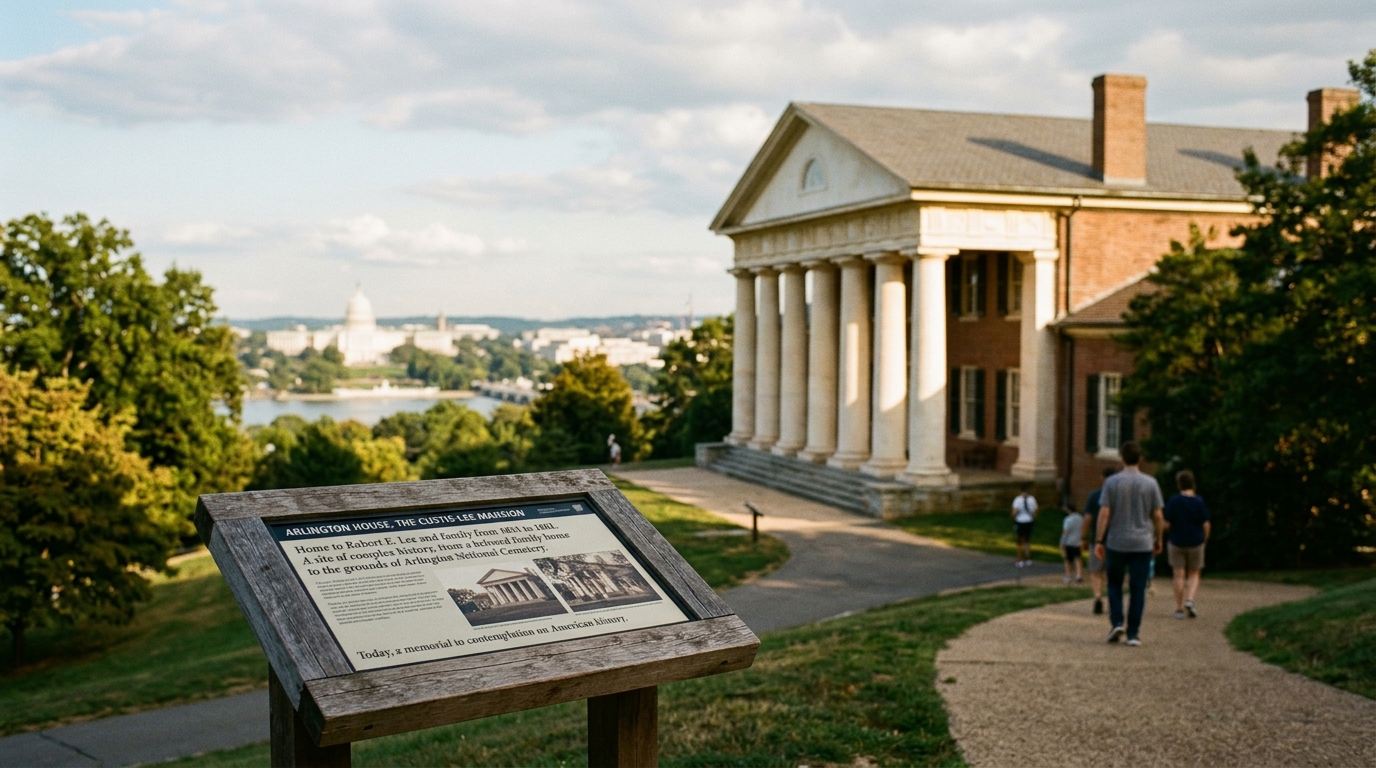
Arlington House, the Custis-Lee Mansion, stands as a poignant and complex landmark overlooking the Potomac, a site where the legacies of American history—from slavery to the Civil War—converge. It's a place that has long grappled with how to tell its story, and now, that narrative is once again at the forefront of a political debate. Virginia Democrats are stepping up, demanding the return of certain interpretive materials concerning Robert E. Lee to the historic site. This call from state Democrats highlights an ongoing discussion about historical accuracy and contextualization at sites managed by the National Park Service (NPS), especially those linked to the Confederacy. For many, Arlington House isn't just a grand estate; it's a critical lens through which to understand the nation's difficult past, including the lives of the enslaved people who lived and toiled there, and the pivotal role it played during the Civil War.
The Core of the Demand
The specific materials in question are described as "targeting Robert E. Lee," suggesting they provide a critical examination or re-contextualization of his life and legacy within the broader historical narrative of the house and the nation. The demand for their "return" implies these materials were either removed, altered, or sidelined from prominent display. While the exact details of these materials haven't been widely publicized, the very nature of the demand underscores a political desire to ensure that the full, unvarnished history of figures like Lee, including their connection to slavery and secession, remains a central part of the visitor experience [1].Virginia Democrats are advocating for a more comprehensive and critical historical interpretation of Robert E. Lee at Arlington House.
This isn't just about restoring old exhibits; it's about shaping the historical understanding of thousands of visitors who walk through Arlington House each year. The site, administered by the National Park Service, serves as the Robert E. Lee Memorial, but it also functions as a memorial to the enslaved people who were part of the Custis estate and later became the site of Arlington National Cemetery. Balancing these complex narratives is a delicate act, and political voices are clearly weighing in on how that balance should be struck. Arlington House: A Site of Contested History
Originally built by George Washington Parke Custis, George Washington's step-grandson, Arlington House was home to hundreds of enslaved people for decades. Robert E. Lee married Custis's daughter, Mary Anna Randolph Custis, and inherited the estate through her. His decision to resign from the U.S. Army and lead the Confederate forces had profound implications for the property. During the Civil War, Union troops seized the estate, eventually establishing what would become Arlington National Cemetery on its grounds. This history makes Arlington House a uniquely significant, and often contested, site. For years, many historical institutions, particularly in the South, presented a romanticized view of Confederate figures, often downplaying or omitting their roles in upholding slavery. In recent decades, there's been a significant push, particularly in the DMV area, to rectify these historical omissions and provide a more complete and accurate portrayal of the past. This includes acknowledging the brutality of slavery and the motivations behind the Confederacy. The demand from Virginia Democrats aligns with this broader movement, seeking to ensure that Arlington House's interpretation reflects contemporary historical scholarship and a commitment to telling a comprehensive story. The Commonwealth of Virginia itself has seen numerous debates and actions regarding Confederate monuments and historical markers.The Broader Context of Historical Reassessment
The debate over how to present figures like Robert E. Lee isn't new to the DMV. Across Washington, D.C., Maryland, and Northern Virginia, communities have grappled with street names, school names, and public monuments honoring Confederate leaders. From the removal of the Robert E. Lee statue in Charlottesville to ongoing discussions about historical markers, there's a clear trend towards re-evaluating historical narratives in public spaces. This push for critical interpretation at Arlington House is part of that larger regional and national dialogue. For residents of Arlington County, this debate hits close to home. Arlington House isn't just a national landmark; it's a visible part of the community's landscape, a place many have visited since childhood. How its story is told directly influences local identity and the understanding of the area's complex past. The push from state-level politicians reflects the ongoing effort to ensure that local historical sites accurately represent the diverse experiences and painful truths that shaped the region. The Arlington County government has also been involved in discussions surrounding historical markers and public spaces.What's Next for Arlington House's Narrative?
The demand from Virginia Democrats will likely put pressure on the National Park Service to review its current interpretive strategy at Arlington House. It signals a clear preference from a segment of the state's political leadership for a robust and critical examination of Robert E. Lee's role and the broader context of slavery at the site. Visitors to Arlington House, and indeed all historical sites, will continue to witness this evolution in how history is presented. For DMV residents, this ongoing discussion is a reminder that history isn't static; it's a dynamic narrative constantly being re-examined and re-told. Watching how the NPS responds to these demands will be key to understanding the future direction of historical interpretation at this significant national memorial. It's a testament to the idea that even centuries later, the stories of the past continue to shape our present and future understanding.Advertisement