Federal
Ballroom Project Tied to Trump Resumes in D.C. After White House Security Incident
Share this article
Advertisement
The engines of ambition, even those linked to a former president, often pause when security alarms blare at the nation's capital. But in a city known for its resilience and relentless pursuit of political and business objectives, operations tend to resume. That's the clear message from downtown Washington, D.C., where a project involving a ballroom associated with former President Donald Trump is reportedly back on track after a shooting incident near the White House caused a temporary halt to its progress [1]. While specific details about the shooting itself, including its timing, the individuals involved, or the precise nature of the "push" for the ballroom, remain publicly scarce from the available information, the resumption signals a return to a determined pursuit of the project. It underscores the unique environment of Washington, D.C., where high-profile developments frequently intersect with the city's intense security landscape.
White House Security: A Constant State of Alert
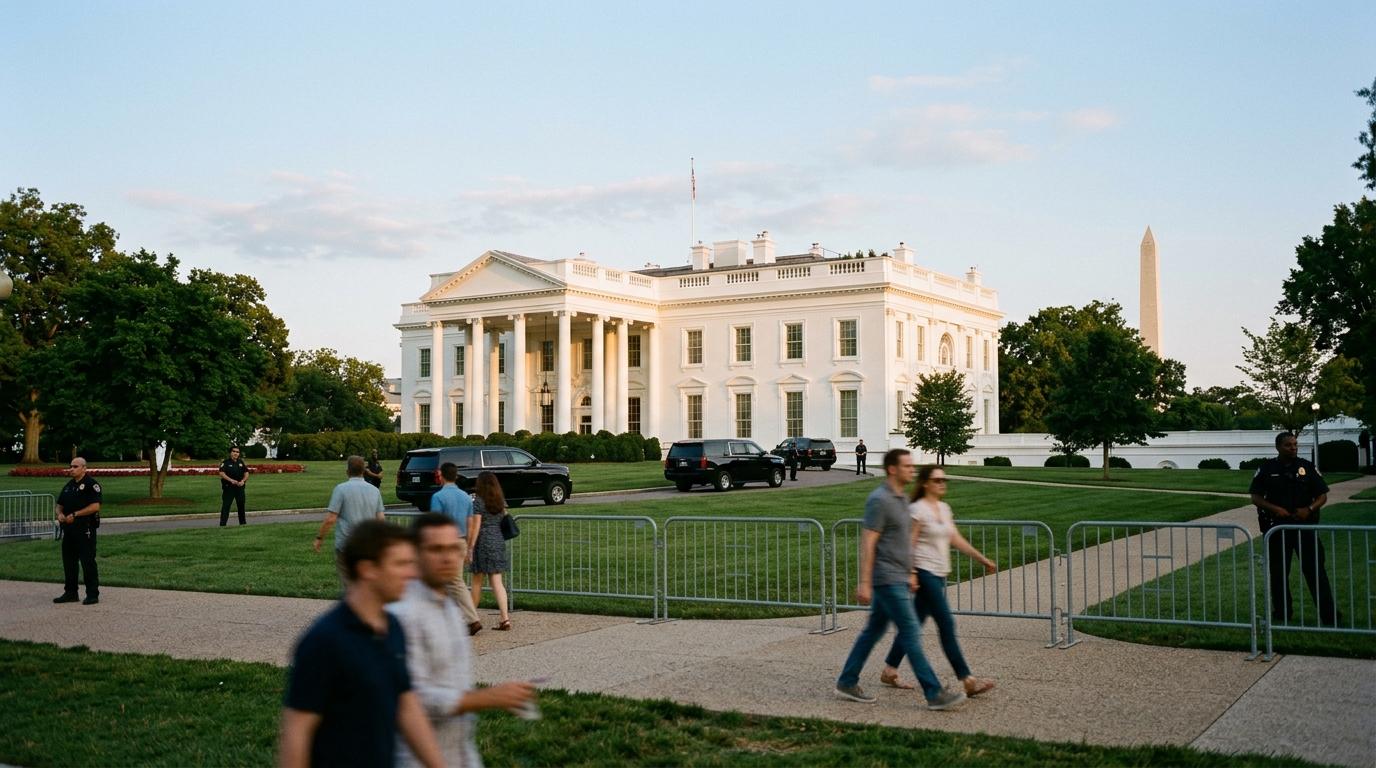
The White House complex, nestled at 1600 Pennsylvania Avenue NW, is arguably one of the most protected sites globally. It's not just the residence and workplace of the President of the United States, but a symbol of American democracy, drawing millions of visitors and constant scrutiny. This prominent location means that any security breach or incident, no matter its scale, immediately triggers extensive protocols and can send ripple effects across the surrounding downtown area. Federal agencies, primarily the U.S. Secret Service, are tasked with maintaining a robust security perimeter around the Executive Mansion and its grounds. This involves a multi-layered approach, from uniformed officers and surveillance technology to traffic control and airspace restrictions. Even minor disturbances can lead to temporary lockdowns, road closures, and heightened vigilance, impacting the daily lives of residents and commuters in the heart of D.C.The White House complex remains one of the most heavily secured locations in the world, its operations frequently adjusting to evolving security landscapes.
A shooting incident, even if contained or quickly resolved, invariably prompts a thorough review of security measures and a period of elevated caution. For nearby operations, especially those with a public profile, a temporary pause often becomes a necessary step to ensure safety, assess risks, and allow security forces to manage the situation without additional distractions. This immediate reaction is a testament to the city's priority on safeguarding its most critical institutions and the people within them. The "Push for Trump's Ballroom": Resuming Momentum
The mention of a "push for Trump's ballroom" suggests an ongoing effort related to a property or development associated with the former president. While the specific ballroom location isn't identified in the information available, Donald Trump's business ventures, particularly in the hospitality and real estate sectors, are well-known. His properties often carry his distinctive brand and have been the subject of public and political discourse, especially given his post-presidency activities. In a city like Washington, D.C., real estate projects, particularly those involving prominent figures, are rarely just about bricks and mortar. They often carry political weight, economic implications, and significant public interest. A "push" could involve anything from securing permits and zoning approvals to launching marketing campaigns or planning grand opening events. These efforts often require coordination with local D.C. government agencies, community groups, and various stakeholders. The resumption of this "push" after a White House shooting signals a determination to proceed despite external disruptions. It implies that any immediate security concerns that might have stalled the project have either been addressed or deemed manageable. For those involved, it's a clear indication that the business or political objectives tied to the ballroom remain a priority, and the broader context of the capital's security environment has been factored into the decision to move forward. The intersection of such a high-profile business endeavor with the intense political and security climate of D.C. is a hallmark of the city's unique character.Navigating Public Perception and Operational Pauses
High-profile projects, especially those connected to political figures, operate under constant public scrutiny. When an external event, like a security incident near the White House, occurs, it naturally casts a shadow over surrounding activities. For a project like "Trump's ballroom," a temporary pause following such an incident isn't just about immediate safety; it's also a strategic decision regarding public perception and operational logistics. Pausing allows for a period of assessment, both from a security standpoint and a public relations perspective. It gives stakeholders time to gauge the mood, ensure that all necessary precautions are in place, and avoid the appearance of insensitivity or disregard for public safety concerns. In a city where news travels fast and every action is scrutinized, demonstrating caution and responsiveness to significant events is paramount. The decision to resume the "push" implies that this period of assessment has concluded. It suggests that the project's developers and associated parties are confident in their ability to proceed safely and effectively, or that the initial disruption has passed. This resumption can be interpreted as a signal of resilience, a declaration that the capital's core activities, even those with strong political associations, will not be indefinitely derailed by isolated incidents. It's a testament to the enduring drive behind commercial and political ventures in the heart of the nation's capital, even in the face of unforeseen challenges.What This Means for Washingtonians
For residents of Washington, D.C., events near the White House, whether security incidents or high-profile developments, are part of the city's fabric. A shooting near the Executive Mansion, even if details are scant, can trigger a heightened sense of awareness and concern about safety in an already bustling urban core. Commuters might face unexpected traffic diversions, public transportation adjustments, and increased security checkpoints in the surrounding areas. The sight of emergency vehicles and federal agents is a familiar, though often unsettling, aspect of life in the capital. The resumption of a project like "Trump's ballroom" also has local implications. Depending on its specific location and purpose, it could bring new economic activity, such as job creation in hospitality or construction, or it could contribute to ongoing discussions about urban development and the use of prominent spaces in the city. For businesses in the area, a high-profile opening or ongoing operations could mean increased foot traffic or, conversely, additional security measures that affect accessibility. The interplay of national security concerns and local economic development is a constant balancing act in D.C. Residents learn to navigate these dynamics, understanding that their city is both a global power center and a vibrant community. The return to activity for a project tied to a former president, following a significant security event, highlights how quickly the capital adapts and moves forward, even as the echoes of disruption linger. As the "push" for Trump's ballroom continues, Washingtonians will likely watch for more concrete details about the project itself and observe how it integrates into the city's unique blend of politics, business, and security. It serves as a reminder that even after moments of tension, the capital's dynamic pulse quickly returns to its determined rhythm.📍 Local Resources
DC Homeland Security and Emergency Management Agency (HSEMA)
Provides emergency preparedness information, alerts, and coordination for D.C. residents.
📞 Phone: (202) 727-6161 (Non-Emergency)
🌐 Website: hsema.dc.gov
📍 Location: 2720 Martin Luther King Jr Ave SE, Washington, DC 20032
🕐 Hours: 24/7 for emergencies
DC Department of Behavioral Health (DBH)
Offers mental health services, crisis support, and substance use disorder treatment for D.C. residents.
📞 Phone: (202) 673-9300 (Access Helpline)
🌐 Website: dbh.dc.gov
📍 Location: 35 K St NE, Washington, DC 20002
🕐 Hours: Access Helpline 24/7
Metropolitan Police Department (MPD) - Non-Emergency
For non-emergency police assistance in Washington, D.C.
📞 Phone: (202) 727-9099
🌐 Website: mpdc.dc.gov
📍 Location: 300 Indiana Ave NW, Washington, DC 20001
🕐 Hours: 24/7
Advertisement