Community
Trinidad Cyclist's Simple Act Illuminates Shared Responsibility for DC's Bike Lanes
Share this article
Advertisement
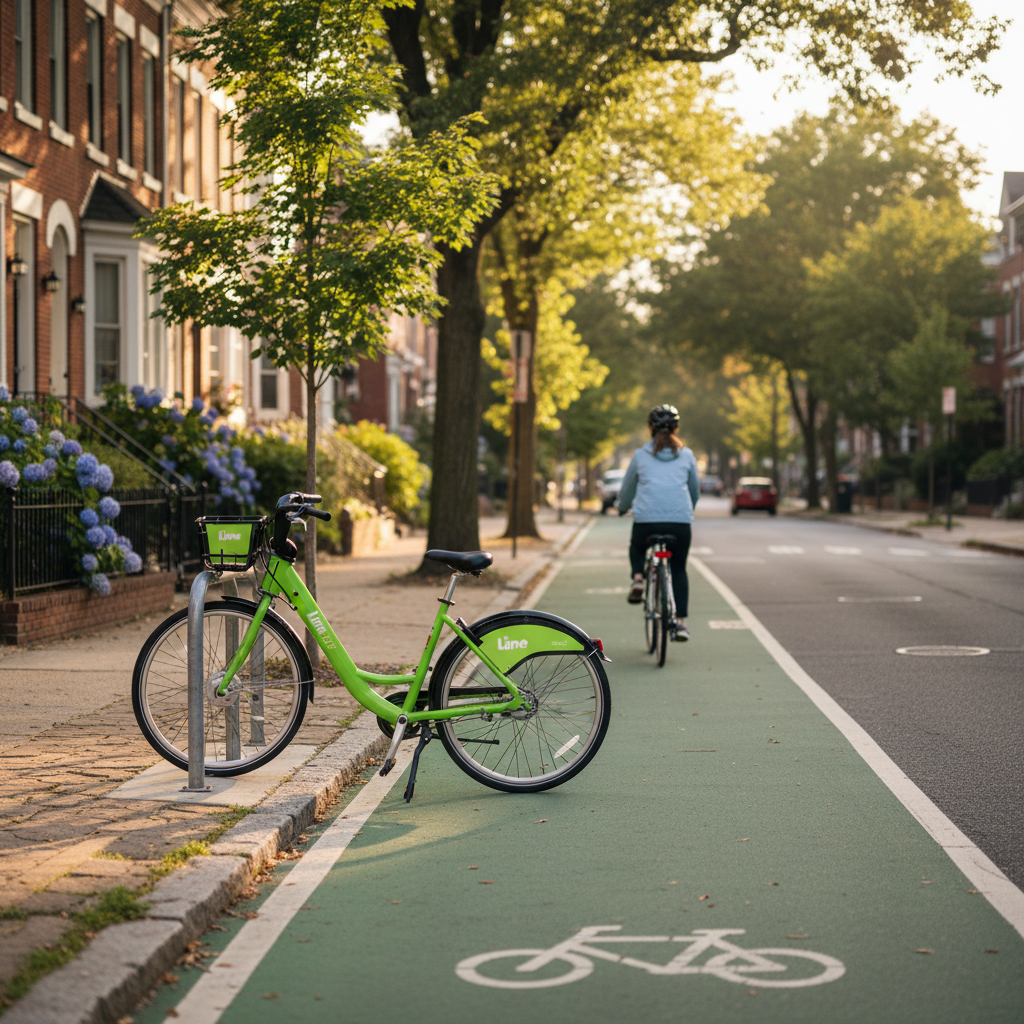
In the bustling heart of Northeast Washington, D.C., where the rhythms of urban life often lead to hurried glances and unspoken assumptions, a solitary act of civic grace recently unfolded. On a Saturday afternoon, April 18, 2026, amidst the dynamic flow of traffic and pedestrian movement near Florida Avenue NE and Staples Street NE, a cyclist paused their journey to mend a small but significant disruption to the city's shared spaces [1]. This quiet moment, observed and shared by a passerby, offers a poignant reflection on the collective spirit essential for a functioning community. The scene, captured and recounted to PoPville, describes a Lime bike lying perpendicular across an eastbound bike lane, effectively barricading the path for anyone else on two wheels. It was approximately 2 PM when the anonymous cyclist took it upon themselves to gently lift and reposition the shared mobility device, moving it from the direct line of travel onto the sidewalk, parallel and out of harm's way [1]. This gesture, seemingly minor, prevented potential accidents and smoothed the way for countless others who might have encountered the obstruction.
A Call for Collective Stewardship on DC Streets
The anonymous observer, deeply moved by the cyclist's initiative, articulated a profound truth about urban living. "It takes so many of us just a few moments of our day to keep the city safe for all who are in transit: pedestrians, cyclists, and motorists," they shared with Popville [1]. This sentiment underscores a fundamental principle: the vibrancy and safety of Washington, D.C.'s streets are not solely the purview of city planners or law enforcement, but a shared responsibility among all who traverse them."It takes so many of us just a few moments of our day to keep the city safe for all who are in transit: pedestrians, cyclists, and motorists."
The incident in Trinidad serves as a vivid reminder that the integrity of public infrastructure, from bike lanes to sidewalks, relies on a delicate balance of careful design and consistent public consideration. Bike lanes, critical arteries for a growing number of D.C. commuters and recreational riders, are maintained by the District Department of Transportation (DDOT). However, the day-to-day usability of these lanes often falls to the vigilance of individual citizens.
The Ethics of Shared Spaces and Dockless Mobility
The rise of dockless bike share programs, like Lime, has revolutionized urban transit, offering flexible and convenient options for navigating the District. However, this convenience also introduces challenges, particularly when bikes are left improperly parked or discarded, creating obstacles for pedestrians and other road users. The D.C. government has established guidelines for these services, with the goal of ensuring they integrate seamlessly into the urban fabric without compromising public safety or accessibility via the DDOT website. The observer's message went further, condemning the "abhorrent behavior" of intentionally or obliviously impeding the travel of others [1]. This highlights a tension between individual convenience and collective welfare. The cyclist's act transcends mere tidiness; it is a manifestation of an ethical commitment to the common good, a silent rebuke to apathy. Organizations like the Washington Area Bicyclist Association (WABA) advocate for safer cycling conditions and highlight the importance of respectful use of shared spaces.A Lesson in Civic Generosity
The anonymous individual who reported the incident concluded with a powerful commendation: "Bravo Zulu to this cyclist who took the time to remove an obstacle that untold numbers of others passed off as someone else’s problem to fix. I see you, and I admire your generosity" [1]. "Bravo Zulu," a naval signal of congratulations for excellent performance, perfectly encapsulates the quiet heroism displayed. This small, unheralded act in Trinidad, D.C., speaks volumes about the kind of city we aspire to build—one where individual kindness ripples outwards, fostering a safer, more considerate environment for all. It reminds us that citizenship is not merely about rights, but also about the small, daily duties we undertake to uplift our shared reality. It is in these moments of unassuming generosity that the true heart of a community beats strongest.📍 Local Resources
DC 311 - Report a Problem
For reporting non-emergency issues in the District, including obstructions in bike lanes, illegally parked vehicles, or other public space concerns.
📞 Phone: 311 (within DC) or (202) 737-4404 (outside DC)
🌐 Website: 311.dc.gov
Lime Customer Service
Contact for issues related to Lime bikes, including reporting misplaced or improperly parked scooters and bikes.
📞 Phone: (888) 546-3345
🌐 Website: li.me/help
Washington Area Bicyclist Association (WABA)
A local advocacy group working to make bicycling a safe, healthy, and enjoyable form of transportation and recreation in the Washington, D.C. metropolitan area.
📞 Phone: (202) 621-0060
🌐 Website: waba.org
📍 Location: 2599 Pennsylvania Ave NW, Washington, DC 20037
Advertisement
Explore more on this topic
Related Stories
Community
Virginia Mom Channels Grief into Lifesaving Seatbelt Advocacy for Teens
Arlington County·Community
A Virginia
3 days ago4 min read

Community
Maryland Bakery Rebrands, Expands Training for Adults with Disabilities
Montgomery County·Community
4 days ago4 min read
Community
Dupont Circle Braces for Annual 'Epic' Rummage Sale at St. Margaret's Episcopal Church This Saturday
Community
St. Margaret's Episcopal Church in Dupont Circle is holding its "epic" annual rummage sale this Saturday, October 17. The one-day event promises clothing, jewelry, housewares, and more, with all proceeds supporting church ministries and donations benefiting local nonprofits like Charlie's Place.
4 days ago4 min read