The Unrepresented Capital: Understanding DC's Lack of Voting Power
Share this article
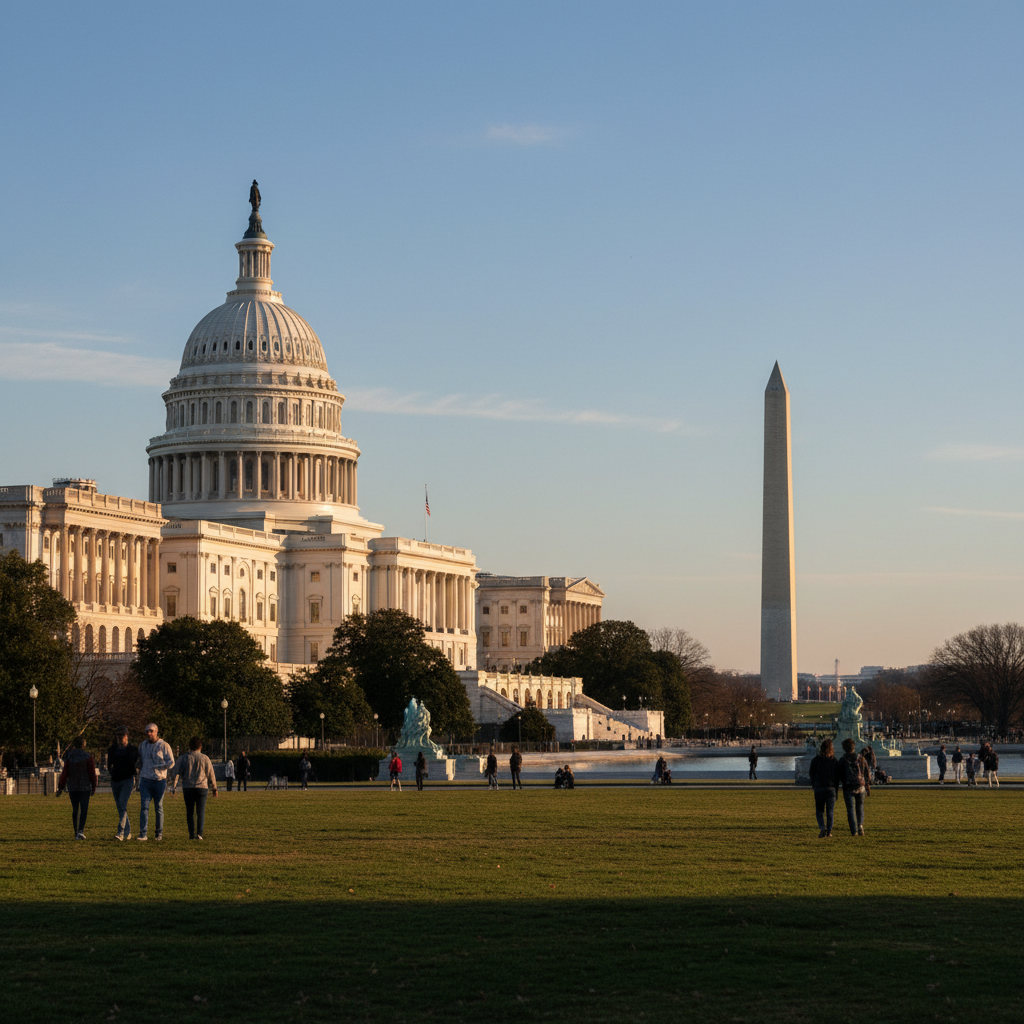
For anyone who lives in, works in, or simply passes through Washington, D.C., the phrase "Taxation Without Representation" emblazoned on thousands of license plates is a stark, daily reminder of a fundamental democratic imbalance. Despite being home to over 700,000 American citizens – a population larger than two states – the District of Columbia lacks full voting representation in the U.S. Congress, a situation with deep historical roots and profound modern-day implications for its residents. This article will unravel the complexities of D.C.'s unique status, exploring its origins, its impact on daily life, and the persistent debate over its future.
Quick Answer: Washington, D.C. operates as a federal district, not a state, which means its citizens do not have voting representation in the U.S. Senate and only a non-voting delegate in the House of Representatives. Despite paying federal taxes and abiding by federal laws, D.C. lacks full self-governance, with Congress retaining ultimate authority over its local budget and legislation, leading to ongoing calls for statehood or full voting rights.
A Delegate, Not a Vote: The Core Problem for D.C. Residents
At the heart of the "dc voting representation" issue is the fact that D.C. residents, unlike those in Maryland or Virginia, do not have a voice that truly counts in federal lawmaking. While every state sends two senators and a number of voting representatives to Congress based on population, D.C. is represented solely by a non-voting delegate in the House of Representatives, currently Eleanor Holmes Norton. This delegate can introduce bills, participate in committee discussions, and even vote in committee, but cannot cast a vote on the House floor when legislation is being passed.
This unique status means that federal laws impacting D.C. residents – from national security policy to environmental regulations that affect the Potomac River – are decided upon by members of Congress who are accountable to voters in other states, not to the citizens of the District. Furthermore, D.C. has no representation in the U.S. Senate whatsoever, leaving its interests completely unrepresented in the chamber where many critical decisions, including judicial appointments and treaty ratifications, are made. This democratic deficit is why "Taxation Without Representation" has become a rallying cry and a visible protest on D.C.'s license plates, symbolizing the residents' frustration with contributing financially and civically to the nation without having an equal say in its governance.
A Capital's Peculiar History: Why D.C. Isn't a State
To understand D.C.'s current predicament, one must look back to the nation's founding. The U.S. Constitution, in Article I, Section 8, Clause 17, grants Congress exclusive jurisdiction "over such District (not exceeding ten Miles square) as may, by Cession of particular States, and the Acceptance of Congress, become the Seat of the Government of the United States." The Founding Fathers, wary of a state exerting undue influence over the federal government, envisioned a neutral federal district separate from any state.
The land for the District of Columbia was ceded by Maryland and Virginia in 1790. Initially, residents of the District retained their voting rights in their former states. However, with the passage of the Organic Act of 1801, Congress formally assumed control, effectively disenfranchising D.C. residents from federal elections and establishing a federal city with limited self-governance. While part of the original District, Alexandria, Virginia, was retroceded to Virginia in 1846, the remaining portion, which constitutes modern-day D.C., has remained under federal control. Over the centuries, D.C. has gained some measure of local autonomy, including the right to elect a mayor and city council, but this authority remains subservient to Congress, which can overturn local laws or meddle in its budget at will.
Beyond the Ballot Box: How Lack of Representation Impacts Daily Life
The absence of full voting representation isn't just an abstract constitutional issue; it profoundly impacts the daily lives of D.C.'s more than 700,000 residents. Perhaps the most significant consequence is Congress's ultimate authority over the District's local budget. Even after D.C. residents vote on their budget, Congress must approve it. This has historically led to political interference, with members of Congress from other states dictating how D.C. can spend its locally raised tax dollars on issues ranging from Metro funding to reproductive health services or the sale of cannabis, even when those issues have been approved by D.C. voters.
Beyond the budget, Congress can also overturn or block local laws passed by the D.C. Council and signed by the Mayor. For instance, in recent years, Congress has considered overturning D.C.'s criminal code reforms, a move widely seen by D.C. residents as an affront to local self-governance. Federal control also extends to the appointment of D.C.'s judges and the U.S. Attorney for the District, who are not chosen by D.C. residents but by federal officials. In times of crisis, the Mayor of D.C. cannot unilaterally deploy the D.C. National Guard; that authority rests with the President, often requiring a federal order, as was critically evident during the January 6th Capitol attack. This constant federal oversight limits D.C.'s ability to manage its own affairs, plan for its future, and respond effectively to the needs of its diverse population.
The Statehood Debate: Arguments for and Against
The "dc voting representation" debate largely centers on whether the District should become the 51st state. The arguments for statehood are rooted in principles of democracy and self-determination.
Arguments for Statehood
- Taxation Without Representation: D.C. residents pay more federal taxes per capita than residents of any state, yet lack full voting rights in Congress.
- Democratic Principle: It is fundamentally undemocratic for over 700,000 American citizens to lack a voice in the national legislature. D.C. has a larger population than Wyoming or Vermont, and a comparable population to several other states.
- Self-Determination: Statehood would grant D.C. full control over its local laws and budget, free from congressional interference.
- National Security: The Mayor would have direct command over the D.C. National Guard, enabling faster response in emergencies.
Arguments Against Statehood
Opponents of statehood often raise constitutional, historical, and political concerns.
- Constitutional Concerns: Some argue that the "District Clause" of the Constitution (Article I, Section 8, Clause 17) requires a federal district separate from any state. Proponents counter that the proposed state, "Washington, Douglass Commonwealth," would carve out a small federal enclave for government buildings, leaving the residential and commercial areas as a state.
- 23rd Amendment: This amendment grants D.C. electoral votes in presidential elections. Opponents argue statehood would require its repeal or modification.
- Partisan Power Grab: D.C. is overwhelmingly Democratic, and statehood would likely add two Democratic senators and a Democratic representative, shifting the balance of power in Congress.
- Founders' Intent: Some argue that the Founders intended a neutral federal capital, not a state, to prevent any single state from having undue influence over the national government.
The Path to Statehood: Legislative Efforts and Political Hurdles
The push for D.C. statehood has gained significant momentum in recent years, particularly with the introduction of legislation like H.R. 51 (the "Washington, D.C. Admission Act") in the House of Representatives and S. 51 in the Senate. H.R. 51 has passed the House multiple times, most recently in 2021, demonstrating a growing level of support among House Democrats. The bill proposes creating the state of "Washington, Douglass Commonwealth," while retaining a small federal district encompassing the U.S. Capitol, the White House, and other federal buildings.
However, the legislation faces an uphill battle in the Senate, where it has consistently stalled. While a simple majority is technically needed to pass a statehood bill, the Senate's filibuster rule effectively requires 60 votes to overcome procedural hurdles, a threshold that D.C. statehood proponents have yet to achieve. This political reality means that despite strong public support within D.C. and increasing national awareness, the path to statehood remains obstructed by partisan divisions and the entrenched nature of Senate rules. Advocacy groups like DC Vote and the Office of the D.C. Delegate continue to lobby tirelessly, but the ultimate decision rests with a deeply divided Congress.
Alternative Futures? Other Solutions Considered
While statehood is the primary focus of D.C.'s voting rights advocates, other solutions have been proposed over the years, each with its own set of complexities and limitations.
Retrocession to Maryland
One historical alternative is retrocession, where D.C. would return its residential and commercial land to Maryland, making its residents citizens of that state and granting them full voting rights. This concept has historical precedent, as the Virginia portion of the original District was retroceded in 1846. However, modern retrocession faces significant hurdles: it would require approval from D.C. voters, the Maryland legislature, and the U.S. Congress. Maryland has historically been hesitant to absorb D.C., citing potential financial burdens and political shifts. Furthermore, many D.C. residents prefer statehood, which would grant them full self-governance and an independent identity, rather than becoming part of another state.
Constitutional Amendment
Another theoretical path is a constitutional amendment to grant D.C. full voting rights or statehood. This approach, however, is notoriously difficult, requiring a two-thirds vote in both the House and Senate, and ratification by three-fourths of the states (38 states). Given the current political climate, achieving such broad consensus is highly improbable, making it a less viable option than a legislative act of statehood.
Voting Rights Act Amendment
Some have suggested amending the Voting Rights Act to include D.C., but this would likely only address federal election participation, not the fundamental issues of congressional oversight, budget control, or Senate representation. Ultimately, these alternatives are often seen as less comprehensive or less achievable than the direct path to statehood, which would resolve the core issues of democratic parity and local autonomy for the nation's capital.
Frequently Asked Questions
Does Washington D.C. have any representation in Congress?
Yes, Washington D.C. has a non-voting delegate in the U.S. House of Representatives. This delegate can introduce legislation, speak on the House floor, and vote in committees, but cannot cast a decisive vote when legislation is brought before the full House. D.C. has no representation in the U.S. Senate.
Why do D.C. residents pay federal taxes if they don't have full voting rights?
D.C. residents are U.S. citizens and, like citizens in all states, are subject to federal tax laws. The argument "Taxation Without Representation" highlights this paradox: they contribute financially to the federal government without having a full voice in how those funds are raised or spent, a principle that fueled the American Revolution.
What are the primary arguments in favor of D.C. statehood?
Proponents argue that D.C. statehood is a matter of basic democratic fairness, granting full voting rights to over 700,000 tax-paying American citizens. They also emphasize that D.C. has a larger population than two existing states and that statehood would provide full local self-governance, free from congressional interference in its budget and laws.
What are the main constitutional objections to D.C. statehood?
Opponents primarily cite the "District Clause" of the Constitution (Article I, Section 8, Clause 17), which mandates a federal district separate from any state. They also raise concerns about the 23rd Amendment, which grants D.C. electoral votes, and the potential for a partisan power shift in Congress if a new, reliably Democratic state is added.
Has D.C. ever been part of a state, or considered retrocession?
The land that became D.C. was originally ceded by Maryland and Virginia. The Virginia portion of the District, including Alexandria, was retroceded back to Virginia in 1846. Modern retrocession to Maryland has been discussed as an alternative to statehood, but it would require approval from D.C., Maryland, and Congress, and has not gained widespread support over the direct path to statehood.
Explore more on this topic
Related Stories
Councilmember Janeese Lewis George Urges Caution on Waymo Legislation, Citing DC's Jobs Crisis
Ward 4 Councilmember Janeese Lewis George has urged the DC Council to pump the brakes on Waymo legislation this year, warning that rushing autonomous vehicle laws could worsen the city's "jobs crisis" by displacing workers. She emphasizes the need to prioritize safety and worker support alongside technological advancement.

Ousted Board of Appeals Chair Sues Howard County Council, Office of Law
Howard County's ousted Board of Appeals chair has filed a lawsuit against the County Council and the Office of Law, initiating a significant legal challenge within the local government structure. This action highlights internal administrative disputes and brings the county's appointment and oversight processes into public scrutiny.