Supreme Court Upholds Same-Sex Marriage Rights, Rejecting Challenge
Share this article
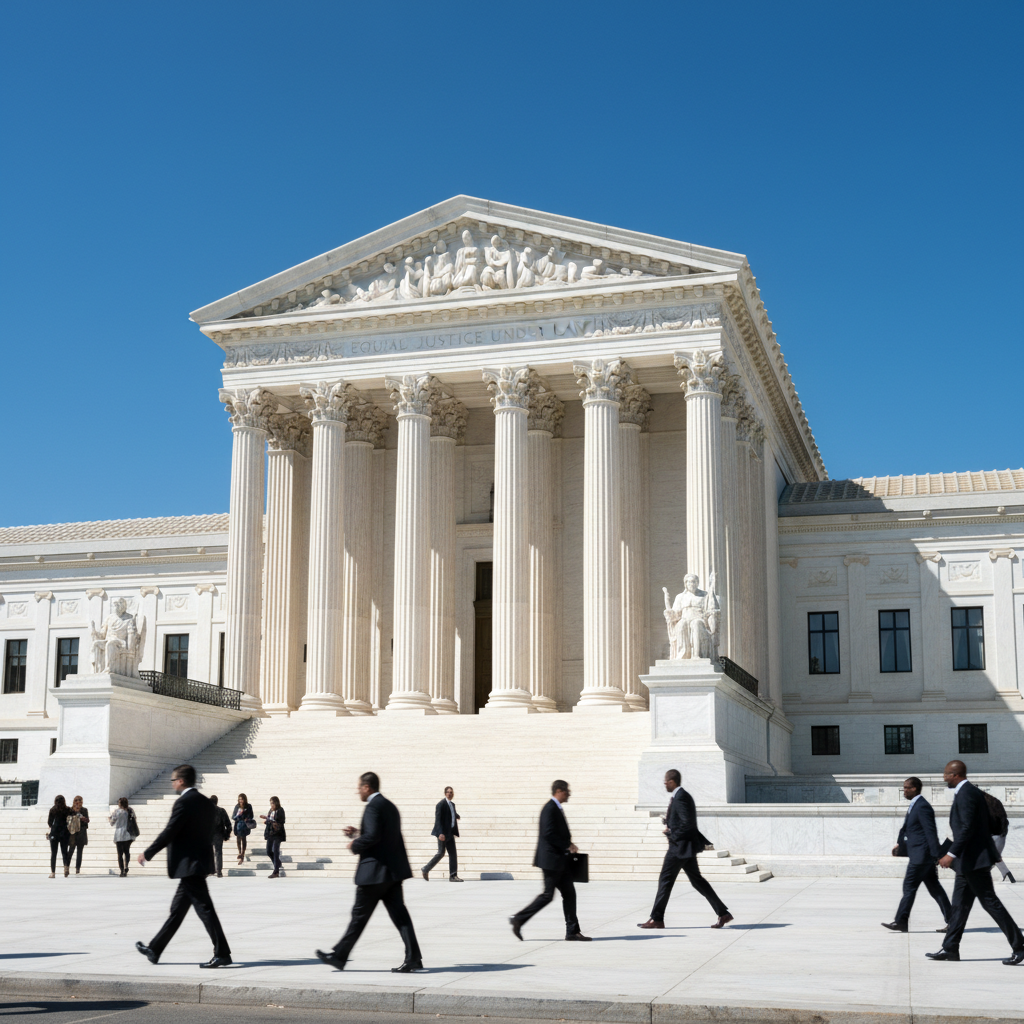
The U.S. Supreme Court has definitively rejected a bid to reconsider its landmark 2015 decision that legalized same-sex marriage nationwide. The court's refusal to hear a case challenging the legality of gay marriage effectively preserves the rights of LGBTQ+ individuals across the country, including those residing in the Washington, D.C. metropolitan area.
A Decisive Stand on Marriage Equality
In a move that solidifies marriage equality, the Supreme Court declined to review a lower court’s ruling that affirmed same-sex marriage. This action means that the precedent set by *Obergefell v. Hodges*, the 2015 decision that recognized the right to marry for same-sex couples nationwide, remains intact. While the Supreme Court did not issue a lengthy opinion explaining its denial, the decision speaks volumes, signaling a commitment to upholding established civil rights protections.
The case that reached the Supreme Court involved a challenge that originated in lower courts, with proponents of the challenge hoping to use it as a vehicle to overturn or significantly alter the landscape of marriage equality. However, the highest court in the nation chose not to engage with the matter, effectively shutting down further legal avenues to dismantle the 2015 ruling.
The Significance of *Obergefell v. Hodges*
The *Obergefell v. Hodges* decision, handed down in June 2015, was a monumental victory for the LGBTQ+ rights movement. It established that the fundamental right to marry is guaranteed to same-sex couples by both the Due Process Clause and the Equal Protection Clause of the Fourteenth Amendment to the U.S. Constitution. This ruling invalidated state bans on same-sex marriage and required all states to recognize lawful same-sex marriages performed elsewhere.
For residents of the Washington, D.C., area, including those in Maryland and Virginia, the *Obergefell* decision brought immediate and lasting change. It ensured that same-sex couples could marry and have their unions recognized equally under the law, regardless of their specific locality within the District, Maryland, or Virginia. This had tangible effects on everything from hospital visitation rights and inheritance to tax benefits and social security.
"The Supreme Court's decision not to take up this case is a crucial affirmation of the rights and dignity of LGBTQ+ individuals and families across the nation. It provides much-needed stability and reassurance." - Sarah Johnson, Senior Policy Analyst at the Equality Federation
Local Impact and Community Response
While the Supreme Court's decision is national in scope, its implications are deeply felt at the local level. In communities across the DMV, LGBTQ+ individuals and allies have long advocated for equality. The continued legal protection of same-sex marriage rights offers a sense of security and continuity for thousands of families.
Advocacy groups in the region, such as Equality Maryland and Equality Virginia, have historically worked to advance LGBTQ+ rights. Their efforts, alongside those in Washington, D.C., have contributed to a more inclusive environment. This latest Supreme Court action reinforces the progress made and signals that marriage equality is a settled issue legally.
The Path Forward
The Supreme Court’s action underscores the enduring nature of the *Obergefell* ruling. Legal experts suggest that while further challenges to LGBTQ+ rights may arise, the path to overturning established rights like marriage equality becomes increasingly difficult, especially without the Court's willingness to hear such cases. This decision provides a robust legal shield for same-sex marriages across all fifty states and U.S. territories.
For residents of the DMV, this means continued legal recognition and protection for same-sex marriages. The decision also offers a moment of reflection on the progress of civil rights in the United States and the role of the judiciary in safeguarding those rights. The Supreme Court's stance reinforces the principle that all citizens are entitled to equal protection under the law, a cornerstone of American democracy.
The Supreme Court's decision highlights the importance of its role in interpreting the Constitution and protecting fundamental rights. While the court remains a subject of intense public scrutiny, its actions in cases like these have profound and lasting impacts on the lives of millions of Americans, including those in the vibrant communities of Washington, D.C., Maryland, and Virginia.
For more information on civil rights and legal protections, individuals can consult resources from the U.S. Department of Justice's Civil Rights Division, available at justice.gov/crt.
📍 Local LGBTQ+ Resources
Advocates for the LGBTQ+ community in the Washington, D.C. metropolitan area, providing resources and support.
The LGBTQ+ Community Center of Washington, D.C., offering programs, services, and community space.
Works to ensure and promote full equality for LGBTQ+ Marylanders through advocacy, education, and community organizing.
Dedicated to advocating for LGBTQ+ equality in Virginia through policy change, education, and community engagement.