Courts
Arlington County
Supreme Court Upholds Virginia's Congressional Map, Rejecting Democratic Bid to Reshape Districts
Share this article
Advertisement
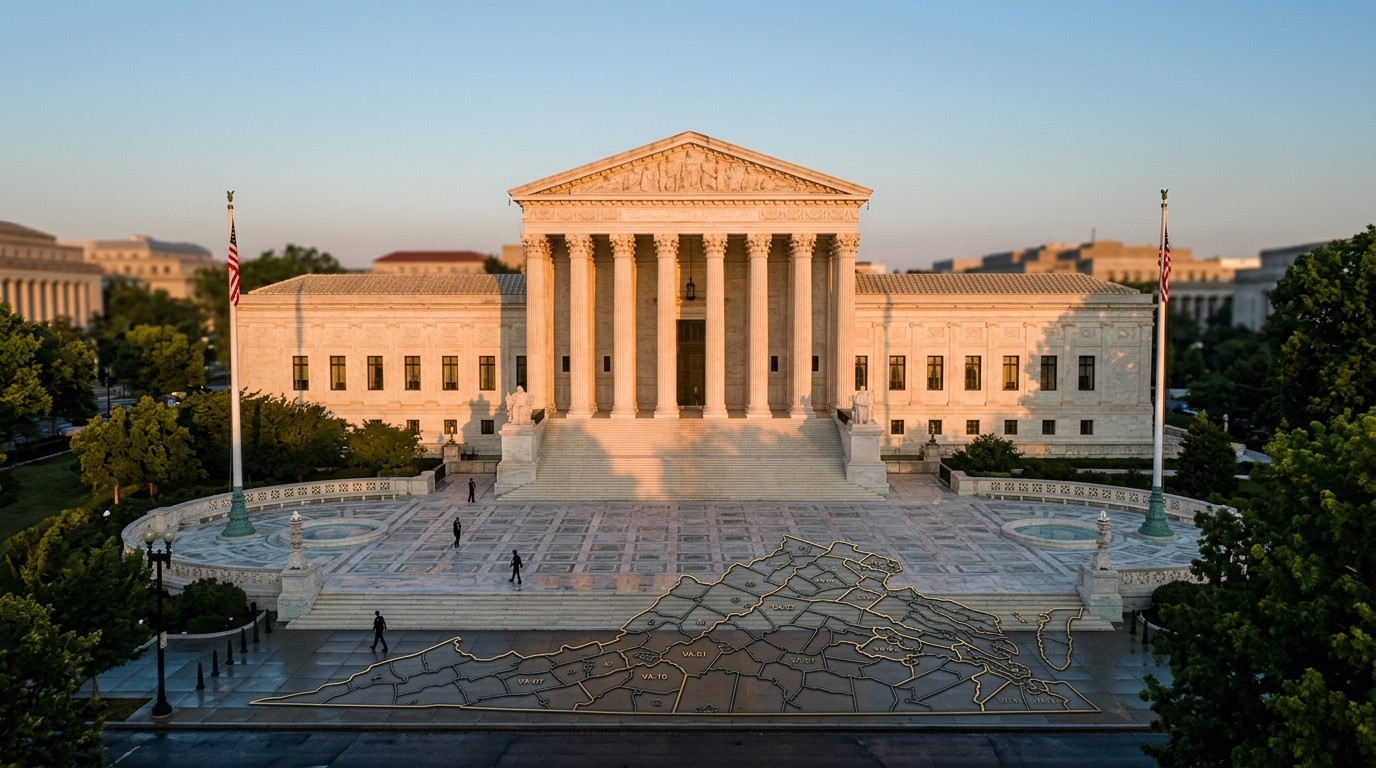
The highest court in the land has spoken, once again shaping the electoral landscape right here in the DMV. The U.S. Supreme Court recently turned down Virginia's push to reinstate a congressional map that some hoped would give Democrats a leg up in future elections. This decision effectively locks in the current district boundaries, a significant moment for voters and political hopefuls across the Commonwealth. This ruling means that the map drawn previously, which had faced challenges from those seeking to restore a more Democratic-leaning configuration, will remain in place for the foreseeable future. For residents across Northern Virginia, from Arlington to Fairfax, this isn't just a political footnote; it's a decision that directly impacts who represents them in Washington and how competitive those races will be.
A High Stakes Battle Over Electoral Lines
Redistricting is often a contentious process, a complex dance of demographics and political strategy that plays out every ten years after the U.S. Census. State legislatures and independent commissions are tasked with redrawing congressional and state legislative districts to reflect population shifts. These lines determine which communities are grouped together, influencing everything from local representation to national power balances. Virginia, like many states, has seen its share of legal battles over these maps, with both parties often accusing the other of gerrymandering — drawing districts to favor one political party over another. The specific map at the heart of this recent Supreme Court action was one that Virginia had sought to restore, arguing for its legitimacy. The Supreme Court's refusal to hear the case, a common way the court signals it won't intervene, means the lower court's decision on the current map stands firm. This isn't an endorsement of the map's fairness, but rather a procedural decision that leaves the existing boundaries untouched.The Supreme Court's decision locks in a congressional map that will shape Virginia's political landscape for the foreseeable future.
Impact on Northern Virginia Voters
For the millions of Virginians living in the DMV, particularly in populous areas like Arlington County and parts of Fairfax County, congressional district lines dictate a fundamental aspect of their democratic participation. These lines determine which candidates appear on their ballots for the U.S. House of Representatives and how their votes contribute to the overall political direction of the state and the nation. A map favoring one party tends to create "safe" districts, where incumbents face little challenge, and "swing" districts, where elections are highly competitive. The map now solidified by the Supreme Court's action will influence the types of campaigns run in these districts, the issues candidates focus on, and ultimately, who represents these communities in Congress. Understanding these boundaries is crucial for residents engaging in local politics, volunteering for campaigns, or simply heading to the polls. More information on Virginia's electoral process can often be found through the Virginia Department of Elections.The Supreme Court's Role in Redistricting
The Supreme Court frequently acts as the final arbiter in disputes over electoral maps, stepping in when lower courts or state bodies cannot resolve challenges. While the Court has previously ruled against extreme partisan gerrymandering in some cases, its recent history has seen it take a more hands-off approach to challenges based solely on political fairness, often leaving such matters to state courts. This latest decision aligns with that trend, emphasizing the federal judiciary's limited role in what many consider inherently political questions. For those interested in the broader context of how the nation's highest court operates, its official proceedings and decisions are regularly updated on the Supreme Court of the United States website. The process of challenging and defending these maps is a costly and time-consuming endeavor, often involving years of litigation and significant legal resources. This ruling brings a measure of finality to the current round of redistricting challenges in Virginia. This decision from the Supreme Court marks a definitive end to this particular chapter of Virginia's redistricting saga. It means that the current congressional map, which has been the subject of much debate and legal wrangling, will be the one voters navigate in the next election cycle and likely beyond. For those living in Northern Virginia, this isn't just a distant political story; it's a concrete reality that will shape the choices on their ballot and the voices representing them in Washington, D.C. As election season approaches, local residents will need to pay close attention to candidate platforms and district-specific issues, knowing that the boundaries are now firmly set.Advertisement