Community
Howard County
New Statue of Enslaving Founding Father Sparks Conversation at DC's Freedom Plaza
Share this article
Advertisement
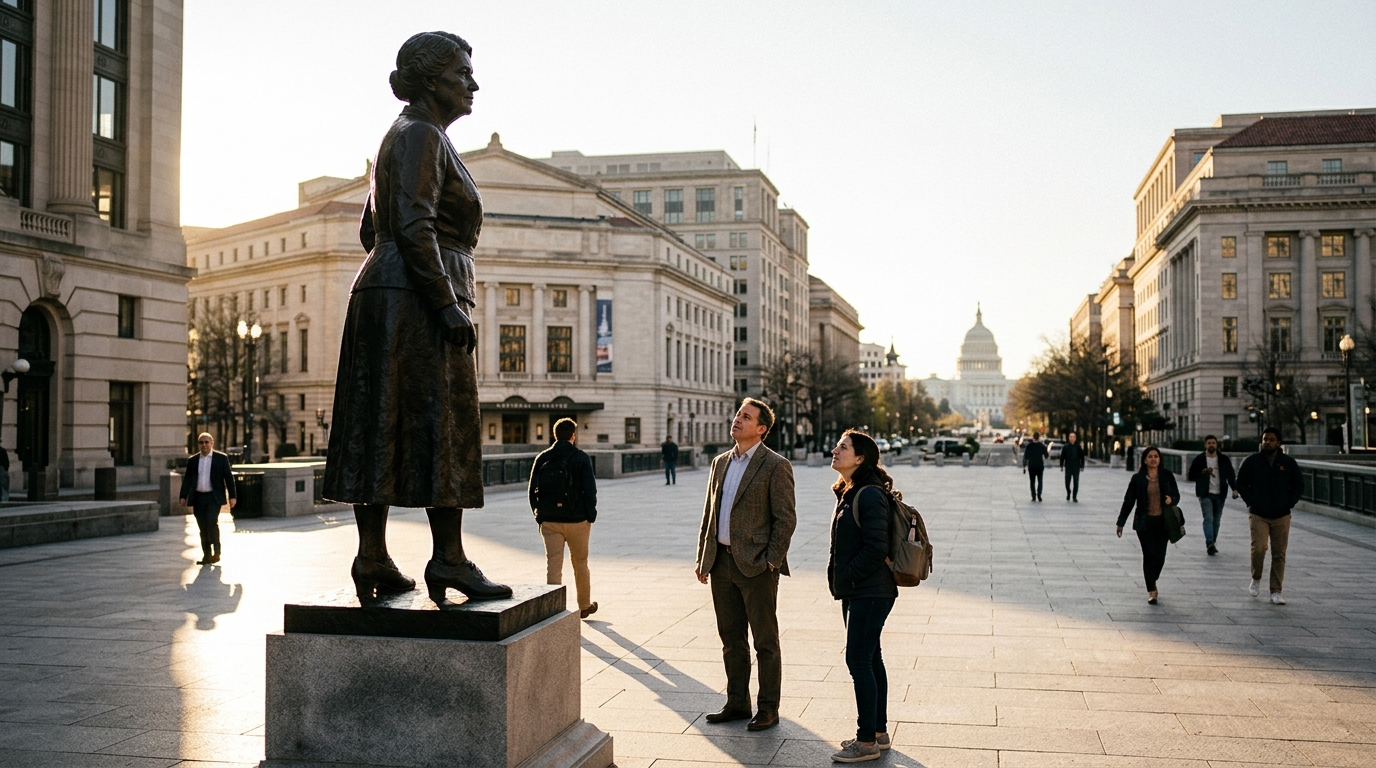
The heart of downtown Washington, D.C., a city steeped in both monumental history and ongoing debates over its complex past, now hosts a new, controversial figure. A statue depicting a founding father who enslaved hundreds of people has been installed at Freedom Plaza, injecting a fresh layer of discussion into the capital's public spaces. This addition comes at a time when cities across the nation, and especially the DMV, are grappling with how to represent historical figures whose legacies are intertwined with the institution of slavery. Freedom Plaza, located prominently on Pennsylvania Avenue NW, has long been a site for public gatherings, protests, and celebrations. Named to symbolize the pursuit of liberty and justice, the plaza's new resident—a figure directly tied to the subjugation of human beings—presents a stark contrast to its namesake. The installation immediately raises questions about historical commemoration, public memory, and the evolving narrative of America's founders in the nation's capital.
A Contested Legacy in a Historic Space
The decision to place a statue of a founding father who enslaved hundreds within such a symbolic location as Freedom Plaza is bound to ignite further conversation. Washington, D.C. itself was built, in part, by enslaved labor, and the city's streets and monuments often reflect a history that has been both celebrated and critically re-examined over the centuries. This latest installation brings that tension directly to one of the city's most visible public squares. For many, the presence of such a monument in a place called "Freedom Plaza" is a painful reminder of the hypocrisy inherent in the nation's founding ideals. While the founding fathers championed liberty, many simultaneously maintained the brutal system of chattel slavery. This dichotomy is not new to the District, where monuments to figures like Thomas Jefferson and George Washington, both enslavers, are prominent. However, the ongoing discourse has led to many cities revisiting how these figures are presented, if at all, in public art. The specific founding father depicted by the statue was not named in initial reports, leaving the public to speculate about which figure will now stand on the plaza. Regardless of the individual, the core issue remains the same: how do we honor historical figures whose contributions to the nation are undeniable, yet whose actions directly contradict the very principles of freedom and equality that the country purports to uphold? This is a question that local leaders, historians, and community members in the DMV have been actively debating for years, particularly concerning monuments and street names.The Broader Conversation Around Monuments
This installation isn't happening in a vacuum. Across the DMV and the country, there's been a significant movement to re-evaluate public monuments, especially those honoring figures with ties to slavery or the Confederacy. In Virginia, numerous Confederate statues have been removed from prominent locations following years of advocacy and legislative changes. Maryland has also seen similar discussions and actions regarding its own historical markers. The context of this new statue at Freedom Plaza fits into a larger national reckoning with history. Public spaces, once seen as static reflections of a curated past, are increasingly understood as dynamic sites where historical narratives are continually contested and reshaped. The choices made about what to commemorate, and how, speak volumes about current societal values and the lessons we choose to emphasize from our past. The National Park Service, which oversees many monuments, acknowledges the evolving nature of these stories. The conversation extends beyond just removal; it also includes adding contextual information to existing monuments, commissioning new works that tell a more inclusive story, and engaging the public in discussions about how best to represent the full spectrum of American history. The National Endowment for the Humanities has supported projects exploring these very issues.What This Means for DC Residents
For residents of Washington, D.C., this new statue at Freedom Plaza means another focal point for public discourse. It's an invitation, and perhaps a challenge, to engage with the city's complex history right in the heart of its civic life. Freedom Plaza, already a magnet for tourists and locals alike, will now serve as a tangible reminder of the ongoing struggle to reconcile historical injustices with national ideals. Anyone walking through the plaza will now encounter this symbol, potentially prompting reflection on the origins of the city and the nation. It highlights the importance of understanding the full story behind the figures we choose to elevate. This discussion isn't just academic; it affects how Washingtonians perceive their city, its values, and its role as the nation's capital. The District of Columbia government continues to manage public spaces while balancing historical preservation and community sentiment. As the city moves forward, the presence of this statue will undoubtedly fuel continued debates about what public art should represent and how the District can best reflect a commitment to freedom for all, living up to the promise of its very name. It's a reminder that history isn't just in textbooks; it's etched into the very landscape of our communities, constantly challenging us to confront its truths and shape a more just future.Advertisement