Port of Baltimore Fuels DMV Economy with $65 Billion in 2025 Amidst Recovery
Share this article
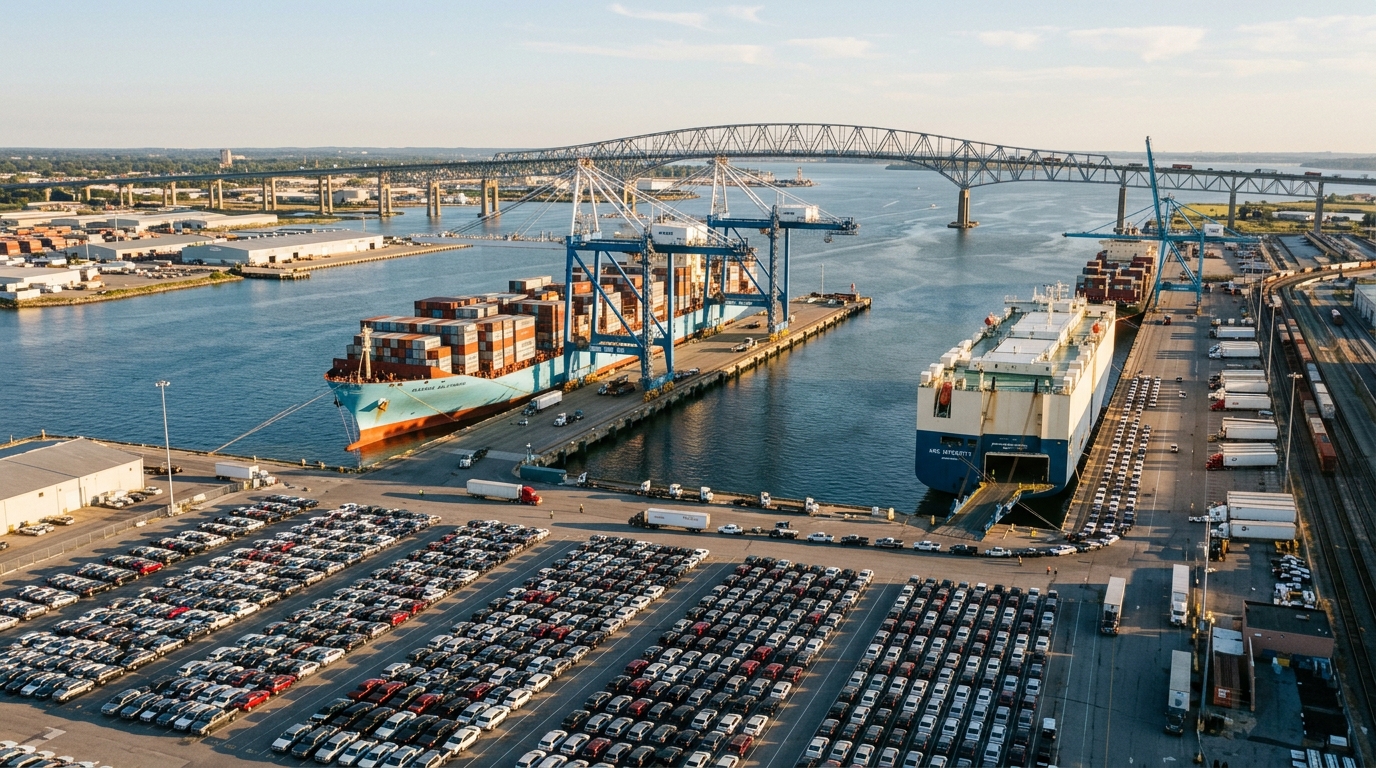
BALTIMORE, MD – The Port of Baltimore emerged from 2025 as a powerhouse for the regional economy, generating a remarkable over $65 billion despite facing the unprecedented challenges posed by the Francis Scott Key Bridge collapse earlier that year. A significant portion of this revenue, nearly $20 billion, was directly attributed to the robust trade in automobiles and light trucks, underscoring the port's critical role in the global automotive supply chain and its resilience in the face of adversity [1].
This impressive financial performance highlights the enduring economic vitality of the Port of Baltimore, which serves as a crucial gateway for goods entering and leaving the Mid-Atlantic region. For residents and businesses across the District of Columbia, Maryland, and Northern Virginia, the port's success translates into jobs, tax revenue, and a stable flow of consumer goods.
A Pillar of Regional Commerce
The Port of Baltimore is more than just a shipping hub; it is an integral component of the DMV's economic infrastructure. Its operations support thousands of direct and indirect jobs, from longshoremen and truck drivers to administrative staff and logistics specialists. The port's ability to swiftly rebound and maintain such high revenue figures in 2025, even after the devastating bridge collapse, speaks volumes about its operational efficiency and the dedicated workforce behind it [1].
Maryland Governor Wes Moore emphasized the port's significance in previous statements, noting its role as a key economic driver for the state and the entire region. The port's strategic location on the Chesapeake Bay, offering direct access to major interstate highways and rail lines, makes it an attractive option for international trade. Its specialized facilities, particularly for roll-on/roll-off cargo like vehicles and farm equipment, have cemented its reputation as a leader in these niche markets.
Automotive Trade: A Driving Force
The nearly $20 billion contributed by automobiles and light trucks in 2025 showcases the port's dominance in this sector [1]. The Port of Baltimore is consistently ranked as the nation's number one port for roll-on/roll-off cargo, handling more cars, light trucks, and heavy equipment than any other U.S. port. This specialization attracts major automotive manufacturers and distributors, making it a critical node in their supply chains. The recovery and continued strength in this sector are particularly reassuring for the regional economy, as disruptions could have far-reaching effects on dealerships, repair shops, and ancillary businesses across the DMV.
Looking Ahead: Sustaining Growth and Resilience
The 2025 revenue figures provide a strong foundation for continued growth and investment in the Port of Baltimore. Officials are focused on not only maintaining but expanding the port's capabilities, ensuring it remains competitive on a global scale. Ongoing projects, such as improvements to infrastructure and deepening of channels, aim to accommodate larger vessels and increase cargo capacity. For more information on the Port's operations and economic impact, visit the Maryland Port Administration website.
The port's success is a testament to the collaborative efforts of state and local governments, private businesses, and the dedicated workforce. Its ability to generate such substantial revenue, especially in a year marked by significant challenges, underscores its vital contribution to the economic well-being of Maryland and the entire DMV region. Businesses relying on efficient logistics and trade, from car dealerships in Rockville to distribution centers in Fairfax, directly benefit from the port's robust performance. The State of Maryland's economic development initiatives often highlight the port as a cornerstone of its prosperity.
As the Port of Baltimore continues its recovery and looks towards future expansion, its role as a key economic engine for the DMV remains undisputed. The figures from 2025 serve as a powerful reminder of its importance and resilience. Further details on regional economic trends can often be found through the U.S. Army Corps of Engineers, which plays a role in maintaining federal navigation channels like those leading to the port.