Federal Judge Rules Pentagon Violating Order on Reporter Access, Impacting DMV Journalists
Share this article
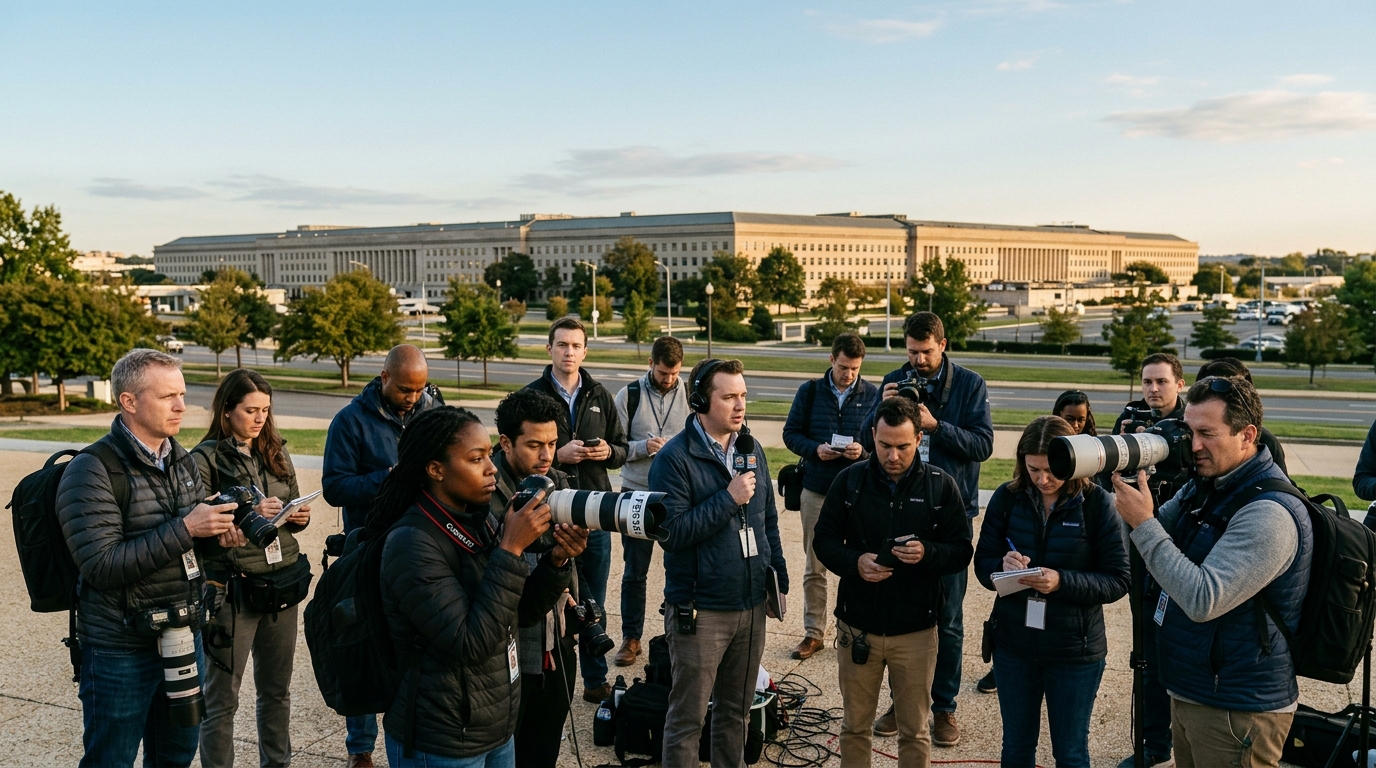
ARLINGTON, VA – A federal judge has issued a significant ruling finding that the U.S. Department of Defense (DoD) is in violation of a previous court order that mandated the restoration of access for reporters to the Pentagon [1]. This decision underscores ongoing tensions between government transparency and media access, particularly impacting the large contingent of journalists based in the Washington D.C. metropolitan area who regularly cover national security and defense issues.
The Pentagon, a sprawling complex in Arlington, Virginia, serves as the headquarters for the U.S. military and a focal point for global defense news. Its proximity to Washington D.C. makes it a critical beat for thousands of reporters, photographers, and broadcast crews, many of whom reside and work across the DMV region.
The Judge's Ruling and Its Context
While specific details of the initial court order and the exact nature of the Pentagon's violation were not immediately elaborated upon in initial reports [1], the ruling itself signifies a judicial acknowledgment that the DoD has failed to comply with directives aimed at ensuring media access. Such orders typically stem from legal challenges brought by press organizations or individual journalists seeking to uphold First Amendment rights and public access to government operations.
For journalists, access to the Pentagon is not merely about convenience; it's essential for timely and accurate reporting on matters of national security, military operations, and defense policy. This includes attending briefings, interviewing officials, and covering events that are crucial for informing the public.
Implications for DMV-Based Reporters and Public Transparency
The DMV region is home to one of the largest concentrations of national and international media outlets, all vying for information from federal agencies. For these journalists, restricted access to the Pentagon can significantly impede their ability to perform their duties. This can lead to delays in reporting, reliance on less direct sources, and potentially less comprehensive coverage of critical defense matters.
Transparency from government institutions like the Pentagon is a cornerstone of democratic governance. When access is curtailed, it raises questions about accountability and the public's right to know. Reporters serve as a crucial intermediary, translating complex government actions into understandable information for citizens. Any barrier to their work is, by extension, a barrier to public information.
Previous Challenges and Ongoing Dialogue
This is not an isolated incident. The relationship between the press and the Pentagon, and indeed many federal agencies, has often involved a delicate balance of providing information while managing security and operational concerns. Media organizations frequently advocate for greater access, citing the public's right to information, while government bodies sometimes cite national security or logistical challenges for restrictions. The legal system often becomes the arena for resolving these disputes.
The federal court's involvement underscores the seriousness of the issue. A judge's finding of non-compliance suggests that the Pentagon's actions, or inactions, were deemed to fall short of legally mandated standards for media engagement. This ruling could prompt the DoD to re-evaluate its current policies and practices regarding press access to avoid further legal repercussions.
For residents across Arlington, Fairfax, Washington D.C., and surrounding Maryland counties, this ruling touches upon the fundamental principle of government accountability. Ensuring that federal agencies, especially one as vital as the Department of Defense, operate with a degree of transparency is essential for an informed populace. The media's ability to report freely from the Pentagon directly contributes to this transparency, affecting how local communities understand national and international events.
What Comes Next?
Following this judicial finding, the Department of Defense will likely face pressure to comply with the original court order swiftly. The judge could impose further sanctions or specific mandates to ensure compliance. Media organizations and advocacy groups will be closely monitoring the situation, pushing for immediate and full restoration of access as ordered by the court.
This ruling serves as a reminder of the vital role the judiciary plays in upholding constitutional principles, including freedom of the press, and ensuring federal agencies adhere to legal mandates. It also highlights the persistent effort required by journalists and their advocates to maintain open channels of communication with government bodies for the benefit of the public.
For more information on the role of the press in a democracy, you can explore resources from organizations like the Society of Professional Journalists. Details about the Department of Defense's operations can be found on its official website, and information on federal court proceedings is available through the U.S. Courts website.