Federal
Howard County
New Video Captures Chaos Near White House After Gunfire
Share this article
Advertisement
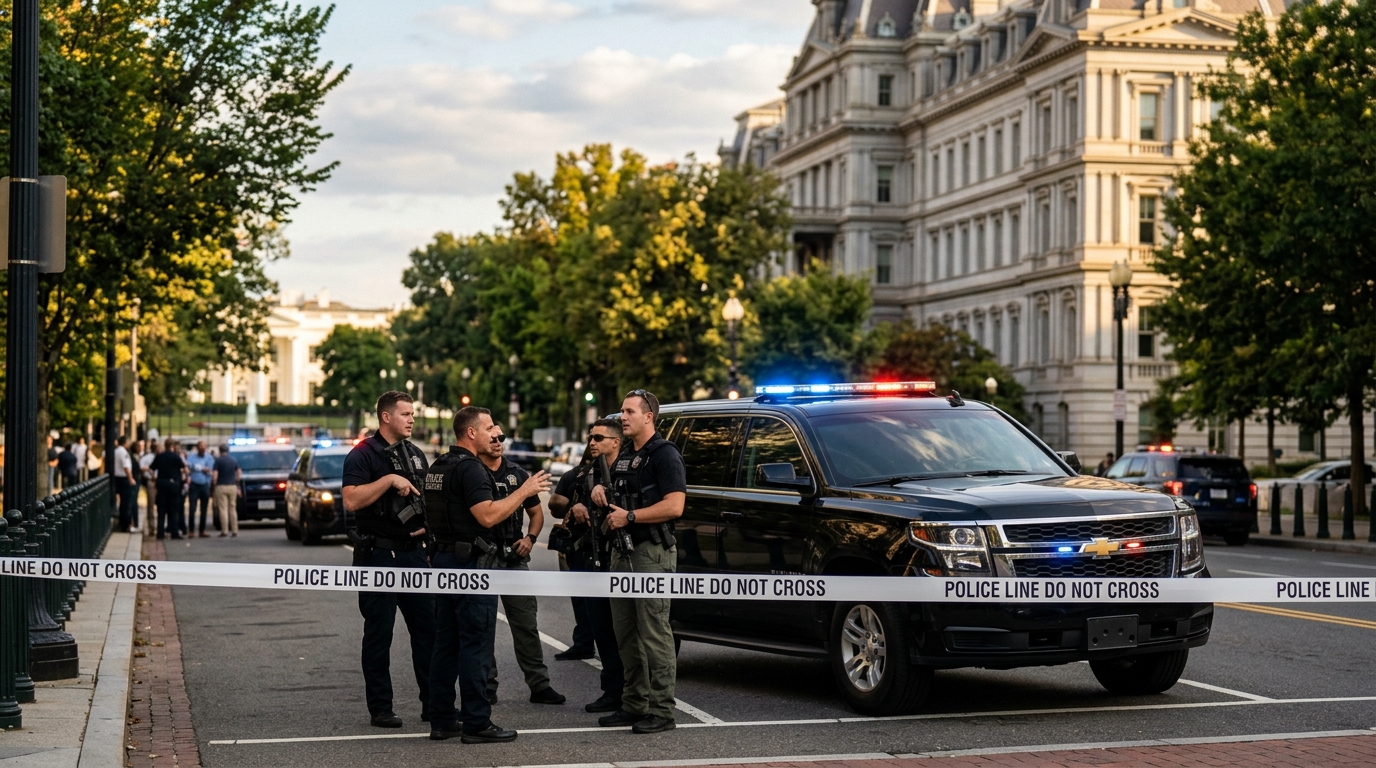
The unsettling sound of gunfire, followed by scenes of palpable panic, has once again underscored the unique security challenges facing the nation's capital. A newly released video captures a chaotic sequence of events near the White House, showing people scrambling and reacting to what's described as gunfire in one of the most heavily guarded areas in the country [1]. While details surrounding the specific incident remain sparse, the visual evidence alone is enough to send a jolt through the DMV community, reminding everyone of the constant vigilance required in a city that hosts the highest levels of government. The video, whose exact timestamp and origin are not fully detailed, paints a picture of disarray just steps from the Executive Mansion. It conjures images of people caught off guard, their routines shattered by an unexpected and alarming event. For anyone who lives, works, or visits downtown D.C., the thought of such an incident unfolding so close to the President's residence is a stark reminder of the ever-present security considerations.
A High-Stakes Location
The area immediately surrounding the White House is arguably one of the most surveilled and protected zones globally. It's a nexus of federal power, national landmarks, and bustling public spaces. Lafayette Square, the Ellipse, and the surrounding streets like Pennsylvania Avenue and 17th Street NW are typically filled with tourists, government employees, and protesters alike. Any disruption here, particularly one involving gunfire, instantly triggers a multi-agency response and can ripple through the city. The visual of "chaos after gunfire" implies a sudden, frightening shift from normalcy to an emergency. Pedestrians running, security personnel mobilizing, and the general public seeking cover are all possibilities invoked by such a description. This kind of incident, even without specific details about injuries or arrests, highlights the complex task federal and local law enforcement face daily in securing such a high-profile target.The area around the White House is one of the most heavily secured zones in the world, a constant focus for federal and local law enforcement.
Immediate Impact on the Capital
For Washingtonians, an event of this nature, regardless of its ultimate resolution, carries immediate implications. Traffic patterns could be disrupted for hours, with roads around the Executive Mansion quickly shut down. Public transportation, including Metrobus routes that traverse downtown, might be diverted or delayed. Office buildings in the vicinity could go into lockdown, and federal workers might be told to shelter in place or evacuate. The emotional toll is also significant. Residents and daily commuters in the District grow accustomed to a certain level of security and occasional protests, but gunfire introduces a different, more visceral level of concern. It can heighten anxiety and reinforce the feeling that even in the heart of the capital, vulnerability exists. Local authorities, like the Metropolitan Police Department (MPD), work closely with federal partners such as the U.S. Secret Service to manage these situations, ensuring public safety and restoring order as quickly as possible.Understanding the Security Landscape
The security apparatus around the White House involves a layered approach. The Secret Service is the primary agency responsible for protecting the President and the White House complex, but they are supported by the MPD, U.S. Park Police, and other federal entities. These agencies routinely conduct drills and maintain a high state of readiness for various threats. An incident involving gunfire would undoubtedly trigger established protocols, including immediate perimeter lockdowns, area sweeps, and a rapid information-gathering process. While the video's title describes the aftermath, the lack of information regarding the cause of the gunfire — whether it was an accidental discharge, a targeted attack, or something else entirely — leaves many questions unanswered. Such incidents often lead to intense investigations to piece together what happened and to ensure any security breaches are addressed. The District of Columbia government provides resources for residents to stay informed during emergencies, including alerts from the Homeland Security and Emergency Management Agency (HSEMA).What This Means for DMV Residents
For residents across the DMV, this video serves as a poignant reminder of living in a globally significant city. While the specific incident's details are still unclear, the visuals of "chaos after gunfire" near such a prominent landmark reinforce the need for personal preparedness and awareness. Staying informed about local emergency alerts and knowing what to do during a security incident are crucial steps for everyone in the region. The White House complex, a frequent site for both peaceful demonstrations and security concerns, requires constant vigilance from both authorities and the public. Moving forward, the DMV community will likely watch for any further details to emerge regarding this incident. Such events, regardless of their scale, often prompt reviews of security measures and public safety protocols in the heart of the capital.📍 Local Resources
DC Homeland Security and Emergency Management Agency (HSEMA)
Provides emergency preparedness information, alerts, and resources for District residents.
📞 Phone: (202) 727-6161 (Non-Emergency)
🌐 Website: hsema.dc.gov
Metropolitan Police Department (MPD)
Local law enforcement for Washington, D.C., responding to emergencies and maintaining public safety.
📞 Phone: (202) 727-9099 (Non-Emergency)
🌐 Website: mpdc.dc.gov
📍 Location: 300 Indiana Ave NW, Washington, DC 20001
U.S. Secret Service
Responsible for protecting
Advertisement