Mystery Robot Rolls Down K Street: What Was That Downtown D.C. Device?
Share this article
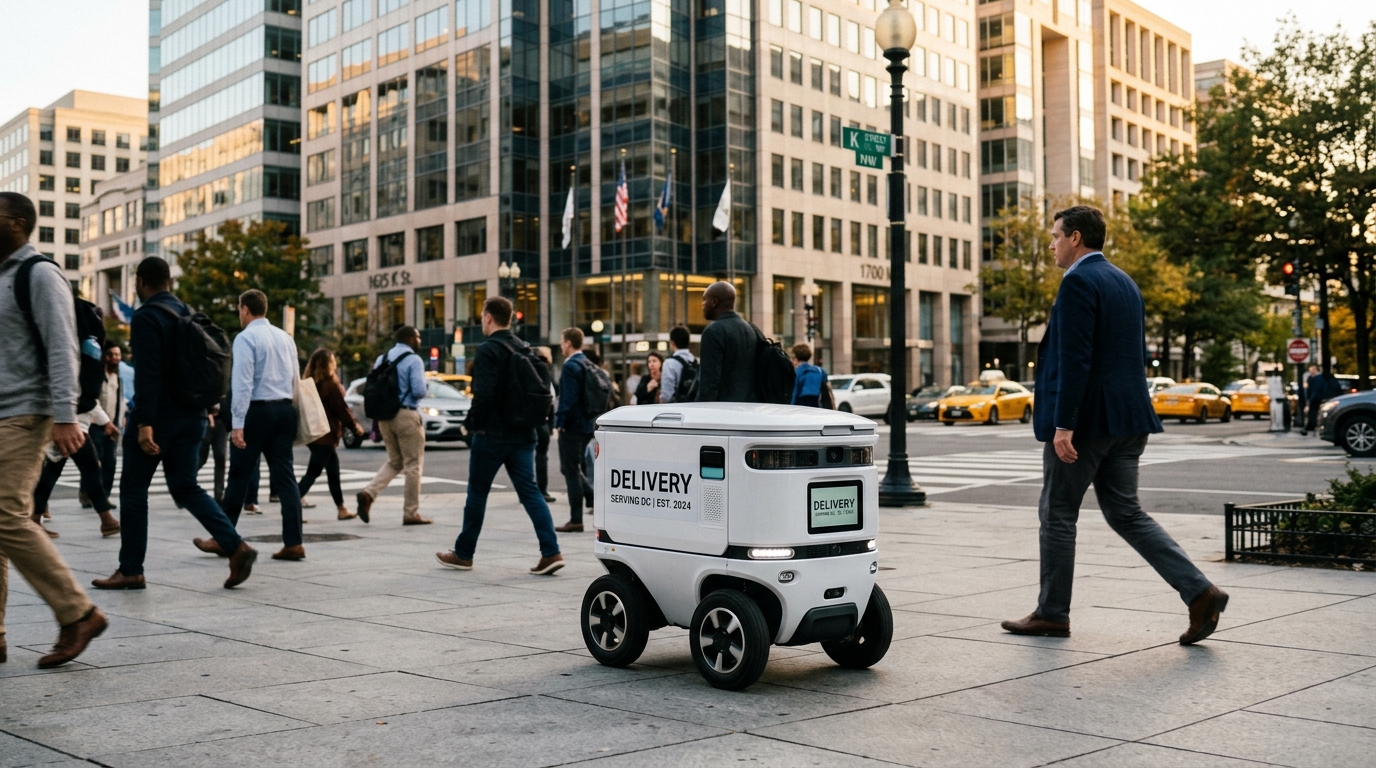
A curious sight recently turned heads on K Street in downtown Washington, D.C., sparking speculation and amusement among passersby. A small, wheeled device, seemingly self-propelled, was spotted navigating the bustling urban corridor, prompting questions about its purpose and origin. The unexpected appearance of the robot has ignited discussions about the evolving landscape of urban technology and public space.
The device, captured in photos and video by a local resident, was observed moving along K Street, a major thoroughfare known for its concentration of businesses and lobbyists. Unlike the larger, more recognizable delivery robots that have become a somewhat common sight in parts of the DMV region, this particular unit appeared smaller and its function less immediately apparent. Its presence led to immediate speculation: was it a futuristic advertising display, a new form of urban surveillance, or something entirely different?
Unidentified Rolling Object Sparks Curiosity
The robot's appearance was first brought to wider attention by a reader submission to a local D.C. blog, detailing the unexpected encounter. The individual who spotted the device questioned its identity, noting its size and apparent function [1].
"What is it? Spotted on K Street downtown. Just looked like a roving advertisement. Or has SkyNet been activated?" — JP, Local Resident (Popville)
The "roving advertisement" theory gained traction due to the robot's design, which suggested it might be a mobile display unit rather than a delivery vehicle. The reference to "SkyNet," a fictional artificial intelligence from popular culture, underscored the blend of wonder and slight apprehension that new, unexplained technologies can evoke in the public imagination.
The Rise of Urban Robotics in the DMV
The DMV area is no stranger to autonomous ground vehicles. Over the past few years, various companies have deployed larger, cooler-sized delivery robots for food and grocery services in neighborhoods like Fairfax, Arlington, and parts of Washington, D.C. These robots, often identifiable by their company branding, navigate sidewalks and crosswalks, delivering goods directly to consumers.
However, the K Street robot's smaller stature and ambiguous purpose set it apart from these more common delivery units [1]. This raises questions about the diversity of robotic applications now being tested or deployed in urban environments. From security patrols to data collection, autonomous devices are increasingly finding roles in city infrastructure, often ahead of comprehensive public understanding or regulatory frameworks.
Navigating Public Space and Regulation in Washington, D.C.
The deployment of any device, autonomous or otherwise, in Washington, D.C.'s public spaces falls under the purview of various city agencies. The District Department of Transportation (DDOT) is responsible for regulating public rights-of-way, ensuring safety, and managing the flow of traffic and pedestrian activity. Additionally, the Department of Buildings' Public Space Committee oversees permits for structures and activities that occupy public land as outlined on DC.gov.
For a device functioning as a "roving advertisement," additional considerations might include D.C.'s regulations on outdoor advertising and signage. The city has specific rules to prevent visual clutter and ensure public safety, which could apply to mobile, autonomous displays. Without official confirmation from the device's operator, it remains unclear whether the robot was part of a permitted pilot program, a private venture, or an unauthorized deployment.
What Does This Mean for Downtown D.C. Residents and Businesses?
The K Street robot incident underscores a broader trend: the increasing presence of technology in our daily lives, often in unexpected forms. For downtown D.C. residents and businesses, such sightings could become more frequent. While some may view these innovations as signs of a progressive, technologically advanced city, others might express concerns about privacy, safety, or the commercialization of public spaces.
As autonomous technology continues to evolve, city officials and policymakers face the challenge of balancing innovation with public interest. Clear guidelines and transparent communication from operators will be crucial in integrating these devices smoothly into the urban fabric. For now, the K Street robot remains a curious enigma, a fleeting glimpse into a potentially more automated future for Washington, D.C.'s streets.