Weather & Traffic
Montgomery County
Metro's Bus Fare Crackdown Ignites Safety Fears Among Operators
Share this article
Advertisement
The familiar rush of a Metrobus pulling up to a stop in Columbia Heights or along Rockville Pike often means a quick hop aboard for many DMV commuters. But soon, that routine ride will come with a new audible reminder: the fare. Starting next week, Metro is rolling out a major crackdown on fare evasion across its bus system, a move designed to staunch a bleeding wound of $50 million annually but one that has already sparked serious safety concerns among its frontline operators. For years, Metro bus drivers have largely been told to avoid confrontation over fares, a policy crafted to protect them from the very real threat of assault. Now, that's shifting. While operators won't be enforcing payments, they will be verbally reminding riders of the fare upon boarding, a seemingly small change that Metro's largest union warns could put drivers directly in harm's way.
The Growing Cost of Unpaid Rides
The numbers are stark and paint a clear picture of the financial hole Metro finds itself in. Transit officials revealed that nearly 70% of Metrobus riders aren't paying their way [1]. That staggering statistic translates into approximately $50 million in lost revenue each year, a sum that Metro General Manager and CEO Randy Clarke calls "completely unacceptable." In a region where transit funding is a perennial tightrope walk, such losses are more than just an accounting problem; they directly impact service quality, maintenance, and future expansion.Nearly 70% of Metrobus riders are not paying, costing the transit agency about $50 million a year.
"Fare nonpayment is completely unacceptable. It is costing us tens of millions of dollars," — Randy Clarke, Metro General Manager and CEO (WTOP) The agency, officially known as the Washington Metropolitan Area Transit Authority (WMATA), has been grappling with declining ridership and budget shortfalls for years, exacerbated by shifts in commuting patterns. This fare evasion crisis on buses adds another layer of complexity to its financial woes, pushing leaders to take decisive action that they hope will change rider behavior and recover much-needed funds. Metro's Dual Approach: Enforcement and Awareness
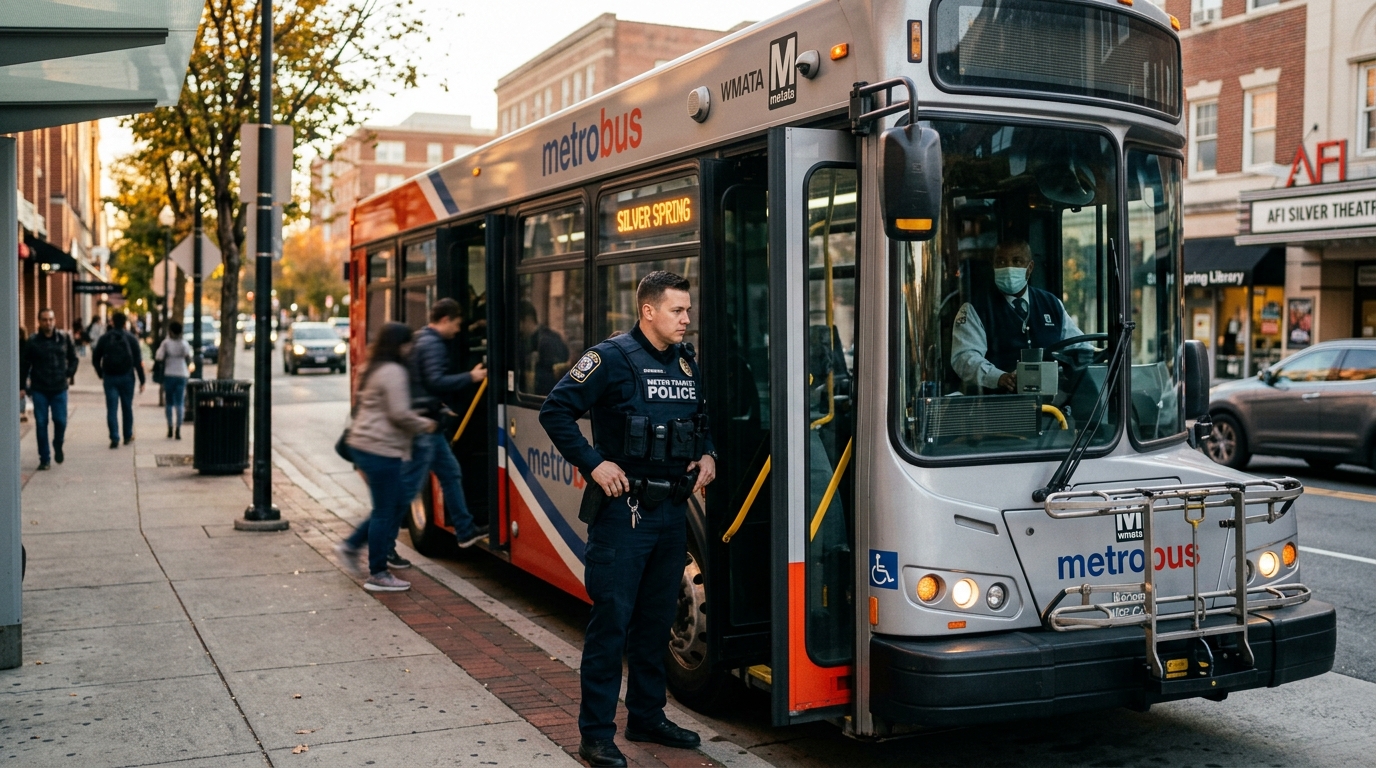
The new plan, announced during a Metro board meeting last week, will kick off right after the Memorial Day holiday weekend. It's a two-pronged strategy focusing on both increased enforcement and public education. Metro Transit Police will significantly ramp up their presence across the bus system, taking on the direct responsibility for fare enforcement. This means riders could see more officers on their daily commutes, particularly on routes identified with high rates of non-payment. The second, more contentious, part of the plan involves bus operators. Drivers will now be expected to state the fare aloud to riders as they board. Clarke emphasized that this is a "fare awareness" initiative, not enforcement. "There's nobody that is a bus operator doing fare enforcement. They're doing fare awareness," Clarke explained [1]. He stressed that operators are protected by secure compartments — millions of dollars have been invested in these barriers — and are not meant to engage riders beyond quoting the fare. The safety of Metro staff, he said, remains paramount.Union Sounds Alarm: "Puts Bus Operator at Risk"
Despite Metro's assurances, the Amalgamated Transit Union Local 689, which represents a vast majority of Metro operators, is pushing back hard. They argue that even a simple verbal reminder about fares is enough to ignite dangerous confrontations, reversing years of hard-won safety protocols. Benjamin Lynn, a spokesman for the union, did not mince words about the potential dangers. "Simply by saying, 'sir, ma'am, whomever, the fare is $2.25 to get on,' that puts that bus operator at risk," — Benjamin Lynn, Amalgamated Transit Union Local 689 spokesman (WTOP) Lynn reported that operators are already "pretty irate, pretty upset" about the policy change [1]. For years, the union has advocated for policies that minimize operator interaction in fare disputes precisely because of the documented risks. They point to a history of operators being physically attacked over fare disagreements, even with protective barriers in place. This policy reversal, in the union's view, represents a step backward in worker safety. They are calling on Metro to leave fare enforcement entirely to the Metro Transit Police and explore other solutions to the revenue problem that don't jeopardize their members' well-being. The union's stance is firm: no amount of revenue is worth an operator's safety.A Regional Challenge with Inconsistent Rules
The issue of fare evasion is complicated by a patchwork of transit policies across the broader DMV region. Randy Clarke pointed out that some local transit systems offer free rides, creating an inconsistent landscape for commuters. This disparity can contribute to a sense of unfairness or confusion, making enforcement more challenging for systems like Metro that rely heavily on farebox recovery. The larger context here involves the ongoing debate about the role of public transit and how it should be funded. Should it be treated as a public utility, heavily subsidized and potentially free at the point of access, or as a service that riders are expected to pay for? While Metro is squarely in the latter camp, the varying approaches by neighboring jurisdictions, such as Alexandria's DASH bus system, which offers free rides, can influence public perception and behavior around fare payment. This makes Metro's task of encouraging payment all the more difficult, as riders might observe different rules just a few miles away.What This Means for DMV Commuters
For the thousands of residents across Washington D.C., Northern Virginia, and Maryland's Montgomery County who rely on Metrobus daily, these changes will be noticeable. You'll likely see more Metro Transit Police officers on buses and around major transit hubs like the Silver Spring Transit Center or the Pentagon City Metro station. More immediately, your bus operator will likely greet you with a verbal reminder of the fare as you board. While Metro assures riders that this is about "awareness" and not "enforcement" by operators, the union's concerns about potential confrontations are real. Commuters might witness more interactions between officers and individuals not paying, potentially leading to delays or increased tension on buses. The hope from Metro is that these efforts will lead to a significant increase in fare payment, helping to stabilize the agency's finances and ensure the long-term viability of public transit in the region. However, the path to achieving this goal without compromising the safety of its dedicated workforce remains a contentious one. Residents should stay informed about these policy shifts and be prepared for a slightly different experience on their bus rides starting next week. The tension between recovering lost revenue and ensuring worker safety will likely continue to be a significant point of discussion for Metro's leadership and its union partners in the months to come.📍 Local Resources
WMATA Customer Service
For general inquiries, fare information, or to report service issues.
Metro Transit Police Department (MTPD)
To report suspicious activity, emergencies, or non-emergency incidents on Metro property.
Amalgamated Transit Union (ATU) Local 689
Represents Metro's bus and rail operators and other transit workers. For members' inquiries or union advocacy information.
📞 Phone: (301) 568-6899
🌐 Website: atulocal689.org
📍 Location: 2701 Whitney Pl, Forestville, MD 20747
Advertisement