May Day 2025: Protesters March on White House, Calling for Boycott Against Trump Policies
Share this article
A Call for Economic Disruption
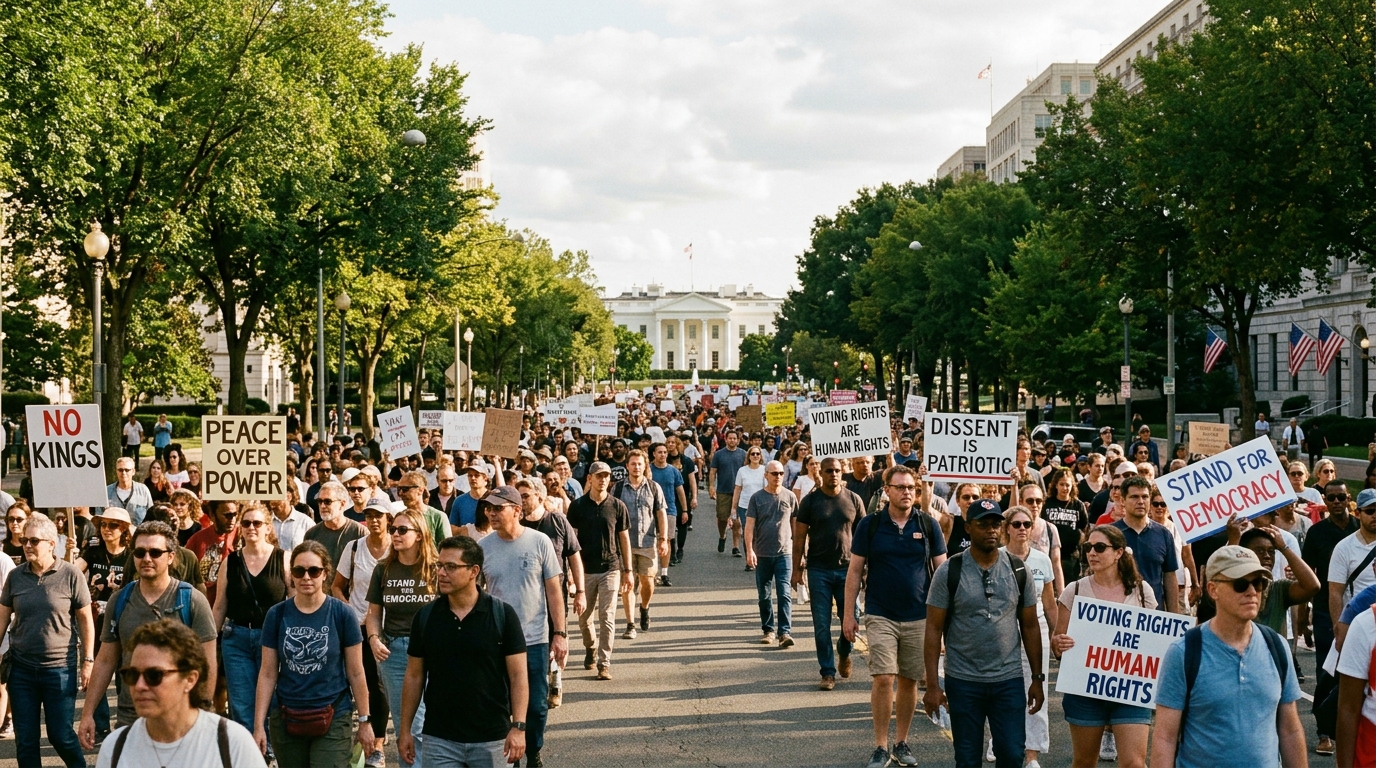
The core of the May Day action wasn't just about marching; it was about demonstrating economic power through absence. Organizers pushed for a "No Kings" theme, a pointed critique of perceived authoritarianism and unchecked corporate influence [1]. They hoped that a collective withdrawal from daily economic activities—from skipping a shift to postponing errands—would send a clear message about dissatisfaction with current political and economic trajectories. While the full extent of the boycott's impact on D.C.'s bustling economy remains to be seen, the intention was clear: to disrupt the status quo and force a reckoning with policies believed to favor the wealthy at the expense of ordinary citizens. This tactic echoes historical labor movements and civil rights protests, where collective action and economic pressure were often central to driving change.Washington D.C. at the Center of the Movement
As the seat of federal power, Washington D.C. frequently serves as the backdrop for national protests, and May Day 2025 was no exception. Demonstrators converged on the city, making their way toward the iconic White House, a powerful symbol of the government they were protesting. The march underscored the city's role as a vital arena for public discourse and political expression. Local law enforcement, as is customary for such events, likely managed traffic and crowd flow to ensure public safety while facilitating the exercise of First Amendment rights. The event, while part of a national movement, had a tangible presence in the DMV. Residents navigating downtown D.C. on May 1 would have encountered the marchers, a stark reminder of the ongoing political dialogue happening right outside their doors. Understanding how such events are planned and managed in the city is crucial for residents, and resources like DC.gov often provide information on public demonstrations and related advisories. The organizers' message was unequivocal: a rejection of policies emanating from the Trump administration and a broader concern about what they term a "billionaire takeover" of governmental processes [1]. This perspective highlights a sentiment among activists that economic inequality and corporate influence are deeply intertwined with political decision-making, driving many to seek avenues for direct action and public demonstration. Organizations like the ACLU of D.C. often provide resources on civil liberties and the right to protest, which are fundamental to such demonstrations. Moving forward, the impact of these May Day protests, particularly the call for an economic boycott, will be a point of discussion. For DMV residents, especially those engaged in local politics or community organizing, watching how such large-scale expressions of dissent evolve will be key. It's a reminder that D.C. remains a focal point for national conversations, often playing host to the very debates that shape the country's future.📍 Local Resources
Advocates for civil liberties and rights through litigation, lobbying, and public education, often providing resources related to protest rights.
Connects residents with government services and promotes civic engagement, including information on public events and community initiatives.
Provides free legal assistance and advocacy on civil rights issues, including those related to protest and freedom of speech.
Explore more on this topic
Related Stories
Councilmember Janeese Lewis George Urges Caution on Waymo Legislation, Citing DC's Jobs Crisis
Ward 4 Councilmember Janeese Lewis George has urged the DC Council to pump the brakes on Waymo legislation this year, warning that rushing autonomous vehicle laws could worsen the city's "jobs crisis" by displacing workers. She emphasizes the need to prioritize safety and worker support alongside technological advancement.

Ousted Board of Appeals Chair Sues Howard County Council, Office of Law
Howard County's ousted Board of Appeals chair has filed a lawsuit against the County Council and the Office of Law, initiating a significant legal challenge within the local government structure. This action highlights internal administrative disputes and brings the county's appointment and oversight processes into public scrutiny.