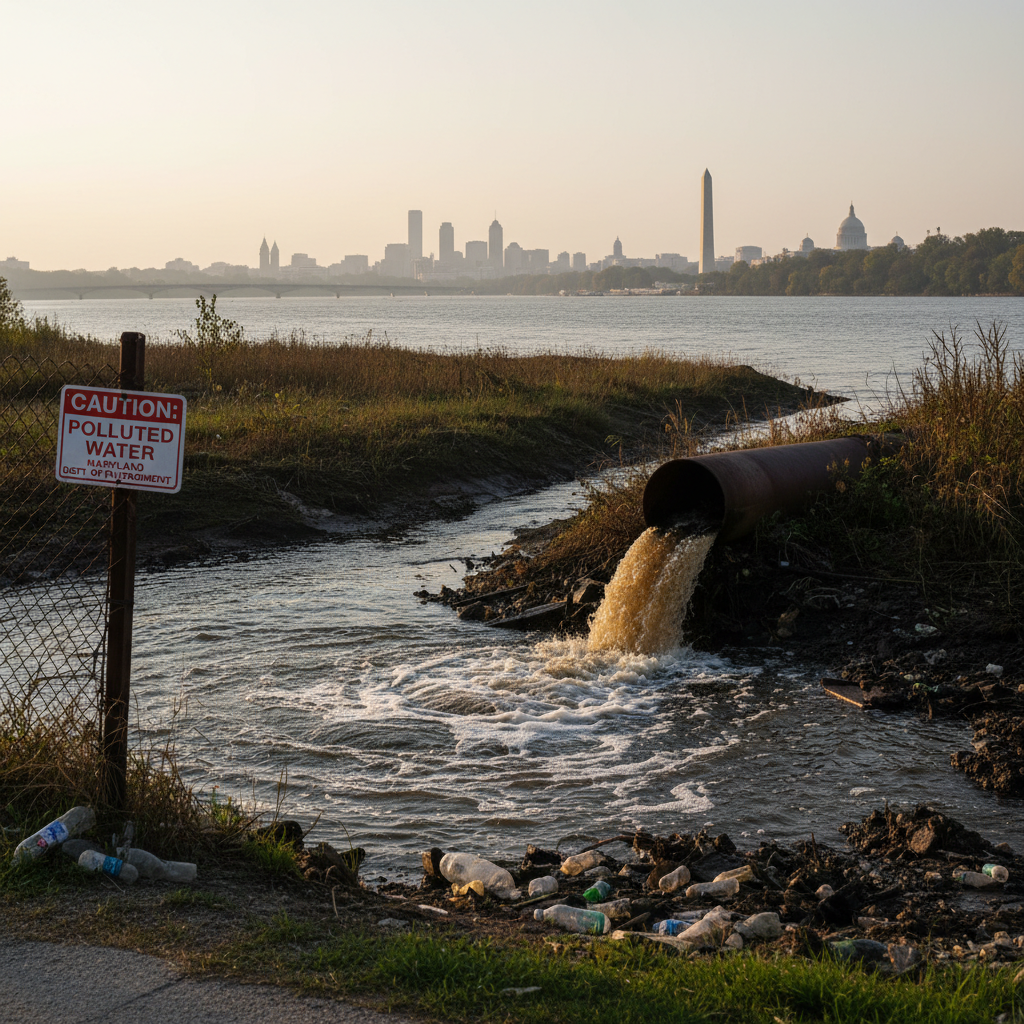
The State of Maryland has initiated legal action against DC Water, alleging responsibility for a multi-million-gallon sewage leak into the Potomac River. This lawsuit underscores ongoing concerns regarding regional water quality and the maintenance of critical infrastructure impacting the entire Washington metropolitan area. The legal challenge, reported by
The National News Desk, highlights the complex inter-jurisdictional responsibilities involved in protecting one of the region's most vital natural resources. The Potomac River serves as a primary source of drinking water for millions of residents across Washington, D.C., Maryland, and Virginia. It also supports diverse ecosystems and recreational activities. A sewage discharge of the reported magnitude can introduce harmful bacteria, nutrients, and other pollutants into the waterway, posing potential risks to public health and environmental integrity.
Maryland's lawsuit against DC Water cites a multi-million-gallon sewage leak into the Potomac River.
### Allegations and Environmental Impact Maryland's lawsuit contends that the significant sewage release constitutes a violation of environmental regulations designed to protect waterways from pollution. While specific details regarding the exact date or duration of the leak were not immediately available, the scale indicated by "multi-million-gallon" suggests a substantial event with potentially far-reaching consequences. Raw or partially treated sewage contains pathogens, such as E. coli, which can make recreational waters unsafe for swimming, fishing, and boating. Elevated nutrient levels from sewage can also lead to algal blooms, depleting oxygen in the water and harming aquatic life. The legal action by the State of Maryland signals a serious concern over adherence to environmental protection standards by public utilities. Regulatory bodies, including the
Maryland Department of the Environment (MDE), are tasked with enforcing clean water laws and ensuring that wastewater infrastructure operates without endangering public health or natural habitats. ### Inter-Jurisdictional Challenges The lawsuit also brings to light the inherent challenges of managing shared environmental resources in a densely populated metropolitan area. The Potomac River flows through or borders multiple jurisdictions, meaning that an incident originating in one area can have immediate and significant impacts on others. DC Water is responsible for providing drinking water and wastewater treatment services to the District of Columbia. Its infrastructure includes extensive sewer systems and treatment plants, which must be maintained to prevent overflows and leaks. Previous incidents of pollution in the Potomac have often led to coordinated efforts among local, state, and federal agencies. However, legal disputes like this one can arise when one jurisdiction believes another has failed in its duty, leading to adverse effects on its residents and natural resources. The
federal Clean Water Act establishes the basic structure for regulating pollutant discharges into the waters of the United States and sets water quality standards, providing a framework for such legal challenges. ### Implications for Regional Water Quality The outcome of this lawsuit could have significant implications for how wastewater utilities operate and are held accountable across the DMV region. It may prompt increased scrutiny of infrastructure maintenance, emergency response protocols, and inter-jurisdictional communication regarding environmental incidents. For residents, such events underscore the importance of vigilance regarding water quality advisories and the need for robust infrastructure investment. Organizations like the
Potomac Riverkeeper Network consistently monitor the river's health and advocate for stronger protections, often providing public alerts about pollution events. Maintaining the ecological health of the Potomac River is a shared responsibility, crucial for both environmental sustainability and the well-being of the millions who rely on it.
📍 Local Resources
Maryland Department of the Environment (MDE)
Responsible for protecting and restoring Maryland's air, water, and land resources, including reporting environmental incidents.
📍 Location: 1800 Washington Blvd, Baltimore, MD 21230
🕐 Hours: Mon-Fri 8am-5pm
DC Department of Energy & Environment (DOEE)
Works to protect and restore the environment, conserve natural resources, and improve the quality of life for residents of Washington, D.C.
📍 Location: 1200 First Street NE, 5th Floor, Washington, DC 20002
🕐 Hours: Mon-Fri 8:15am-4:45pm
Potomac Riverkeeper Network
Advocates for the protection of the Potomac River and its tributaries, offering opportunities for citizen engagement and reporting pollution.
📍 Location: 1615 M Street NW, Suite 210, Washington, DC 20036
🕐 Hours: Mon-Fri 9am-5pm