Politics
Anne Arundel County
Maryland Senator Pushes to Redraw Congressional Map After SCOTUS Decision
Share this article
Advertisement
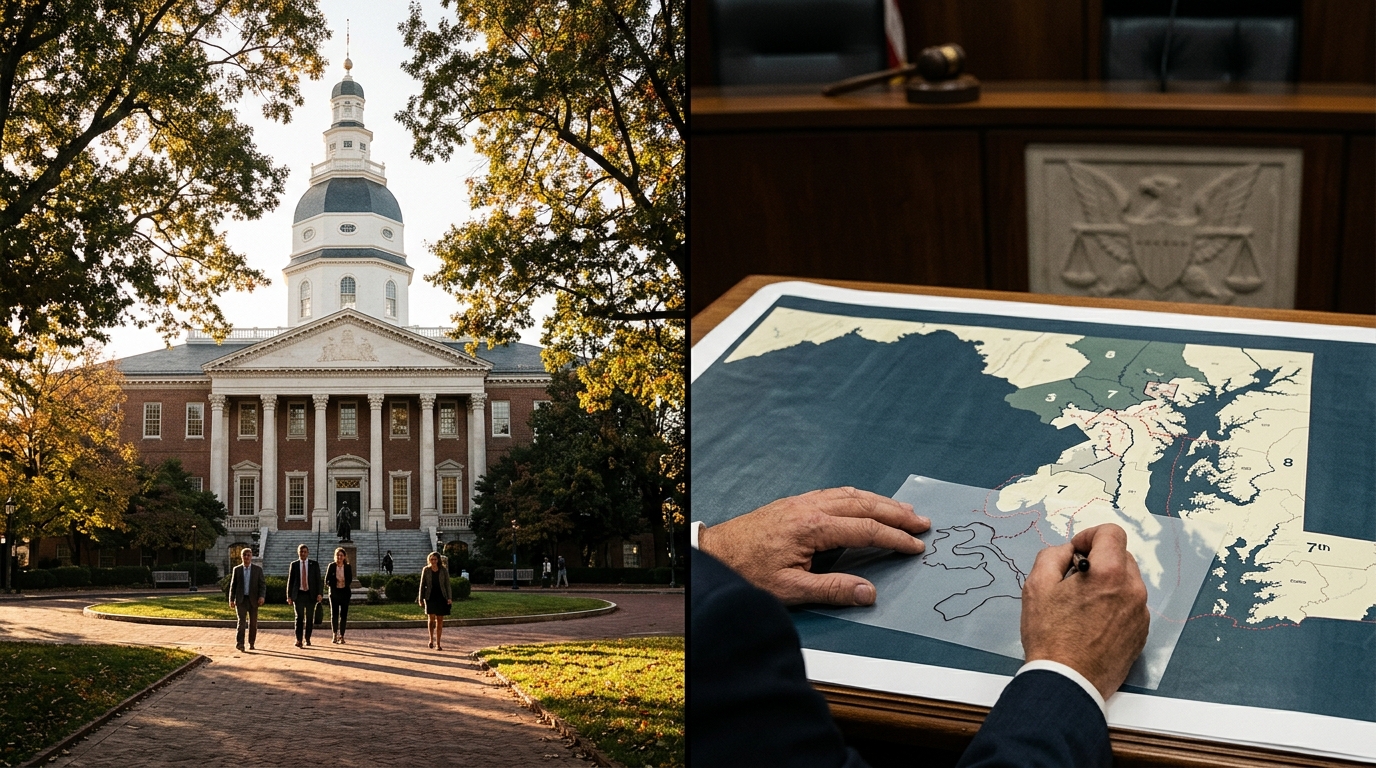
Could Maryland's congressional map be getting another look? That's the question on the minds of many across the Old Line State, as State Senator Arthur Ellis is actively working to bring the conversation about redrawing district lines back to the forefront of Annapolis politics [1]. His renewed push comes on the heels of a significant U.S. Supreme Court decision that has reportedly weakened the landmark Voting Rights Act [1]. This isn't just bureaucratic maneuvering; it's about how Marylanders are represented in Washington, D.C., and the fairness of elections for years to come. Congressional redistricting, the process of redrawing electoral district boundaries, typically happens every ten years after the U.S. Census. Its aim is to ensure districts have roughly equal populations and reflect demographic shifts. However, it’s a process often fraught with political tension, as the way lines are drawn can dramatically influence election outcomes.
Maryland residents should stay tuned to legislative updates from the Maryland General Assembly and local news outlets to understand how this renewed push for redistricting might unfold. The coming months will likely reveal whether Senator Ellis's efforts gain traction and if Maryland's congressional map will indeed undergo another significant transformation.
The Call for a Special Session
Senator Ellis's efforts signal a desire to potentially convene a special session of the Maryland General Assembly to tackle the issue. A special session, called outside of the regular legislative calendar, would allow lawmakers to focus solely on the complex task of redrawing the state’s congressional districts. This kind of legislative action requires careful coordination and a clear legislative agenda, often spurred by urgent matters or significant legal changes. The impetus for Ellis's renewed advocacy stems directly from a recent Supreme Court ruling. While the specifics of that ruling weren't detailed in The Daily Record, its reported impact on the Voting Rights Act is a critical piece of the puzzle [1]. The Voting Rights Act of 1965 is a pivotal federal law that prohibits racial discrimination in voting, designed to protect the right to vote for all citizens, especially minority communities. Any decision perceived as weakening this act could have profound implications for how district lines are drawn to ensure fair representation.Redrawing congressional maps can significantly alter political representation for millions of Marylanders.
Understanding Redistricting's Stakes
Redistricting isn't just about lines on a map; it's about power and voice. When districts are drawn unfairly – a practice often called gerrymandering – it can dilute the voting power of certain communities or virtually guarantee seats for one political party over another. For Maryland, a state with a diverse population, ensuring that district lines genuinely reflect the communities they serve is paramount. The process involves intricate demographic analysis, legal considerations, and, inevitably, political negotiations. Legislators must balance population equality with other criteria, such as maintaining communities of interest and complying with federal laws like the Voting Rights Act. When that federal protection is perceived to be weakened, as in this case, it naturally prompts lawmakers like Senator Ellis to reassess how Maryland’s districts are structured to best serve its residents. The push by Senator Ellis highlights the ongoing challenge of achieving truly fair and equitable political representation. Maryland has a history of contentious redistricting battles, with previous maps facing legal challenges and public scrutiny. This current effort suggests that the fight for fair maps is far from over, especially as legal interpretations of voting rights evolve. For Maryland voters, this renewed conversation means paying close attention to legislative developments in Annapolis. The outcome of any redistricting efforts could directly impact who represents them in Congress and how effectively their voices are heard at the federal level.📍 Local Resources
Maryland State Board of Elections
Provides information on voter registration, election dates, and district maps.
📞 Phone: (410) 269-2840
🌐 Website: elections.maryland.gov
📍 Location: 151 West Street, Suite 200, Annapolis, MD 21401
🕐 Hours: Mon-Fri 8:30am-4:30pm
Maryland General Assembly
Official website for the state legislature, providing information on bills, legislative sessions, and contact details for elected officials.
📞 Phone: (410) 841-3886
🌐 Website: mgaleg.maryland.gov
📍 Location: 90 State Circle, Annapolis, MD 21401
🕐 Hours: Varies by session
ACLU of Maryland
Works to defend and preserve the individual rights and liberties guaranteed by the Constitution and laws of the United States and Maryland, including voting rights.
📞 Phone: (410) 889-8555
🌐 Website: aclu-md.org
📍 Location: 300 E. Joppa Road, Suite 300, Towson, MD 21286
🕐 Hours: Mon-Fri 9am-5pm
Advertisement