Maryland Immigrant Groups Sue Trump Administration Over Alleged Warrantless ICE Arrests
Share this article
A Closer Look at the Allegations
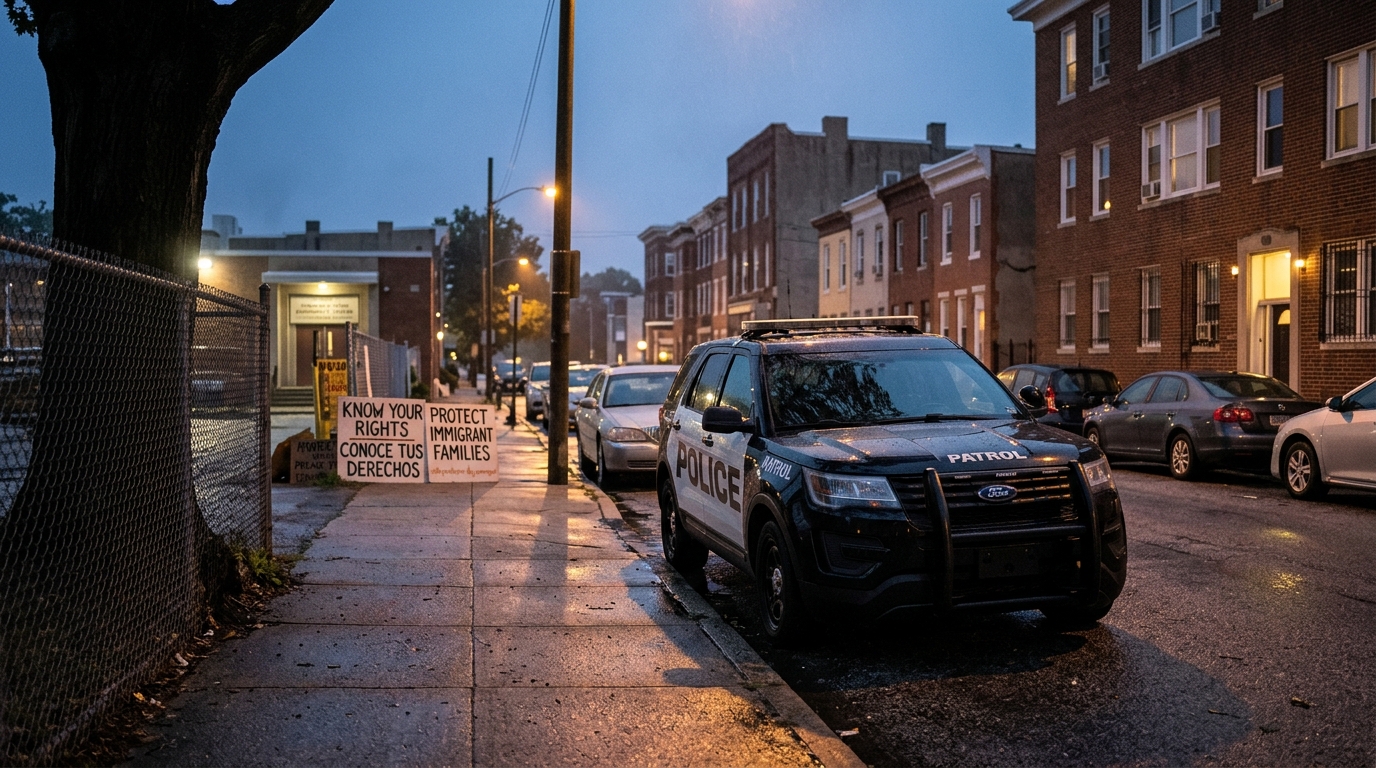
At the heart of the lawsuit are claims that ICE agents have bypassed established legal protocols, particularly those requiring a judicial warrant for arrests in private spaces, or probable cause for arrests in public. Under U.S. law, a warrant issued by a judge typically authorizes law enforcement to enter a home or make an arrest based on criminal probable cause. While ICE agents have administrative warrants for civil immigration violations, these are generally not considered equivalent to judicial warrants and do not grant agents the same broad powers of entry and arrest, especially in homes, without consent or exigent circumstances. The lawsuit reportedly details instances where ICE agents allegedly used deceptive tactics to gain entry into homes or conducted arrests in public places without reasonable suspicion that the individual had committed a crime. Immigrant rights advocates contend that these practices target vulnerable populations, leading to unjust detentions and deportations that separate families and destabilize communities.Constitutional Protections and Immigration Enforcement
The Fourth Amendment to the U.S. Constitution protects individuals from unreasonable searches and seizures, a right that generally applies to all persons within the United States, regardless of immigration status. The Fifth Amendment guarantees due process of law. Legal experts emphasize that while the government has the authority to enforce immigration laws, this authority isn't limitless and must adhere to constitutional safeguards. "The Fourth Amendment guarantees protection against unreasonable searches and seizures for everyone in the United States, regardless of immigration status," explained a legal advocate familiar with similar cases. "When ICE agents act without proper judicial authorization or probable cause, they are infringing upon these fundamental rights, turning routine enforcement into a constitutional crisis." During the Trump administration, there was a significant increase in interior enforcement efforts by ICE, often prioritizing the arrest and deportation of individuals with civil immigration violations, even those without criminal records. This shift in policy led to heightened tensions and numerous legal challenges across the country, as immigrant communities and their advocates pushed back against what they viewed as overly aggressive and discriminatory enforcement.Impact on Maryland's Diverse Communities
Maryland is home to a robust and diverse immigrant population, particularly in areas like Montgomery County, Prince George's County (though not covered by this publication), and parts of Frederick County. These communities contribute significantly to the local economy and cultural fabric of the DMV region. The alleged practices by ICE, as outlined in the lawsuit, have a tangible, chilling effect on these residents. Families might become hesitant to report crimes, participate in community events, or seek vital public services out of fear of encountering immigration enforcement. This erosion of trust between law enforcement and immigrant communities can undermine public safety for everyone. For example, a parent might be reluctant to call the police after a domestic dispute if they fear that doing so could lead to their or a family member's detention by ICE. Organizations like CASA de Maryland provide crucial services, from legal aid to advocacy, for immigrant families throughout the state. Their involvement in this lawsuit underscores the severity of the alleged violations and the widespread concern within the communities they serve. "Our families deserve to live without the constant threat of unlawful detention," stated a representative from CASA de Maryland. "This lawsuit is about ensuring that constitutional protections apply to everyone, everywhere in Maryland."The Legal Road Ahead
This lawsuit will navigate the complex landscape of federal courts, likely involving extensive discovery, motions, and potentially a trial. The plaintiffs are seeking not only a declaration that ICE's alleged practices are unconstitutional but also an injunction to prevent future warrantless arrests and possibly damages for those whose rights were violated. The outcome could set important precedents for how immigration enforcement is conducted not just in Maryland, but potentially nationwide. The legal arguments will likely hinge on the interpretation of the Fourth Amendment in the context of civil immigration arrests, and the extent to which administrative warrants can authorize actions typically reserved for judicial warrants. The federal government, under the Trump administration, has consistently defended ICE's enforcement actions as necessary for national security and border integrity, arguing that agents operate within their legal authority. For DMV residents, particularly those in immigrant communities, the lawsuit represents a critical effort to uphold civil liberties and ensure accountability from federal agencies. The proceedings will be closely watched by legal scholars, civil rights advocates, and thousands of families whose lives are directly impacted by immigration enforcement policies. This case serves as a powerful reminder that the legal system is often the arena where the balance between government authority and individual rights is debated and decided. What happens in federal court in Maryland could redefine the boundaries of immigration enforcement and offer much-needed clarity and protection for countless individuals.📍 Local Resources for Immigrant Communities
Provides comprehensive services for immigrant and working-class families, including legal assistance, workforce development, and community organizing.
Works to defend and preserve the individual rights and liberties guaranteed by the Constitution and laws of the United States, offering legal resources and advocacy.
Provides free civil legal services to eligible low-income individuals and communities, including immigration-related legal advice.
Explore more on this topic
Related Stories

ARTECHOUSE Reopens in DC with Whimsical Interactive Exhibit Featuring Dancing Flamingos and a Talking Penguin
DC's ARTECHOUSE interactive art space has reopened its doors, inviting visitors to a new immersive experience featuring dancing flamingos and a talking penguin. This innovative venue continues to redefine art through
"The Newsroom Erupted": A DMV Editor Remembers 9/11's Local Impact

Arts1515: Logan Circle Welcomes New Art-Centric Creative Hub This Fall
Logan Circle's 14th Street corridor is set to welcome Arts1515 this Fall, a new art-centric creative hub and coworking space at 1515 14th Street NW. Designed for artists, designers, and creative entrepreneurs, this boutique community aims to foster collaboration and innovation in the heart of Washington, DC.