Politics
Maryland Governor Urged to Champion Open Primary Elections
Share this article
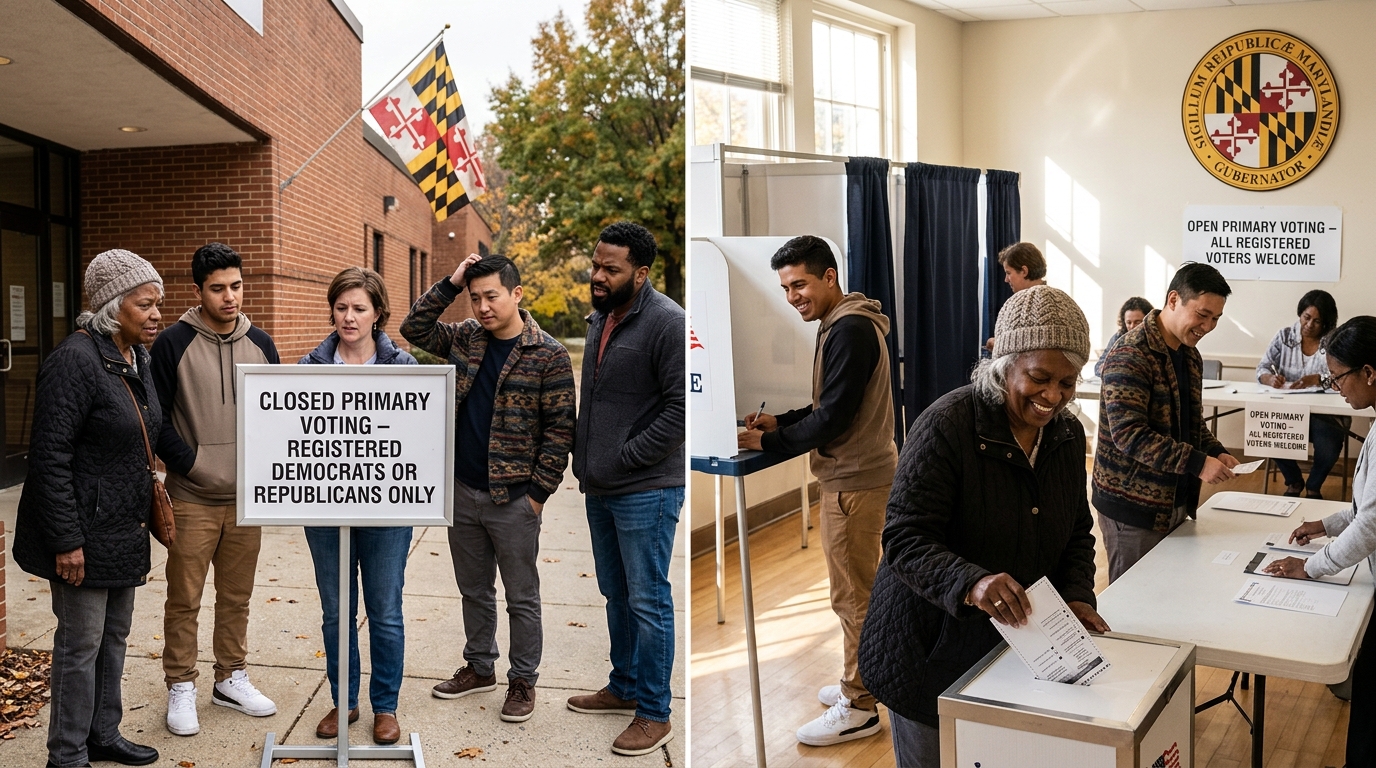
Should Maryland voters have a greater say in selecting candidates for the general election, irrespective of their party affiliation? This question lies at the heart of a growing debate, with an increasing call for Governor Wes Moore to take a decisive stance on open primaries in the state. A recent commentary in The Baltimore Sun highlights a significant opportunity for Governor Moore to underscore his commitment to expanding voter engagement by actively supporting reforms to Maryland's current primary election system.
Maryland presently operates under a closed primary system. This means that only registered members of a specific political party can vote in that party's primary election. Voters who are unaffiliated with any major party, or who belong to smaller parties, are excluded from a process that often determines the eventual winners in heavily partisan districts. This exclusion leaves a substantial portion of the electorate feeling disenfranchised, unable to influence the selection of candidates for critical roles ranging from local council seats to statewide offices.
The commentary points out that Governor Moore has previously expressed support for open primaries in principle. However, it argues that stated support is insufficient; tangible action is necessary to advance this reform. Advocates for open primaries contend that such systems encourage the nomination of more moderate candidates, boost overall voter turnout, and mitigate political polarization by requiring candidates to appeal to a broader base of voters beyond their party's core supporters.
Maryland presently operates under a closed primary system. This means that only registered members of a specific political party can vote in that party's primary election. Voters who are unaffiliated with any major party, or who belong to smaller parties, are excluded from a process that often determines the eventual winners in heavily partisan districts. This exclusion leaves a substantial portion of the electorate feeling disenfranchised, unable to influence the selection of candidates for critical roles ranging from local council seats to statewide offices.
Over one million Maryland voters are not affiliated with a major political party, yet they are barred from participating in partisan primary elections.
The commentary points out that Governor Moore has previously expressed support for open primaries in principle. However, it argues that stated support is insufficient; tangible action is necessary to advance this reform. Advocates for open primaries contend that such systems encourage the nomination of more moderate candidates, boost overall voter turnout, and mitigate political polarization by requiring candidates to appeal to a broader base of voters beyond their party's core supporters.