Maryland General Assembly Concludes Session, Sends Key Bills to Governor Wes Moore
Share this article
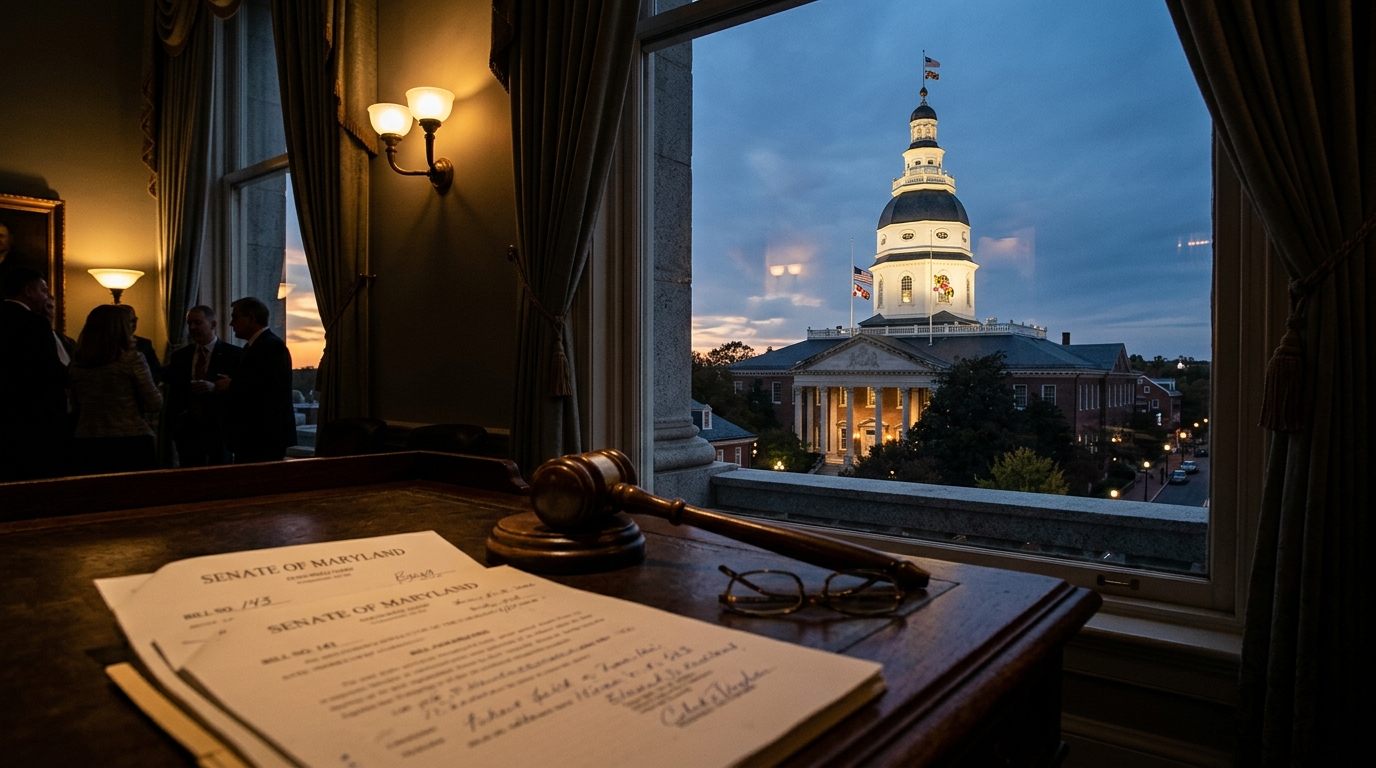
ANNAPOLIS, MD – The Maryland General Assembly has officially concluded its 2024 legislative session, marking the traditional "sine die" at midnight. With the gavel having fallen, attention now shifts to Government House, where Governor Wes Moore will review a slate of bills passed by state lawmakers [1].
The conclusion of the 90-day legislative period signifies a critical juncture for policymaking in the Old Line State. Throughout the session, legislators in Annapolis debated and refined numerous proposals touching on various aspects of Maryland life, from economic development and environmental protection to public safety and education.
While specific details of the individual bills now awaiting the Governor's signature have not yet been fully publicized from the provided information, the sheer volume of legislation typically passed in the final days of a session underscores the rigorous work undertaken by the General Assembly. These bills represent months of committee hearings, public testimony, and floor debates involving delegates and senators from across Maryland's diverse counties.
The Governor's Critical Role
Once bills are passed by both chambers of the General Assembly – the House of Delegates and the Senate – they are formally sent to the Governor's desk. This transfer initiates the final phase of the state's legislative process. Governor Moore now has several options for each piece of legislation presented to him. He can sign a bill into law, allowing it to take effect on a specified date, often July 1st of the same year or October 1st. Alternatively, he can veto a bill, preventing it from becoming law. The General Assembly, however, has the power to override a gubernatorial veto with a three-fifths vote in both the House and Senate during the next legislative session.
The Governor can also allow a bill to become law without his signature by taking no action within a specific timeframe after receiving it. This period is typically six days if the General Assembly is in session or 30 days if the session has adjourned, as is the case now. This final review period by the executive branch is a cornerstone of Maryland's system of checks and balances, ensuring that proposed laws receive thorough consideration before implementation.
Impact on Maryland Residents
The legislative outcomes from Annapolis directly affect millions of residents in the DMV region, particularly those in Maryland counties like Montgomery, Prince George's, Anne Arundel, and Frederick. New state laws can influence everything from local property taxes and school funding to transportation infrastructure projects and environmental regulations for the Chesapeake Bay. Understanding which bills have been passed and subsequently signed into law is crucial for residents, businesses, and local governments to adapt and plan accordingly.
For instance, legislation related to housing could impact rent prices or zoning regulations in suburban communities, while bills focusing on healthcare access might change how residents in places like Silver Spring or Bowie receive medical services. Similarly, state-level decisions on transportation funding can have direct consequences for daily commuters on routes such as Interstate 270 or US Route 50.
Residents are encouraged to monitor announcements from the Governor's office and the Maryland General Assembly's official website for updates on the bills that have been signed into law. The legislative process, while complex, is designed to address the evolving needs of the state's population.
Looking Ahead: The Path to Implementation
With the session adjourned, the focus now shifts from legislative debate to executive action and, eventually, implementation. Governor Moore's decisions over the coming weeks will shape the legal landscape of Maryland for the foreseeable future. Each bill signed into law will represent a new policy or adjustment that agencies across the state will be tasked with executing.
The public will have opportunities to learn more about the specific contents and effective dates of these new laws as official announcements are made. The Governor's official website is a primary source for these updates, along with the Maryland State Archives, which provides comprehensive information on the legislative process and bill status.
The conclusion of the legislative session is not an end but a transition, initiating the next phase in Maryland's governance where proposed changes move from concept to concrete reality, impacting the daily lives of residents across the DMV.