Maryland Delegate Phillip Scott Discusses Critical Redistricting Vote Impacting DMV Communities
Share this article
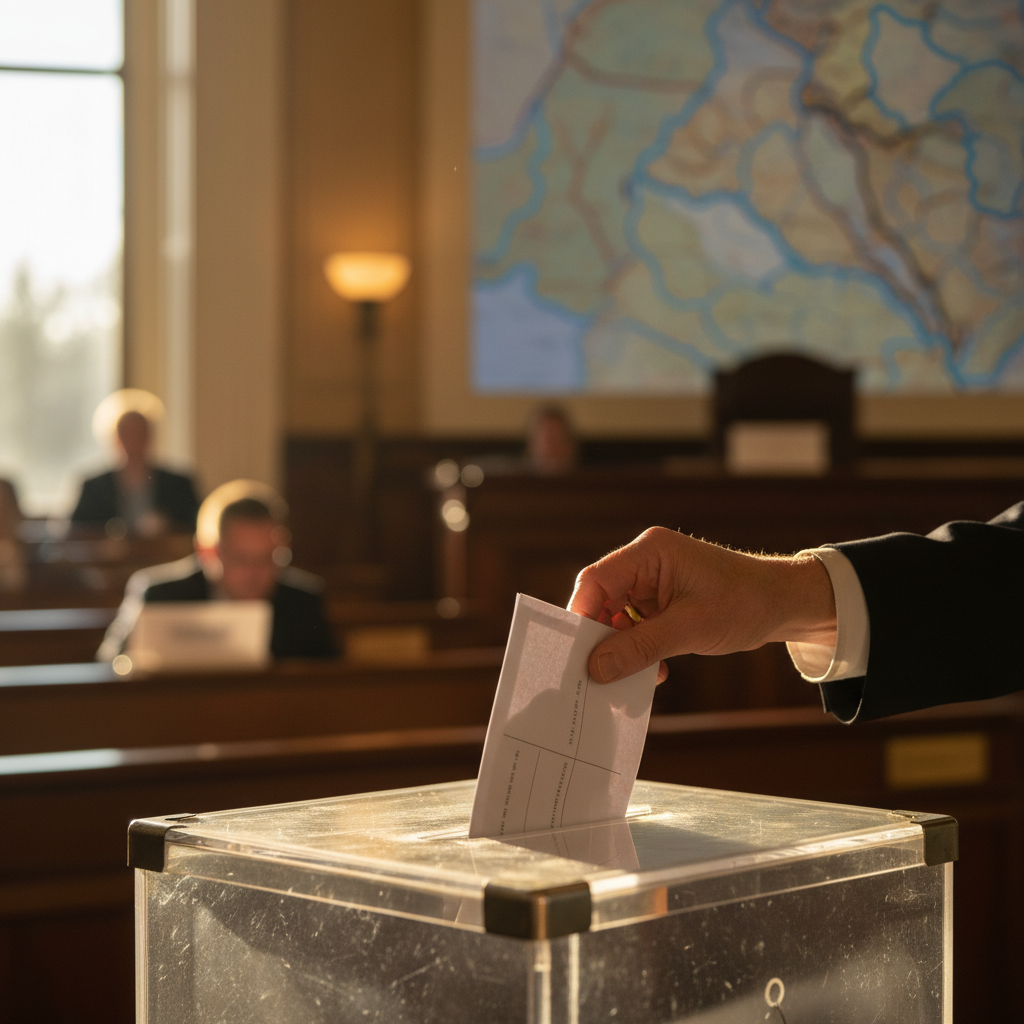
ANNAPOLIS, MD – Maryland State Delegate Phillip Scott recently addressed the crucial topic of the redistricting vote, a process that redraws electoral boundaries and profoundly shapes political representation across the state and the broader DMV region. His remarks underscore the significant implications of these decisions for residents, communities, and the future of local governance.
Redistricting, which occurs typically once every ten years following the U.S. Census, is a constitutionally mandated process designed to ensure that each legislative district contains roughly the same number of people. However, the method by which these lines are drawn often becomes a contentious political battle, with profound consequences for how communities are represented in Annapolis and beyond.
Understanding the Redistricting Process in Maryland
In Maryland, the redistricting process involves several key players, including the Governor's office and the General Assembly. After the decennial census data is released, a redistricting commission or similar body typically proposes new maps. These maps then undergo review and approval by the state legislature, culminating in a legislative vote. Delegate Scott's address on this vote highlights a critical juncture in this intricate process.
The goal is to create districts that are fair and equitable, reflecting population shifts and demographic changes. However, critics often point to "gerrymandering," the practice of drawing district lines to favor one political party or group over another, as a significant challenge. This can lead to districts with unusual shapes, sometimes splitting communities or diluting the voting power of specific populations. Understanding these complexities is vital for Maryland voters, who can find information on their current districts and elected officials through the Maryland State Government website.
Impact on DMV Residents and Representation
For residents across the DMV, including those in Baltimore City, Montgomery County, Prince George's County, and other areas served by Maryland's legislative districts, the outcome of a redistricting vote can directly affect their daily lives. New district lines can shift which delegate or senator represents their neighborhood, potentially altering access to local services, advocacy for community needs, and the overall political landscape. This process is not merely about lines on a map; it's about the fundamental structure of democratic representation.
Delegate Scott's discussion on this vote, as reported by FOX 5 DC, underscores the importance of transparency and public engagement in the redistricting process. Fair maps are essential for ensuring that every vote counts and that elected officials are truly accountable to their constituents.
The Path Forward: Engagement and Oversight
As Maryland moves through its redistricting cycles, the discussions surrounding the vote remain critical. Advocates for fair maps often call for independent commissions to handle redistricting, aiming to remove partisan influence from the process. While Maryland has its own established procedures, conversations like Delegate Scott's serve to inform the public and emphasize the gravity of the decisions being made.
Citizens interested in understanding the specifics of their legislative districts and the broader redistricting efforts can often access maps and data through the Maryland State Board of Elections. Furthermore, educational institutions like the University of Maryland frequently host discussions and provide research on the impact of electoral processes, offering valuable context for the public.
The outcome of a redistricting vote can shape Maryland's political landscape for a decade, influencing everything from local zoning decisions to state-level policy on education and healthcare. Delegate Scott's remarks serve as a reminder of the ongoing importance of this fundamental democratic exercise.
📍 Local Resources: Understanding Your Vote and Representation
Provides official information on voter registration, election dates, and legislative districts. Residents can look up their current elected officials and district boundaries.
Access information about Maryland's legislative process, find your delegate and senator, and track legislation. Essential for understanding state governance.
A non-partisan organization dedicated to voter education and advocating for informed and active participation in government, including fair redistricting.
Explore more on this topic
Related Stories

FBI and Postal Service Investigate Suspicious Mail to Congressional and Election Offices Across the DMV
Federal authorities are investigating letters containing suspicious substances sent to congressional and election offices across the DMV. The FBI and U.S. Postal Inspection Service are leading the joint probe, highlighting concerns for public safety and the integrity of democratic processes in the region.

Virginia Attorney General Establishes New Voter Protection Unit
Maryland's Political Slogans: Catchy Campaigns That Often Fade Away
Political slogans are powerful tools during Maryland elections, but they often vanish once the ballots are counted, giving way to the practical language of governance.