Maryland Leaders Honor Hundreds of Black Boys Buried in Unmarked Graves at Cheltenham, Promise Further Action
Share this article
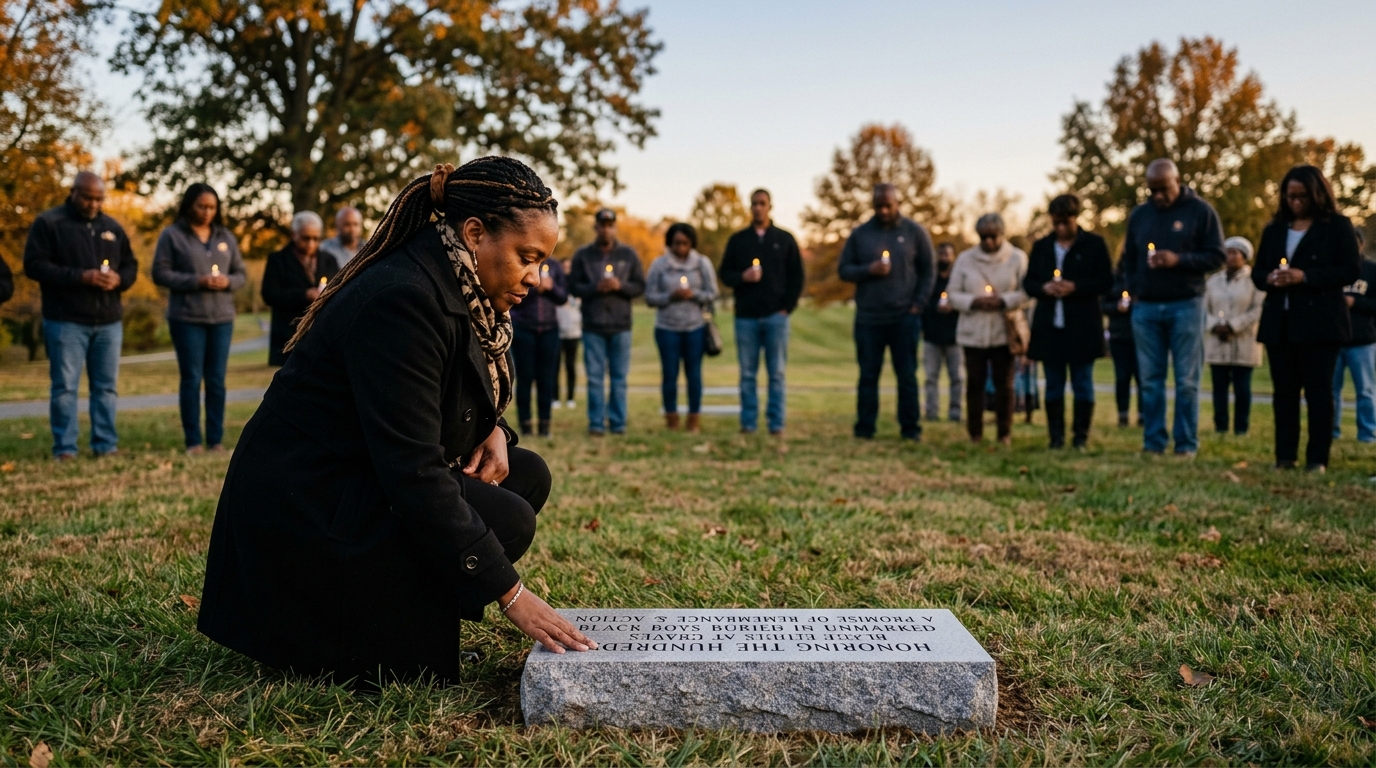
In a somber and significant ceremony, Maryland leaders recently gathered to honor the memory of hundreds of Black boys buried in unmarked graves across the state, particularly those connected to the former Cheltenham facility. The event served as a powerful acknowledgment of a painful chapter in Maryland's history, where young lives, often subjected to the juvenile justice system, were seemingly forgotten.
The ceremony brought into sharp focus the long-overlooked history of these individuals, many of whom were interred without proper recognition after being sent to institutions like the Cheltenham facility. For generations, their stories remained untold, their resting places unmarked, a silent testament to systemic injustices. This recent gathering aims to begin righting that historical wrong, providing a measure of dignity and remembrance that was denied for far too long [1].
A Legacy of Neglect at Cheltenham
The Cheltenham facility, formally known over its history by various names such as the House of Reformation for Colored Children and the Maryland Training School for Boys, has a complex and often troubling past. Established in the late 19th century, it was intended as a reform school for Black youth. However, like many such institutions of its era, it frequently operated more as a punitive system, disproportionately affecting Black children and often subjecting them to harsh conditions. Many of the boys who died while in the state's care at Cheltenham were buried on the grounds in graves that, over time, became unmarked and neglected.
The rediscovery and recognition of these unmarked graves represent a critical step towards confronting the full scope of Maryland's historical treatment of its most vulnerable populations. It sheds light on how racial disparities were embedded within institutions, leading to tragic outcomes and the erasure of individual identities.
Promises for Future Action
During the recent honoring event, state leaders didn't just look back; they also looked forward, promising "more" in terms of addressing this historical injustice [1]. While specific details of these future actions weren't immediately outlined, such commitments often include efforts to properly identify those buried, establish permanent memorials, conduct further historical research, and implement educational programs to ensure such oversights are never repeated. This commitment signals a broader understanding that historical reckoning is an ongoing process, requiring sustained effort and resources.
The effort to honor these boys is part of a larger movement across the country to uncover and acknowledge the hidden histories of marginalized communities, particularly those impacted by state-run institutions. For Prince George's County residents, where the Cheltenham facility is located, this recognition hits particularly close to home, resonating with the community's deep-rooted history and its continuous fight for equity and justice. Understanding this past is crucial for shaping a more just future for current and future generations of Marylanders.
Residents interested in learning more about Maryland's efforts in historical preservation and juvenile justice reform can explore resources from the Maryland Department of Juvenile Services and the Maryland Historical Trust. These agencies play vital roles in documenting and preserving the state's complex history, as well as shaping its present and future policies.
The ceremony serves as a powerful reminder that history, even its most uncomfortable parts, must be confronted and understood. The promise of further action from Maryland's leaders suggests a path towards deeper reconciliation and a commitment to ensuring that no child's life is ever again overlooked or forgotten within the state's care. What this "more" will entail for the communities and the historical record remains to be seen, but the conversation has officially begun.
📍 Local Resources
State agency dedicated to preserving and interpreting Maryland's historical and cultural heritage, including important sites like historical cemeteries.
Dedicated to researching, preserving, and promoting the history and culture of African Americans in Maryland.
Works to protect and promote human rights within the county, including addressing historical injustices and advocating for equity.