Kennedy Center Poised for Major Renovation After Media Tour Highlights Deterioration
Share this article
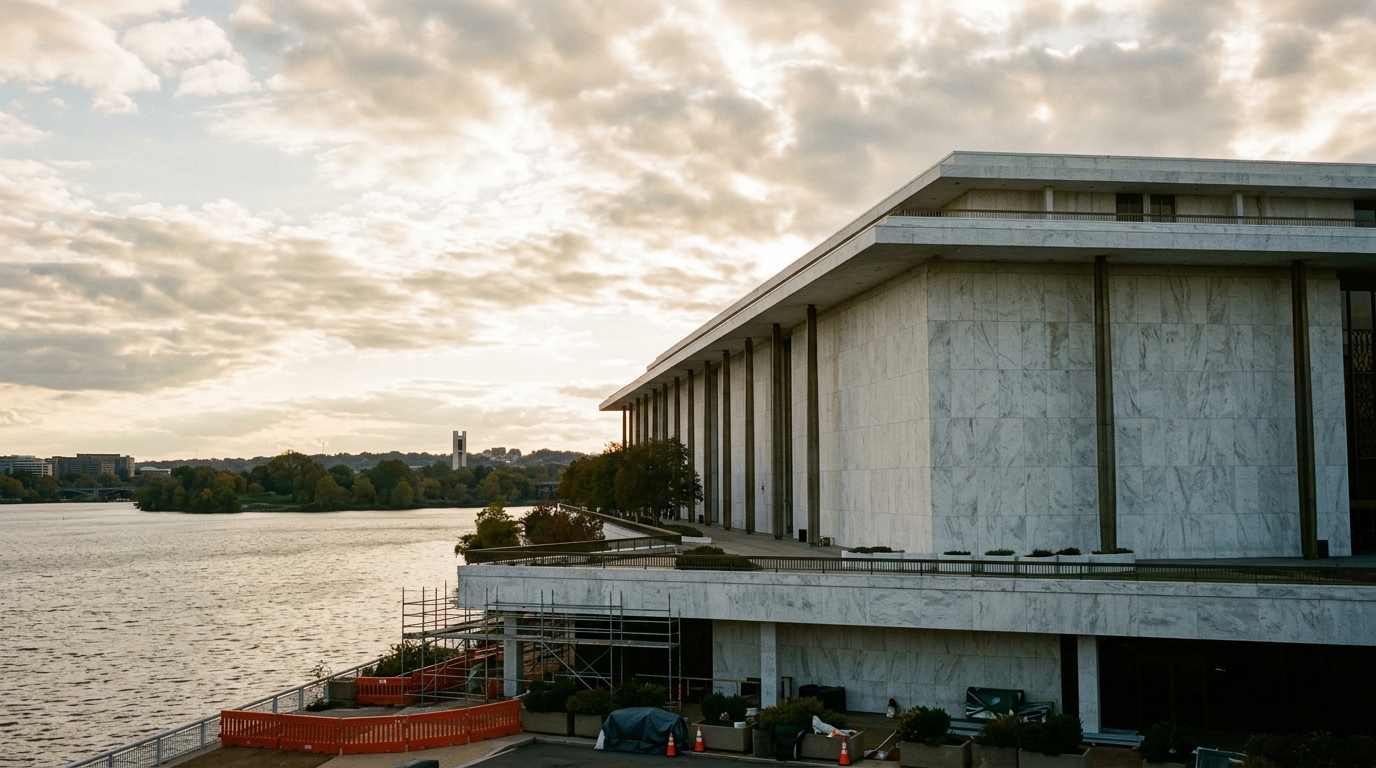
WASHINGTON, D.C. — The John F. Kennedy Center for the Performing Arts, a cornerstone of the nation’s cultural landscape, is slated for comprehensive renovations following a recent media tour that underscored the urgent need for upgrades. Executive Director Matt Floca guided journalists through the iconic building on Wednesday, revealing instances of water damage and outdated infrastructure that have prompted a significant federal investment [1].
The extensive repair project is projected to span two years, backed by a substantial $257 million allocation from Congress. This funding aims to address the structural and operational deficiencies that have accumulated over decades, ensuring the center can continue its mission as a premier venue for arts and culture.
Federal Commitment to a National Landmark
The decision to undertake such a large-scale renovation reflects a renewed federal commitment to preserving one of Washington, D.C.'s most vital cultural institutions. President Donald Trump, in remarks ahead of the tour, characterized the facility as “tired, broken, and dilapidated,” underscoring the critical state of disrepair that necessitated immediate action [1]. This assessment highlights a broader concern regarding the maintenance of federal properties and national treasures.
"tired, broken, and dilapidated." — President Donald Trump (WTOP)
The Kennedy Center, officially named the John F. Kennedy Center for the Performing Arts, stands as a living memorial to President Kennedy and serves as the national cultural center of the United States. Its various stages host a diverse array of performances, from ballet and opera to jazz and theater, attracting millions of visitors and performers annually. Preserving this legacy requires consistent investment, a point emphasized by the recent Congressional funding.
Addressing Critical Infrastructure Needs
During the media walkthrough, Executive Director Matt Floca specifically pointed out areas afflicted by water damage and highlighted the presence of outdated equipment [1]. These issues are not merely cosmetic; they can impact everything from the structural integrity of the building to the functionality of its performance spaces, potentially affecting audience experience and the quality of artistic presentations. Modernizing these systems is crucial for the center's long-term viability and its capacity to host world-class productions.
The scope of the renovation is expected to be extensive, addressing not only the visible signs of wear but also updating critical behind-the-scenes technology and infrastructure. This includes improvements to mechanical systems, electrical wiring, and potentially accessibility features, ensuring the center meets contemporary standards for safety, efficiency, and visitor experience. The General Services Administration (GSA) often plays a role in overseeing federal building projects, ensuring they meet rigorous standards for public use and historic preservation.
Implications for Washington D.C.'s Cultural Landscape
The two-year renovation timeline will undoubtedly present logistical challenges for the Kennedy Center, which typically maintains a bustling schedule of performances and events. While specific operational plans during the renovation period have not been fully detailed, such projects often involve temporary closures of certain venues or phased work to minimize disruption. The Kennedy Center's official website will be the primary source for updates on performance schedules and visitor access.
For the Washington, D.C. community, the renovation signifies an investment in the city’s vibrant cultural ecosystem. The Kennedy Center is not just a venue; it is an economic driver, supporting numerous jobs and attracting tourism. Its revitalization will ensure that it remains a beacon for the arts, contributing to the cultural richness of the District for generations to come. The DC Commission on the Arts and Humanities recognizes the profound impact cultural institutions like the Kennedy Center have on the local economy and community well-being.
The federal funding, approved by Congress, highlights the bipartisan recognition of the Kennedy Center’s national importance. Such allocations are typically part of broader appropriations bills, reflecting careful consideration by committees such as the House Committee on Appropriations. As the project moves forward, ongoing oversight will be critical to ensure the renovations are completed on schedule and within budget, delivering a revitalized national cultural center.
Explore more on this topic
Related Stories
Councilmember Janeese Lewis George Urges Caution on Waymo Legislation, Citing DC's Jobs Crisis
Ward 4 Councilmember Janeese Lewis George has urged the DC Council to pump the brakes on Waymo legislation this year, warning that rushing autonomous vehicle laws could worsen the city's "jobs crisis" by displacing workers. She emphasizes the need to prioritize safety and worker support alongside technological advancement.
Ousted Board of Appeals Chair Sues Howard County Council, Office of Law
Howard County's ousted Board of Appeals chair has filed a lawsuit against the County Council and the Office of Law, initiating a significant legal challenge within the local government structure. This action highlights internal administrative disputes and brings the county's appointment and oversight processes into public scrutiny.