Gov. Spanberger Enacts Key Energy and Contraception Bills from Fairfax County Legislators
Share this article
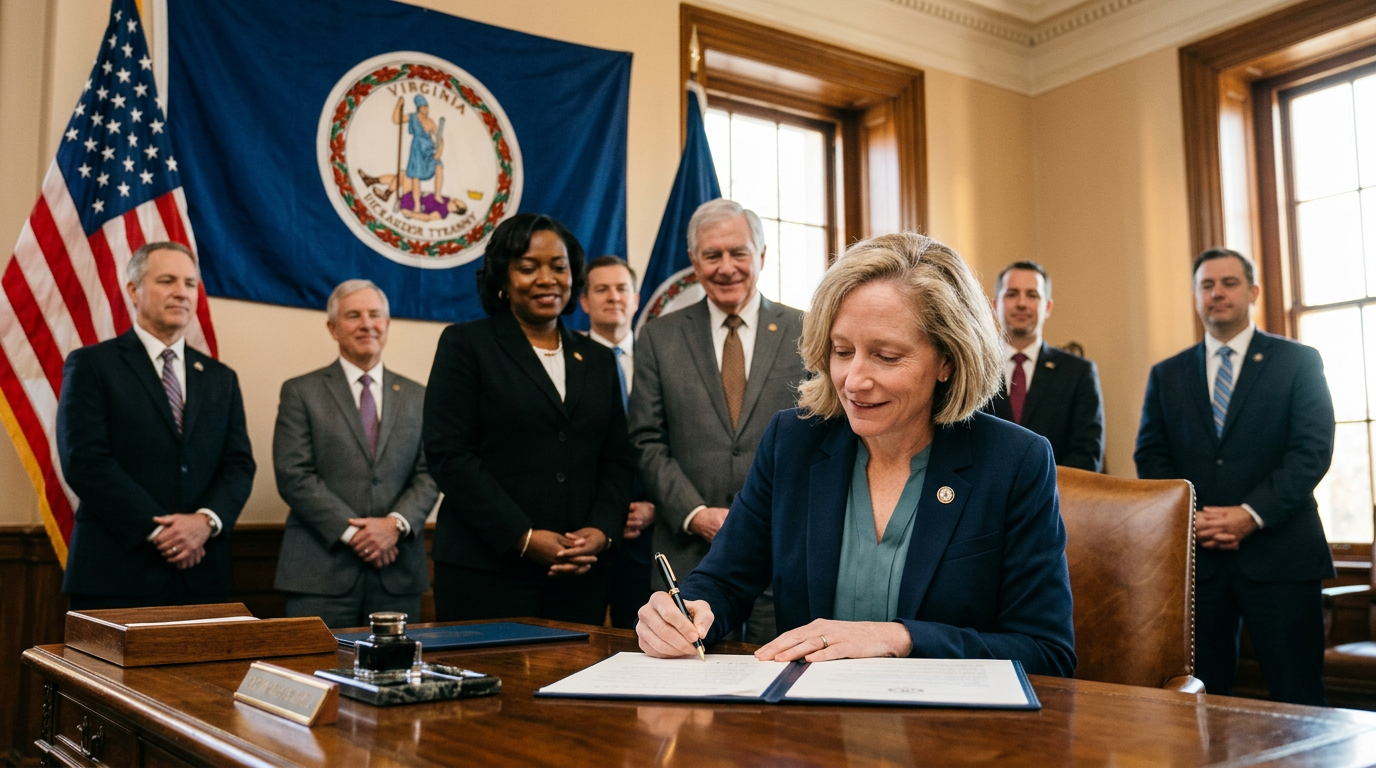
Virginia Governor Abigail Spanberger has signed into law several significant pieces of legislation, including bills focused on healthcare, housing, and energy, with notable contributions from Fairfax County legislators. The signings occurred yesterday, Wednesday, April 9, 2026, as the deadline for gubernatorial action on bills from the 2026 General Assembly session rapidly approaches [1].
The legislative package underscores the ongoing efforts by state lawmakers to address critical issues affecting residents across the Commonwealth, particularly in the densely populated Northern Virginia region. Fairfax County, as Virginia's most populous jurisdiction, often sees its representatives playing a pivotal role in shaping state policy.
Fairfax County's Legislative Impact on Healthcare and Energy
Among the bills signed by Governor Spanberger were measures championed by legislators representing Fairfax County. While specific bill numbers and sponsors were not detailed in the initial report [1], the emphasis on contraception and energy legislation highlights key priorities for the region and the state. These bills aim to enhance access to essential health services and promote sustainable energy practices, areas of growing concern for many Virginia families.
The push for expanded contraception access reflects a broader statewide effort to protect and broaden reproductive health rights. Such legislation can impact local pharmacies, healthcare providers, and public health initiatives within Fairfax County and beyond. Residents seeking information on family planning resources can often find guidance through local health departments and community clinics.
On the energy front, new policies could range from incentives for renewable energy adoption to regulations aimed at improving energy efficiency in homes and businesses. These measures are particularly relevant in a region like Fairfax County, which has demonstrated a strong commitment to environmental sustainability and reducing its carbon footprint. Local initiatives often complement state-level mandates, creating a comprehensive approach to energy conservation and clean power generation. For more details on Virginia's legislative process and bill tracking, residents can visit the Virginia Legislative Information System website.
The Governor's Role and Legislative Process
Governor Spanberger's actions come as part of her constitutional duty to review and act upon legislation passed by the Virginia General Assembly. Each year, thousands of bills are introduced, debated, and voted upon by state delegates and senators. Once a bill passes both chambers, it goes to the Governor's desk, where she can sign it into law, veto it, or propose amendments. The deadline for her to act on bills from the 2026 session is a crucial point in the legislative calendar [1].
The legislative session itself is a dynamic period where lawmakers from across the Commonwealth converge in Richmond to address pressing issues. Fairfax County's delegation often includes a mix of experienced incumbents and newer representatives, all working to advocate for their constituents' interests in areas such as education, transportation, economic development, and public safety. Understanding the legislative journey of a bill, from its introduction to becoming law, is essential for informed civic engagement. The official Virginia government portal provides further insights into the state's legislative branch.
Implications for Fairfax County Residents
The signing of these bills will have direct implications for residents of Fairfax County. The contraception legislation aims to ensure continued and perhaps expanded access to reproductive healthcare services, which is a significant concern for many families. Similarly, new energy laws could lead to changes in utility services, opportunities for energy-efficient home improvements, or support for local renewable energy projects.
Keeping informed about these legislative changes is vital for residents. Local government bodies, such as the Fairfax County Board of Supervisors, often work in conjunction with state mandates to implement new programs or adapt existing services. Information on local health services and environmental initiatives can typically be found on the Fairfax County government website.
As these new laws take effect, community organizations and government agencies will be instrumental in disseminating information and assisting residents in navigating any changes. The continued collaboration between state and local officials is key to ensuring that the intent of the legislation translates into tangible benefits for the people of Fairfax County.
📍 Local Resources for Fairfax County Residents
Provides comprehensive reproductive health services, including contraception, STI testing, and pregnancy testing.
Offers information and programs related to energy conservation, renewable energy, and assistance programs for Virginians.
Provides a wide range of reproductive healthcare services, including birth control, well-woman exams, and STI services.
Explore more on this topic
Related Stories

Councilmember Janeese Lewis George Urges Caution on Waymo Legislation, Citing DC's Jobs Crisis
Ward 4 Councilmember Janeese Lewis George has urged the DC Council to pump the brakes on Waymo legislation this year, warning that rushing autonomous vehicle laws could worsen the city's "jobs crisis" by displacing workers. She emphasizes the need to prioritize safety and worker support alongside technological advancement.

Ousted Board of Appeals Chair Sues Howard County Council, Office of Law
Howard County's ousted Board of Appeals chair has filed a lawsuit against the County Council and the Office of Law, initiating a significant legal challenge within the local government structure. This action highlights internal administrative disputes and brings the county's appointment and oversight processes into public scrutiny.