Politics
Howard County
Georgia Lawmaker Proposes Reviving 1790 D.C. Border in Wake of Virginia Redistricting
Share this article
Advertisement
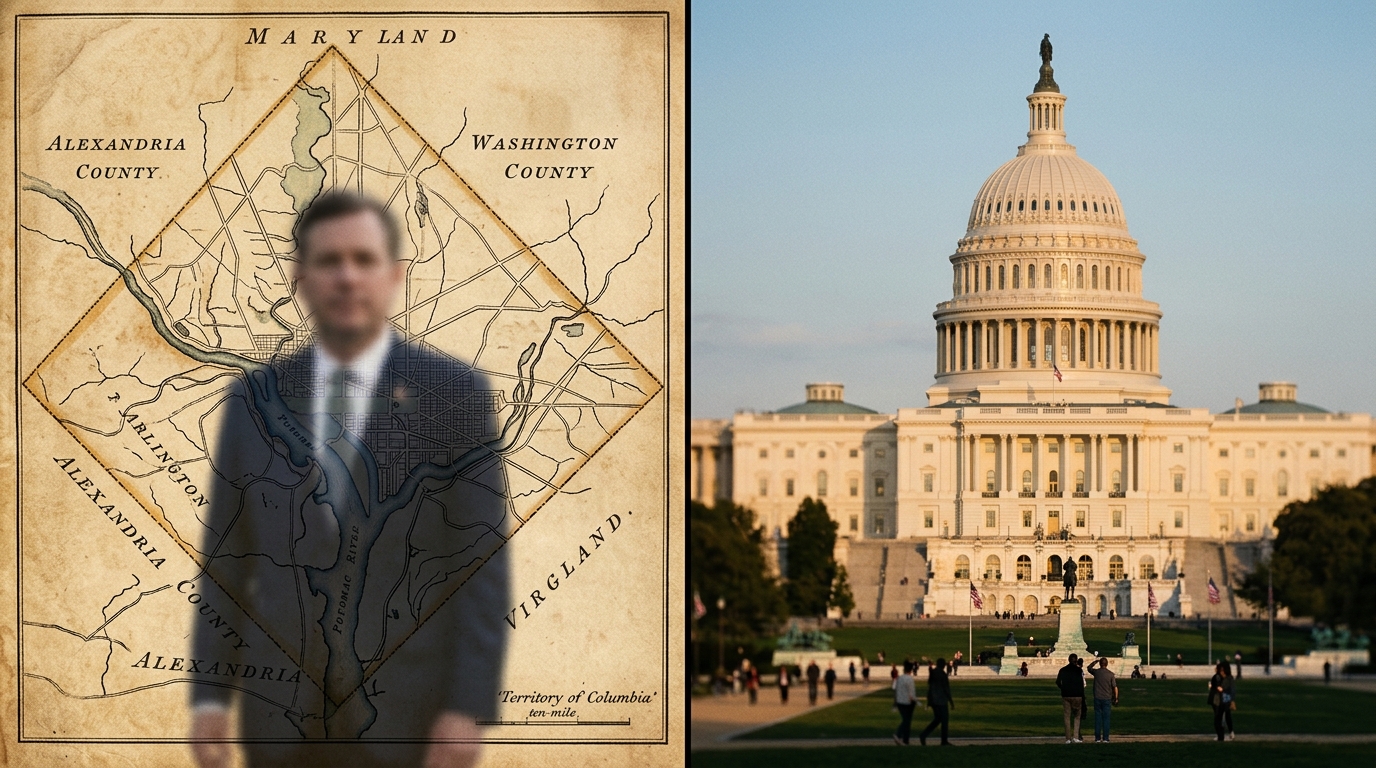
In a peculiar turn that delves deep into the archives of American history and the intricate dance of federal-local relations, a Republican lawmaker from Georgia has introduced legislation aiming to redraw the borders of Washington, D.C. [1] This isn't about modern urban planning or population shifts; it's a proposal to resurrect the original boundaries of the nation's capital, as they were first laid out in the late 18th century. The move, coming on the heels of Virginia's own redistricting efforts, stirs a long-settled territorial question that many DMV residents might have assumed was firmly in the past. Congressman Rich McCormick (R-Ga.) is the architect behind this legislative push [1]. His bill seeks to restore the District of Columbia to its initial design, a perfect ten-mile square carved out of Maryland and Virginia land. This original vision, formally established by the Residence Act of 1790, defined the fledgling capital's footprint. Over time, however, parts of that square, specifically the portion ceded by Virginia, were retroceded back to the commonwealth in 1846, leaving D.C. with its present, somewhat irregular shape. McCormick's proposal suggests turning back the clock, erasing nearly two centuries of territorial evolution.
A Glimpse into the Original Square
The Residence Act of 1790 was a landmark piece of legislation that designated a site on the Potomac River as the permanent seat of government. It empowered President George Washington to select the exact location, leading to the creation of the "Federal City." This original plan envisioned a precise 100-square-mile diamond-shaped territory, with its corners pointing north, south, east, and west. The land south of the Potomac, including what is now Arlington County and part of Alexandria, was originally part of this federal district. When Virginia successfully petitioned for the return of its portion, arguments centered on the lack of federal investment in that area and the loss of voting rights for its residents.The legislation proposes to restore the original boundaries established by the Residence Act of 1790, effectively revisiting a territorial design from over two centuries ago.
While the legislation from a Georgia representative might seem geographically distant, its timing is notable. It arrives as Virginia has recently undergone its own complex and often contentious redistricting process. The interplay between federal and state legislative actions, particularly those touching upon historical land disputes, often reveals deeper political undercurrents. For those living and working in the DMV, the idea of a border dispute, even a historical one, resurfacing can feel like a disruption to the settled rhythm of daily life. Political Maneuvering or Genuine Intent?
The rationale behind McCormick's bill, beyond the simple desire to restore historical boundaries, remains a subject of speculation among political observers. Is it a symbolic gesture, a way to inject a historical argument into contemporary debates about D.C. autonomy or federal overreach? Or does it represent a more pointed political maneuver, perhaps aimed at the political landscape of Virginia's rapidly changing demographics and electoral maps? Whatever the immediate intent, the proposal undeniably brings a fascinating historical footnote back into the legislative spotlight. For residents across the District and Northern Virginia, this legislation, while unlikely to pass without significant hurdles, serves as a reminder of the dynamic and sometimes surprising ways history can intersect with current politics. It prompts questions about what it means to be a "federal city," the rights of its residents, and the enduring legacy of decisions made centuries ago. Whether this bill gains traction or simply fades into the annals of congressional proposals, it's a development worth watching for anyone interested in the foundational identity of our nation's capital and its surrounding communities.Advertisement
Explore more on this topic
Related Stories
Politics
Councilmember Janeese Lewis George Urges Caution on Waymo Legislation, Citing DC's Jobs Crisis
Howard County·Politics
Ward 4 Councilmember Janeese Lewis George has urged the DC Council to pump the brakes on Waymo legislation this year, warning that rushing autonomous vehicle laws could worsen the city's "jobs crisis" by displacing workers. She emphasizes the need to prioritize safety and worker support alongside technological advancement.
4 days ago6 min read
Politics
Ousted Board of Appeals Chair Sues Howard County Council, Office of Law
Howard County·Politics
Howard County's ousted Board of Appeals chair has filed a lawsuit against the County Council and the Office of Law, initiating a significant legal challenge within the local government structure. This action highlights internal administrative disputes and brings the county's appointment and oversight processes into public scrutiny.
4 days ago5 min read

Politics
Senator Mark Warner to Seek Final Term in Virginia Senate Race Against Military Veteran
Arlington County·Politics
4 days ago4 min read