Community
Howard County
New Statues Adorn Freedom Plaza, Sparking Historical Reflection in Washington, D.C.
Share this article
Advertisement
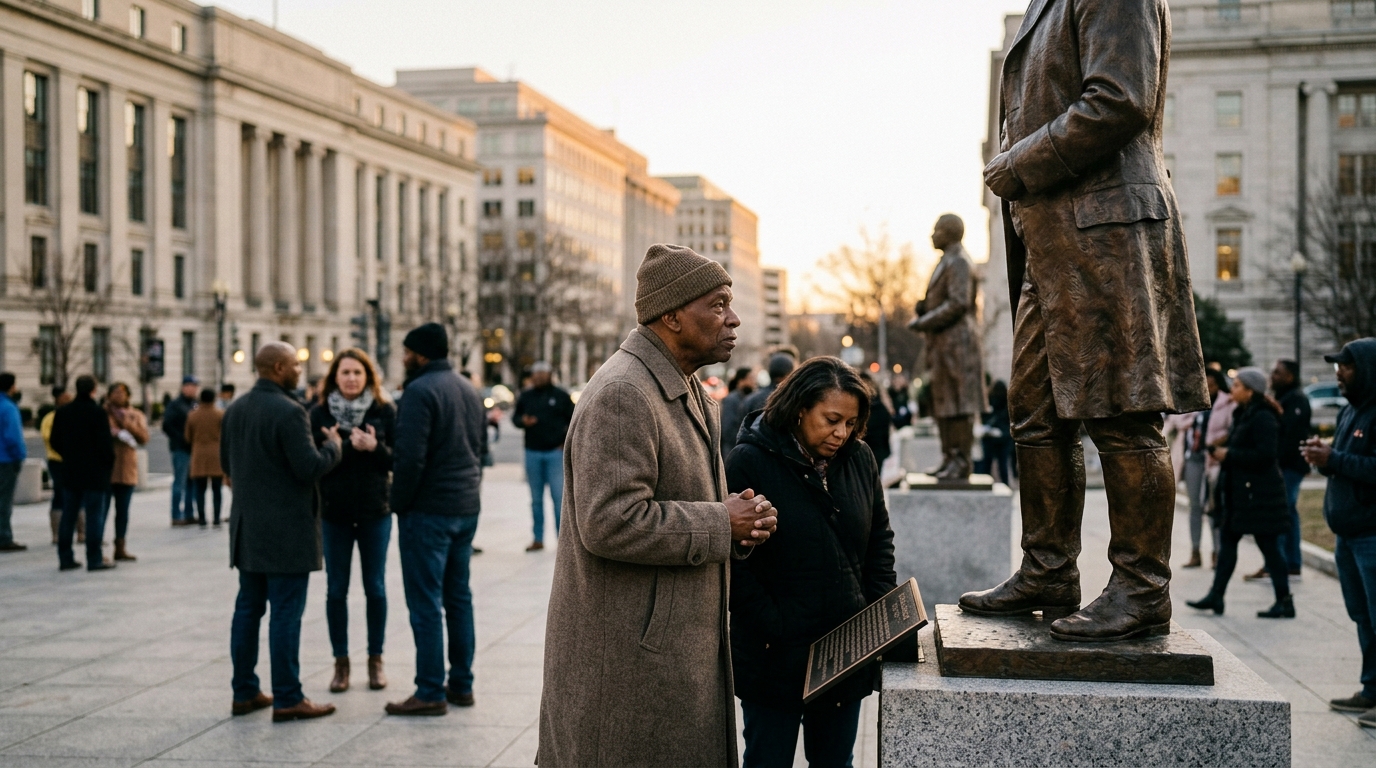
A notable change has come to Washington, D.C.'s iconic Freedom Plaza, where thirteen new statues now stand, adding to the visual landscape of the city's public spaces. Among these newly placed figures is one depicting a founder known to have enslaved hundreds, a detail that inherently brings a complex layer to the conversation around public monuments and historical representation in the nation's capital. Freedom Plaza, stretching along Pennsylvania Avenue between 13th and 14th Streets NW, has long served as a prominent stage for public gatherings, protests, and celebrations. It's a place where history has been made and debated, often reflecting the ongoing dialogue about American ideals and realities. The plaza itself is a tribute to Martin Luther King Jr., featuring excerpts from his "I Have a Dream" speech, and its design includes a large-scale map of Washington, D.C., originally envisioned by Pierre Charles L'Enfant. This context makes the introduction of new historical figures particularly impactful, as the space itself is steeped in layers of historical narrative and civic discourse.
Thirteen new statues now line Freedom Plaza, including a figure representing a founder who enslaved hundreds.
The installation of these thirteen statues according to NBC Washington, introduces a new artistic and historical dimension to the plaza. While the specific identities of all thirteen figures have not been detailed, the presence of a founder who enslaved hundreds immediately draws attention to the persistent national conversation about how historical figures with problematic legacies are honored in public. This isn't a new debate for the DMV area, or for the country, where monuments to figures tied to slavery or other controversial pasts have been re-evaluated, removed, or contextualized in recent years. Public art and monuments in Washington, D.C., are more than just decorative elements; they are powerful symbols that shape collective memory and civic identity. From the towering Washington Monument to the numerous smaller sculptures scattered across parks and plazas, each piece contributes to the city's narrative. The decision to install new statues in such a high-profile location, especially one that includes a figure with ties to slavery, inevitably invites scrutiny and discussion among residents, historians, and visitors alike. It prompts questions about the messages these monuments convey, the historical truths they represent, and their place in a modern, diverse society. For more on the city's approach to public spaces and art, the District of Columbia's official website provides insights into their management. The ongoing dialogue about historical representation in public spaces reflects a broader societal effort to reconcile with the past. Many communities across the United States are grappling with how to acknowledge historical figures who played significant roles in the nation's founding and development, while also confronting their involvement in practices like slavery. This often leads to calls for recontextualization, the addition of interpretive plaques, or even the removal of certain monuments. The National Park Service, which manages many historical sites and monuments, offers resources and perspectives on the interpretation of national memorials. For residents across the DMV, this development at Freedom Plaza is more than just a new set of sculptures; it's a fresh focal point for discussions about history, memory, and public values. As people walk through the plaza, attend events, or simply pass by, these statues will stand as physical reminders of a complex past and an evolving present. They prompt a deeper engagement with the stories of those who shaped the nation and encourage reflection on the ideals that a public space like Freedom Plaza aims to embody. Understanding the historical context of such installations is key, and resources like the Advertisement