Federal Judge Halts White House Ballroom Construction, Citing Congressional Oversight in D.C.
Share this article
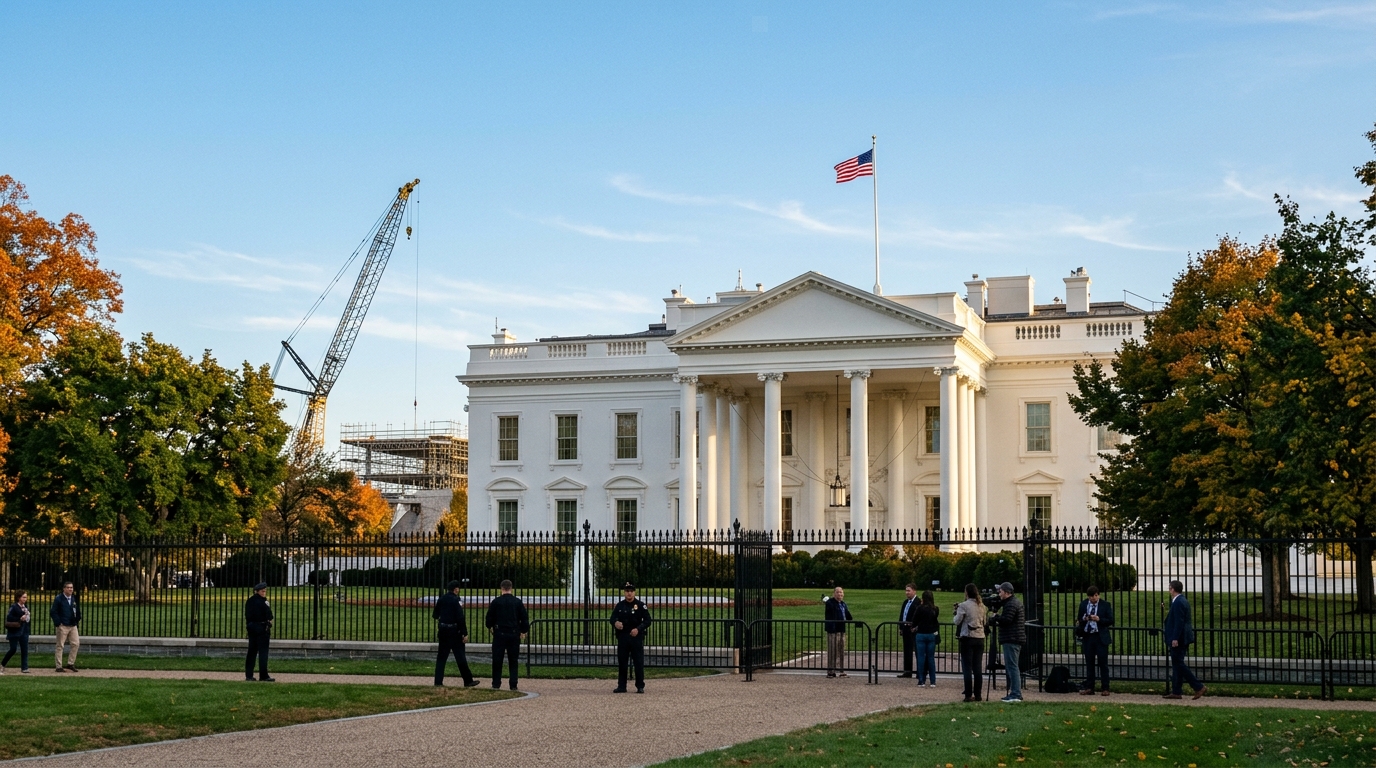
A federal judge in Washington, D.C., has issued a significant ruling that brings construction on a planned White House ballroom project to a halt. U.S. District Judge Richard J. Leon determined that the executive branch's undertaking requires explicit congressional approval, underscoring the vital principle of separation of powers at the heart of the nation's capital. This decision, citing specific federal statute 48 U.S.C. sec. 8116, emphasizes the legislative branch's role in overseeing major federal property initiatives, even those within the iconic residence of the President.[1]
The ruling has immediate implications for the White House project, effectively pausing any further work until the necessary legislative consent can be obtained. For residents across the DMV region, particularly those in Washington, D.C., the decision is a potent reminder of the intricate checks and balances that govern federal operations and spending right in their backyard.
The Judge's Mandate and Legal Basis
Judge Richard J. Leon's order directly addresses the proposed ballroom expansion or renovation project at the White House. While specific details of the project's scope have not been widely publicized, the judge's focus was not on the necessity or aesthetics of the ballroom itself, but rather on the procedural requirements for such a significant undertaking. The core of his ruling rests on federal law 48 U.S.C. sec. 8116, a statute that generally pertains to the management and disposition of federal property.[1] This section of the U.S. Code often dictates that certain actions regarding federal buildings and lands, especially those involving substantial construction or modification, must receive congressional authorization to proceed. Such laws are designed to prevent unilateral executive action on matters that could involve significant public funds or alter national assets without legislative oversight. For more information on federal statutes, the U.S. House of Representatives Office of the Law Revision Counsel provides comprehensive access to the U.S. Code.
Upholding the Separation of Powers
The commentary surrounding Judge Leon's decision, as noted by the Maryland Daily Record, highlights its importance in reaffirming the constitutional doctrine of the separation of powers.[1] This fundamental principle, established by the U.S. Constitution, divides governmental responsibilities into three distinct branches: the legislative (Congress), executive (President), and judicial (Courts). Each branch possesses unique powers and also serves as a check on the powers of the other two, preventing any single branch from becoming too powerful. In this instance, the judiciary, through Judge Leon, is asserting the legislative branch's authority over specific executive actions concerning federal property.
Implications for the White House and Congress
The immediate consequence of Judge Leon's ruling is the cessation of work on the White House ballroom project. This could lead to significant delays and potentially require the executive branch to formally seek an appropriation or approval from Congress, a process that can be lengthy and subject to political debate. For Congress, the decision reaffirms its constitutional role in controlling federal spending and overseeing projects involving significant government assets. It provides an opportunity for lawmakers to review the project's scope, cost, and necessity, ensuring transparency and accountability. The official website of the U.S. Congress offers insights into legislative processes and current bills.
This judicial intervention also sends a broader message about the limits of executive power and the enduring strength of the federal court system to interpret and uphold the law. For the many federal employees and contractors in the DMV area whose work directly or indirectly supports federal operations, such rulings are a regular part of the operational landscape, illustrating the complex legal framework within which the government functions.
Looking Ahead: Next Steps
The White House administration now faces a choice: either appeal Judge Leon's decision to a higher court or comply with the ruling by seeking congressional approval. An appeal would extend the legal battle, potentially tying up the project in further litigation. Alternatively, pursuing congressional authorization would require engagement with lawmakers on Capitol Hill, potentially leading to public hearings or debates about the project's merits and funding. The outcome will not only determine the fate of the ballroom project but also contribute to the ongoing dialogue about the balance of power among the branches of the U.S. government, a conversation that is particularly resonant in the nation's capital.