Federal Contracting Basics: Your Guide to Winning Government Work in the DMV
Share this article

Navigating the complex world of federal contracts can unlock unparalleled growth for businesses across the DC, Maryland, and Virginia region. With the U.S. government awarding over $600 billion annually in contracts, understanding the essential steps, from initial registration to successful proposal submission, is critical for DMV companies looking to secure a piece of this lucrative market.
Quick Answer: For DMV businesses, winning federal contracts starts with mandatory SAM.gov registration, followed by strategic identification of opportunities on platforms like SAM.gov, leveraging set-aside programs for a competitive edge, crafting meticulous proposals, and diligently managing post-award compliance. Local resources, including PTACs and SBA offices, are invaluable guides throughout this process.
Understanding the Federal Contracting Landscape in the DMV
The Washington D.C. metropolitan area, encompassing Northern Virginia and suburban Maryland, stands as the epicenter of federal contracting. Its unique proximity to the Pentagon, countless federal agencies, and a dense concentration of government employees and contractors creates an unparalleled ecosystem for businesses seeking government work. This isn't just a national market; it's a hyper-local one, where relationships, proximity, and a deep understanding of agency needs often provide a significant advantage.
For businesses nestled along I-95 in Prince George's County, Maryland, or those in the bustling tech corridors of Tysons Corner and Reston, Virginia, the opportunities are literally on their doorstep. Agencies like the Department of Defense (DoD), General Services Administration (GSA), Department of Homeland Security (DHS), Department of Veterans Affairs (VA), and the National Institutes of Health (NIH) operate vast procurement divisions within this region, awarding billions in contracts annually for everything from IT services and cybersecurity to facilities management, construction, and professional consulting.
While the market is highly competitive, it’s also ripe with potential for those who understand its nuances. The sheer volume of federal spending in the DMV means a constant demand for innovative solutions and reliable service providers. Success here often hinges on more than just capability; it requires strategic positioning, a commitment to compliance, and the ability to navigate a bureaucracy that, while complex, is designed to be accessible.
Essential First Steps: SAM.gov Registration and DUNS Number
Before any DMV business can even consider bidding on a federal contract, it must complete a foundational and mandatory registration: the System for Award Management, or SAM.gov. Think of SAM.gov as the government's central vendor database. Without being registered here, your business is invisible to federal agencies and ineligible for contract awards.
The process, while free, requires meticulous attention to detail and can take several weeks to complete, so proactive registration is crucial. The first step in SAM.gov registration is obtaining a Unique Entity Identifier (UEI). In April 2022, the federal government officially transitioned from using the proprietary DUNS number to a new, government-owned UEI, which is assigned directly by SAM.gov. You no longer need to go to a third-party like Dun & Bradstreet for this number; it's generated automatically during your SAM.gov registration.
During registration, you'll provide comprehensive information about your business, including its legal structure, financial details, and relevant North American Industry Classification System (NAICS) codes. NAICS codes are essential as they classify your business by industry, helping agencies find contractors with specific capabilities. For a tech firm in Loudoun County, Virginia, or a construction company in Baltimore, Maryland, accurately selecting the primary and secondary NAICS codes that reflect your services is paramount. Maintaining an active and up-to-date SAM.gov registration, which requires annual renewal, is not optional; it’s a continuous requirement for doing business with the federal government.
Key Details for SAM.gov Registration:
- Unique Entity Identifier (UEI): Generated directly through SAM.gov. This replaces the DUNS number.
- Tax Identification Number (TIN): Your Employer Identification Number (EIN) for businesses.
- Bank Account Information: For electronic funds transfer (EFT) to receive payments.
- NAICS Codes: Identify your primary and secondary business activities.
- Representations and Certifications: Annual attestations of your business's status and compliance.
Identifying Opportunities: Navigating Federal Procurement Platforms
Once your DMV business is registered in SAM.gov, the next critical step is to find suitable opportunities. The federal government uses several platforms to announce its contracting needs, and understanding where to look and how to interpret the solicitations is key to securing work.
The primary platform for federal contracting opportunities is the "Contract Opportunities" section of SAM.gov itself. This is where agencies post Requests for Proposals (RFPs), Invitations for Bid (IFBs), and Requests for Information (RFIs) for contracts above $25,000. For businesses in Alexandria or Rockville, regularly searching SAM.gov using relevant NAICS codes, keywords, and agency filters is non-negotiable. You can set up alerts to receive notifications for new opportunities that match your criteria, streamlining your search.
Beyond SAM.gov, other platforms cater to specific types of contracts or agencies. Businesses holding a GSA Schedule contract, for instance, will frequently use GSA eBuy to find opportunities restricted to Schedule holders. Certain large agencies, like the Department of Health and Human Services (HHS) or the Department of Energy (DOE), may also have their own procurement portals or preferred methods for communicating upcoming needs. For specialized IT services, the NIH's National Institutes of Allergy and Infectious Diseases (NIAID) or the Defense Information Systems Agency (DISA) might have specific portals or industry days.
Furthermore, don't overlook subcontracting opportunities. Many large prime contractors, especially those headquartered in Northern Virginia or suburban Maryland, are actively seeking small business partners to fulfill their federal contracts. Platforms like the Small Business Administration's (SBA) SubNet can help identify primes with subcontracting plans. Attending local industry events and networking with prime contractors at events hosted by organizations like the GovCon Council or local chambers of commerce in Fairfax or Baltimore can also yield invaluable leads and partnerships.
Leveraging Set-Aside Programs and Certifications
For many small businesses in the DMV, navigating the federal contracting landscape can seem daunting, especially when competing against established, larger firms. This is precisely where federal set-aside programs offer a crucial competitive advantage. These programs are designed to help specific categories of small businesses win a fair share of government contracts, with the goal that at least 23% of all federal contract dollars go to small businesses annually.
Understanding and leveraging these certifications can significantly increase your chances of securing awards. For instance, a woman-owned small business in Silver Spring, Maryland, might qualify for the Woman-Owned Small Business (WOSB) or Economically Disadvantaged Woman-Owned Small Business (EDWOSB) programs, which restrict competition on certain contracts to eligible firms. Similarly, a service-disabled veteran in Annapolis, Maryland, can pursue the Service-Disabled Veteran-Owned Small Business (SDVOSB) certification, opening doors to exclusive opportunities.
The 8(a) Business Development Program is another powerful tool, offering a nine-year program of business development assistance and access to sole-source and set-aside contracts for socially and economically disadvantaged businesses. For businesses located in designated historically underutilized business zones, such as parts of Washington D.C. or specific counties in Maryland and Virginia, the HUBZone Program can provide a preference in federal contracting. The SBA is the primary certifying body for most of these programs, and the application processes can be rigorous, requiring detailed documentation and adherence to specific eligibility criteria.
Each certification provides a distinct pathway to contracting opportunities, making it essential for DMV businesses to assess their eligibility carefully. Local Procurement Technical Assistance Centers (PTACs) are invaluable resources for understanding these programs and assisting with the complex application processes, helping your business in Arlington or Richmond position itself for success.
Crafting a Winning Proposal: Best Practices for DMV Businesses
Once an opportunity is identified, the real work begins: crafting a proposal that not only meets all requirements but also persuasively demonstrates your DMV business's unique value proposition. In the highly competitive federal market, especially within the DMV where experienced contractors abound, a well-written, compliant, and compelling proposal is paramount.
The first and most critical step is to thoroughly read and understand the Request for Proposal (RFP) or other solicitation document. Every detail matters – from the statement of work and evaluation criteria to specific formatting requirements and submission deadlines. Missing a single mandatory item can lead to disqualification, regardless of your technical capabilities. For businesses in Fredericksburg, Virginia, or Gaithersburg, Maryland, taking the time to deconstruct the RFP and develop a compliance matrix is a foundational best practice.
A winning proposal typically comprises several key sections: a strong technical approach outlining how you will meet or exceed the agency's requirements, a robust management plan detailing your team and project oversight, and a realistic cost proposal that is both competitive and profitable. Emphasize your past performance and relevant experience, particularly on similar federal projects. If your business has successfully delivered IT solutions to a federal agency in Bethesda or managed logistics for a DoD component in Arlington, highlight those successes with specific metrics and client testimonials.
For many smaller DMV firms, teaming agreements with larger primes or other small businesses can be a strategic move, allowing you to bid on opportunities that might otherwise be out of reach. Clearly articulate the roles and responsibilities of each team member. Finally, ensure your proposal is professionally presented, free of errors, and submitted well in advance of the deadline. The competitive environment means that even a minor flaw can be the difference between winning and losing a critical contract.
Compliance and Post-Award Management: Key Considerations
Winning a federal contract is a significant achievement for any DMV business, but it marks the beginning, not the end, of the journey. The federal government operates under a stringent regulatory framework, primarily the Federal Acquisition Regulation (FAR) and agency-specific supplements like the Defense Federal Acquisition Regulation Supplement (DFARS). Adhering to these regulations and effectively managing your contract post-award is crucial for success and for building a strong reputation for future opportunities.
Contract administration involves a myriad of responsibilities, including accurate invoicing through systems like Wide Area WorkFlow (WAWF), timely reporting, and meticulous record-keeping. For a construction firm working on a base in Quantico, Virginia, or a cybersecurity provider supporting an agency in Washington D.C., understanding and implementing the specific reporting requirements for labor hours, progress, and deliverables is non-negotiable. Failure to comply can result in delayed payments, penalties, or even contract termination.
Beyond the administrative, robust project management and financial controls are paramount. You must be able to track costs accurately, manage subcontractors effectively, and ensure that deliverables meet the highest quality standards. Federal contracts are subject to audits, and being prepared with organized documentation and transparent processes is essential. Building a positive relationship with your Contracting Officer (CO) and Contracting Officer's Representative (COR) is also vital, fostering clear communication and quickly addressing any issues that may arise.
A strong record of successful performance and compliance, documented through systems like the Contractor Performance Assessment Reporting System (CPARS), directly impacts your ability to win future contracts. For businesses in the DMV, where reputation travels fast within the close-knit GovCon community, diligent post-award management is not just about fulfilling an obligation; it's about strategically positioning your company for long-term growth and sustained success in the federal market.
Key Resources and Support for DMV Contractors
The journey into federal contracting can be complex, but businesses in the DMV region are fortunate to have access to a wealth of resources and support networks specifically designed to help them succeed. Leveraging these local assets can significantly ease the learning curve and provide crucial guidance at every stage of the process.
Procurement Technical Assistance Centers (PTACs)
Perhaps the most invaluable resources are the Procurement Technical Assistance Centers (PTACs), funded by the Department of Defense. These centers provide free, expert counseling to businesses looking to enter or expand within the government contracting market. For DMV businesses, this means:
- Maryland PTAC: With offices in Bowie and other locations, offering assistance with SAM.gov registration, identifying opportunities, proposal review, and understanding set-aside programs.
- Virginia PTAC: Headquartered in Fairfax with regional offices, providing similar comprehensive support tailored to Virginia-based businesses.
- DC PTAC: Serving businesses within the District, offering personalized guidance on federal, state, and local contracting.
These PTACs often host workshops, training sessions, and matchmaking events, connecting small businesses with federal agencies and prime contractors.
Small Business Administration (SBA) District Offices
The SBA plays a crucial role in supporting small businesses nationwide, and its local district offices offer direct assistance:
- Washington D.C. District Office: Provides guidance on SBA programs, certifications, and access to capital.
- Baltimore District Office (serving Maryland): Offers workshops and counseling for Maryland-based businesses.
- Richmond District Office (serving Virginia): Supports Virginia businesses with federal contracting resources and training.
The SBA is also the primary agency for managing and certifying businesses for programs like 8(a), WOSB, SDVOSB, and HUBZone.
Industry Associations and Chambers of Commerce
Networking and staying informed are vital in the DMV's competitive environment. Numerous local organizations offer valuable connections and insights:
- GovCon Council: A prominent local organization focused specifically on government contracting.
- AFCEA International (Armed Forces Communications and Electronics Association): Strong presence in the DMV, particularly for IT and defense contractors.
- National Contract Management Association (NCMA): Offers professional development and networking for contract management professionals.
- Local Chambers of Commerce: Such as the Northern Virginia Chamber of Commerce, Montgomery County Chamber of Commerce, or D.C. Chamber of Commerce, frequently host events, committees, and resources dedicated to government contractors.
These groups provide opportunities to meet agency representatives, prime contractors, and peers, fostering partnerships and staying abreast of industry trends.
Frequently Asked Questions
What is the first step for a DMV business to start federal contracting?
The foundational step for any business in the DC, Maryland, or Virginia area looking to secure federal contracts is to register with the System for Award Management (SAM.gov). This free, mandatory registration ensures your business is visible to federal agencies and eligible for awards. Without a SAM.gov registration, you cannot bid on or receive federal contracts.
How can small businesses in the DMV gain an advantage in federal contracting?
Small businesses in the DMV can leverage set-aside programs such as 8(a), WOSB (Woman-Owned Small Business), HUBZone, and SDVOSB (Service-Disabled Veteran-Owned Small Business). Certifications for these programs provide a competitive edge by restricting competition to eligible small businesses for certain contracts, significantly increasing their chances of winning.
Where can I find federal contracting opportunities specifically for DMV companies?
Federal contracting opportunities are primarily posted on SAM.gov (formerly FBO.gov). Additionally, local resources like the Maryland Procurement Technical Assistance Center (PTAC) in Bowie or the Virginia PTAC in Fairfax offer databases and guidance tailored to businesses in the DMV region. Networking events hosted by organizations like the GovCon Council also provide leads.
What are common pitfalls to avoid when bidding on federal contracts?
Common pitfalls include failing to thoroughly read the Request for Proposal (RFP), underestimating the complexity of compliance requirements, and submitting incomplete or non-compliant proposals. Businesses in the DMV should also avoid neglecting to research the agency's needs and past awards, which can lead to misaligned bids.
What resources are available in the DMV to help with federal contracting?
The DMV region offers a wealth of resources, including Procurement Technical Assistance Centers (PTACs) in Maryland, Virginia, and D.C., which provide free counseling. The Small Business Administration (SBA) district offices in Baltimore, Richmond, and Washington D.C. also offer support and training. Additionally, various industry associations and local chambers of commerce host workshops and networking events.
Explore more on this topic
Related Stories

MOSS Building & Design Relocates Headquarters to Vienna, Replaces Longstanding Diamond Spa
MOSS Building & Design, a Northern Virginia home remodeling firm, is moving its headquarters to 200 Mill Street NE in Vienna, replacing the longstanding Diamond Spa. This move coincides with the company's 25th anniversary, marking a significant change for a prominent commercial spot in the heart of Vienna.
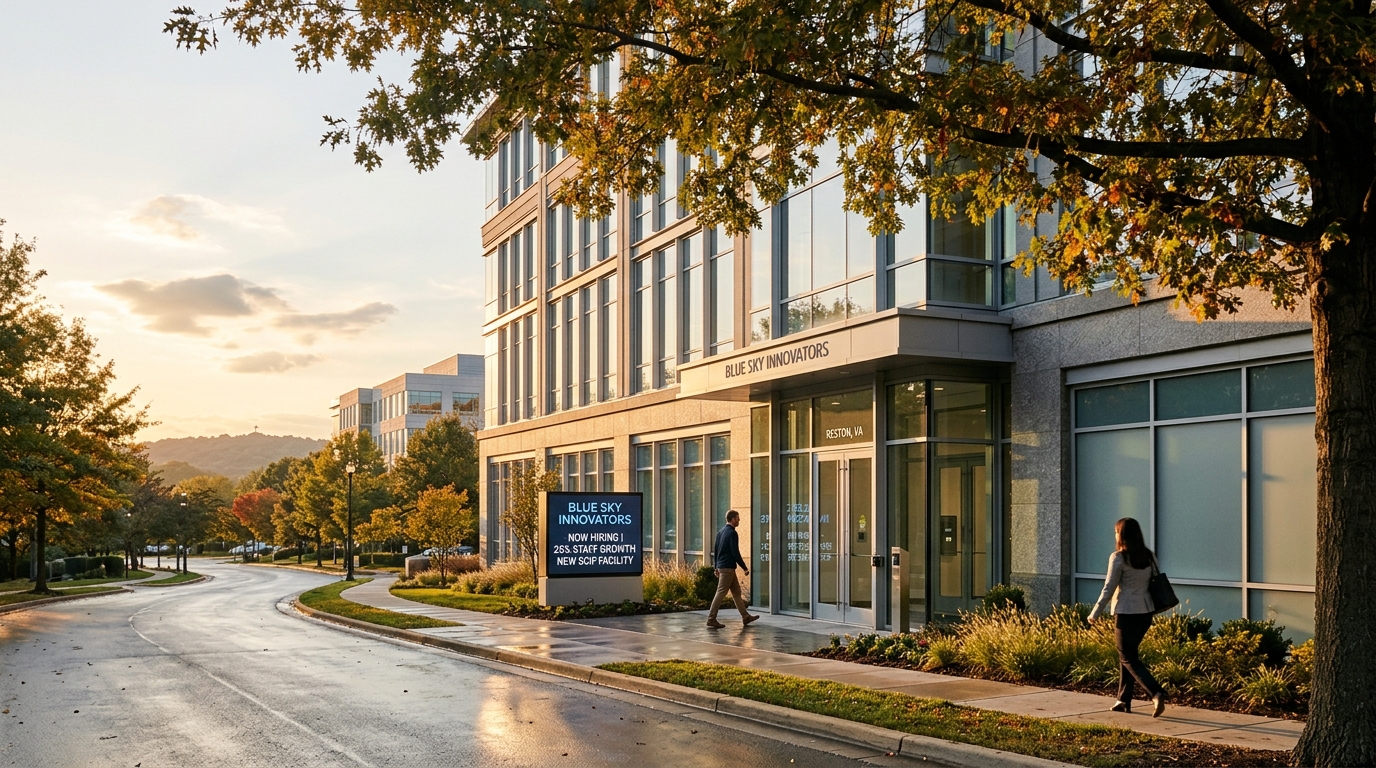
Reston Defense Tech Firm Blue Sky Innovators Eyes 25% Staff Boost, New SCIF Facility
Reston-based defense tech firm Blue Sky Innovators plans to expand its workforce by over 25% and complete a new SCIF facility, signaling significant job growth for Northern Virginia.