Crime
Official Deems Driver's Language 'Unacceptable' Following Fatal I-95 Bus Crash
Share this article
Advertisement
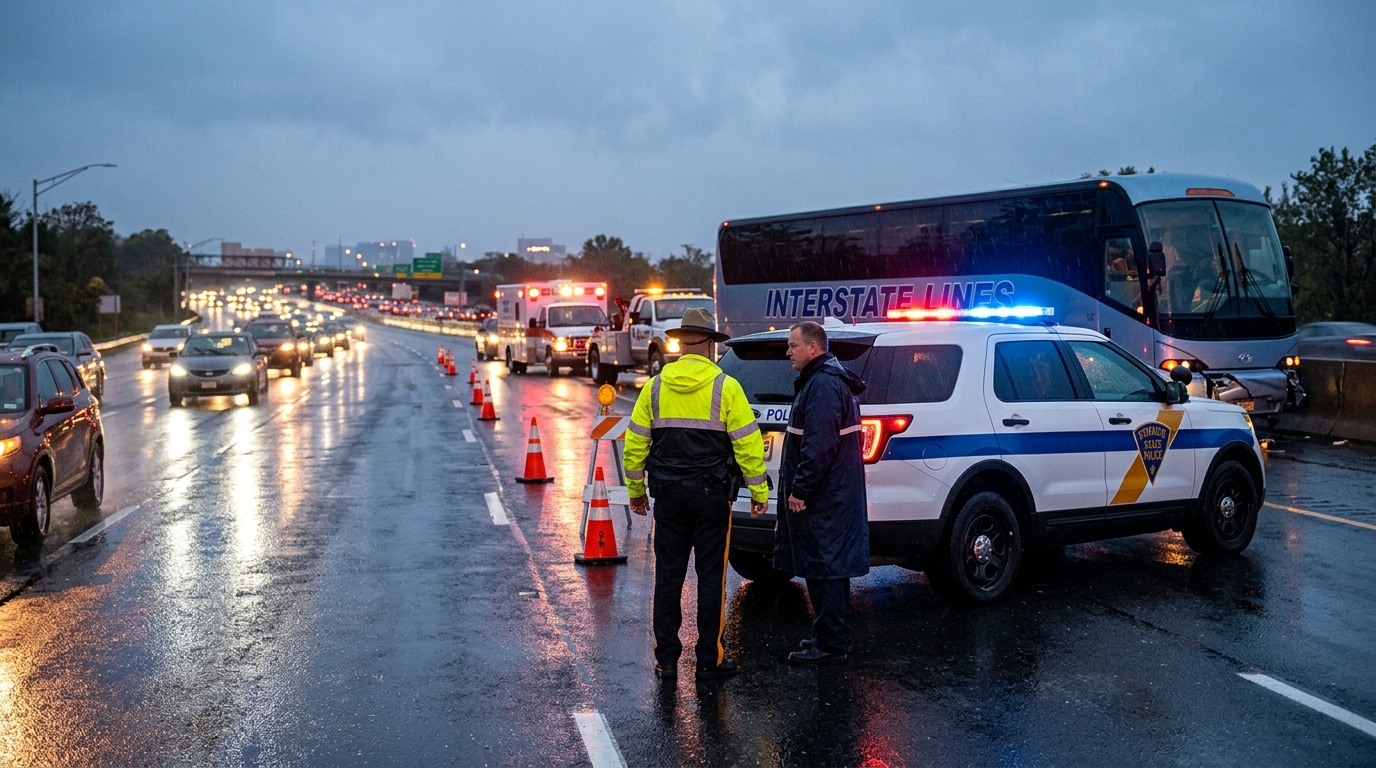
A recent fatal bus crash on I-95, a critical artery for the entire DMV region, has drawn sharp criticism from an official named Duffy, who has publicly labeled the driver's language as "unacceptable." While specific details surrounding the incident remain under active investigation, this strong statement points to a serious line of inquiry into the circumstances leading to the tragic loss of life and significant disruption on one of the East Coast's busiest highways. The comments from Duffy underscore the intense scrutiny applied to commercial vehicle operations, especially when an incident turns fatal. For residents across Washington D.C., Maryland, and Northern Virginia, I-95 is more than just a road; it's a lifeline for commuters, commerce, and travel. A fatal crash involving a bus immediately raises profound questions about safety protocols, driver conduct, and the regulatory oversight designed to prevent such catastrophes.
The investigation into the I-95 bus crash is ongoing, and authorities will provide updates as more information becomes available. DMV residents should monitor official channels for further details and any potential advisories regarding travel or transportation safety. The outcome of this inquiry will undoubtedly shape future discussions around commercial transportation safety standards in our region and beyond.
Every fatal crash on our roads represents a profound loss and a call for rigorous examination of safety protocols.
Investigators are likely delving into every aspect of the incident, from mechanical inspections of the bus to the driver's training, hours of service, and, significantly, their conduct and communication leading up to and during the crash. The mention of "driver's language" suggests a focus on verbal exchanges, internal communications, or possibly even the driver's demeanor or state of mind, all of which could be crucial in understanding the sequence of events. The Gravity of "Unacceptable"
When an official like Duffy publicly declares a driver's language "unacceptable" in the wake of a fatal crash, it signals a potentially serious breach of professional conduct or safety protocols. Commercial drivers, particularly those operating passenger buses, are held to an exceptionally high standard. Their responsibilities extend beyond merely navigating a vehicle; they are entrusted with the safety and lives of every passenger on board. This includes maintaining composure, clear communication, and adherence to strict operational guidelines. The term "language" in this context could refer to a range of issues. It might involve: * **Communication with dispatch or company officials:** Were there distress calls, reports of mechanical issues, or other exchanges that reveal critical information about the driver's state or the bus's condition? * **Interactions with passengers:** Did the driver's words or tone contribute to a chaotic situation, fail to provide necessary instructions, or demonstrate negligence? * **Internal monologue or expressions:** While harder to ascertain, if there were recordings or witnesses, the driver's verbal reactions to unfolding events could offer insights into their decision-making or level of awareness. * **Non-compliance with established procedures:** Perhaps the language used indicated a disregard for safety protocols or a deviation from expected professional behavior. The investigation will seek to determine if this "unacceptable" language was a contributing factor to the crash, indicative of a larger systemic issue, or perhaps a reaction in the immediate aftermath of a terrifying event. Regardless, the statement from Duffy emphasizes that driver conduct is a central element of the ongoing inquiry.I-95: A Vital, Yet Challenging, Corridor
I-95 slices through the heart of the DMV, connecting major population centers and serving as a conduit for millions of vehicles annually. Its stretches through Maryland and Northern Virginia are perpetually busy, often choked with commuter traffic, long-haul trucks, and interstate buses. This constant flow, coupled with varying speed limits, numerous interchanges, and unpredictable weather conditions, makes I-95 a challenging environment for even the most experienced drivers. For DMV residents, a fatal bus crash on I-95 is more than just a news headline; it's a disruption to their daily lives and a cause for concern about the safety of their commutes and travels. Such incidents often lead to extensive road closures, massive traffic backups, and ripple effects across local roads. Beyond the immediate logistical headaches, there's a deeper anxiety about the reliability and safety of public and commercial transportation options that many rely on. Federal and state agencies, including the Federal Motor Carrier Safety Administration (FMCSA) and the National Transportation Safety Board (NTSB), typically play pivotal roles in investigating serious commercial vehicle crashes. These investigations are exhaustive, examining everything from vehicle maintenance records and driver logs to black box data and witness accounts. The goal isn't just to assign blame but to understand root causes and implement measures to prevent future incidents.The Broader Context of Bus Safety
Bus travel is generally considered a safe mode of transportation, especially compared to private vehicles. However, when crashes occur, especially those involving multiple fatalities, they draw significant public and regulatory attention. Bus operators are subject to rigorous federal regulations concerning vehicle inspections, driver qualifications, drug and alcohol testing, and hours-of-service rules designed to prevent fatigue. The professional conduct of a driver, including their communication style and adherence to safety protocols, is a cornerstone of these regulations. Training programs for commercial drivers often emphasize defensive driving, emergency procedures, and effective communication with passengers and authorities. Any deviation from these expected standards, particularly if it contributes to a dangerous situation, is taken very seriously. The fact that an official has singled out "driver's language" suggests a potential breakdown in these critical areas. This incident serves as a stark reminder of the immense responsibility placed on commercial drivers and the need for constant vigilance from operators and regulators alike. It prompts a re-evaluation of how drivers are trained, monitored, and supported in what can often be a stressful and demanding profession.What This Means for DMV Residents
The fatal I-95 bus crash and the ensuing investigation have immediate and long-term implications for DMV residents. In the immediate aftermath, residents experienced severe traffic delays and disruptions on a vital transportation corridor. Looking ahead, this incident could lead to increased scrutiny of bus companies operating in and through the region, potentially resulting in enhanced safety checks or stricter enforcement of existing regulations. For those who regularly travel I-95 or use intercity bus services, this crash highlights the importance of staying informed about transportation safety. It also reinforces the need for authorities to conduct thorough, transparent investigations that not only identify the causes of such tragedies but also recommend actionable steps to prevent their recurrence. Residents should also be aware of resources available for those affected by such incidents, from emergency services to victim support.📍 Local Resources
Maryland State Police
For non-emergency incident reporting, traffic alerts, and general inquiries related to state highways.
📞 Phone: (410) 486-3101 (Golden Ring Barrack for I-95 corridor)
🌐 Website: mdsp.maryland.gov
📍 Location: Varies by barrack, check website for nearest.
🕐 Hours: 24/7 for emergencies, administrative hours vary.
Virginia State Police
For non-emergency incident reporting, traffic alerts, and general inquiries related to state highways.
📞 Phone: (804) 674-2000 (General Headquarters)
🌐 Website: vsp.virginia.gov
📍 Location: Varies by division, check website for nearest.
🕐 Hours: 24/7 for emergencies, administrative hours vary.
National Capital Region Victim Services
Provides support, resources, and advocacy for victims of crime and traumatic incidents in the DMV area.
📞 Phone: (202) 727-9099 (DC Victim Hotline)
🌐 Website: ovsjg.dc.gov (DC Office of Victim Services and Justice Grants)
📍 Location: Varies by service provider, check website for details.
🕐 Hours: Varies by service.
Advertisement