Weather & Traffic
Falling Concrete Shuts I-395 Lane Near 7th Street SW, Sparks Infrastructure Concern in D.C.
Share this article
Advertisement
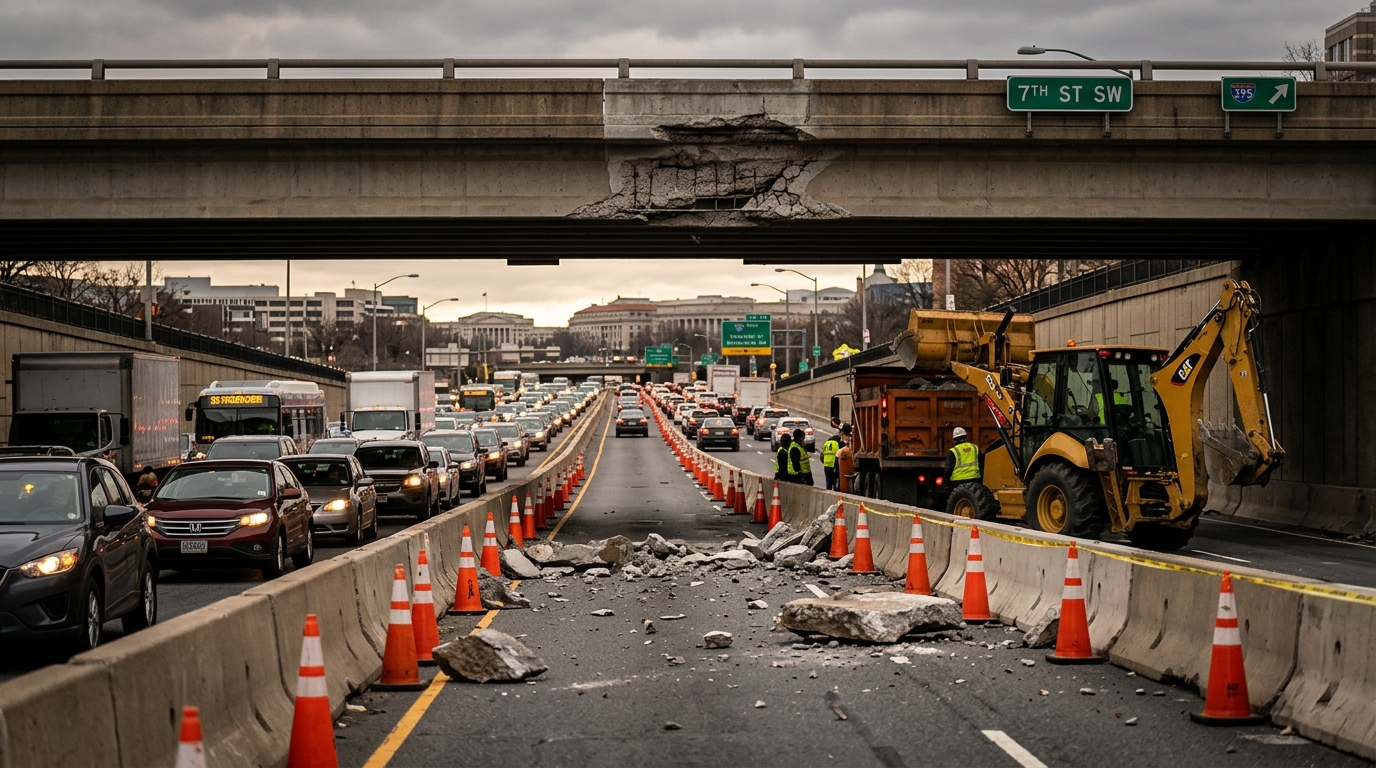
Blocks of concrete, some described as large slabs, tumbled onto Interstate 395 in Southwest D.C. on Monday afternoon, forcing a significant lane closure and raising fresh questions about the integrity of the District's aging infrastructure. The incident, which occurred directly beneath the 7th Street SW overpass, snarled traffic on a critical commuter artery and prompted an immediate response from the District Department of Transportation (DDOT). Drivers navigating the busy Southwest Freeway suddenly faced an unexpected hazard as the debris scattered across the roadway. While fortunately, no injuries were reported and no vehicles were struck, the sheer potential for disaster was palpable. DDOT crews quickly moved to secure the area, blocking the right lane between Maine Avenue SW and the entrance to the 3rd Street Tunnel, a vital stretch for thousands of daily commuters heading into and out of downtown D.C.
There were no reported injuries and there was no indication that the concrete struck any passing vehicles.
The agency immediately launched an investigation into the cause, specifically looking into the possibility of a bridge strike—an incident where an oversized vehicle impacts the underside of an overpass. This type of impact can compromise structural elements, leading to spalling or larger sections of concrete breaking away. However, DDOT officials have not yet confirmed a definitive cause, leaving many to wonder about the general state of the city's overpasses. ### Immediate Response and Commuter Chaos The scene on Monday afternoon was one of urgency, with a backhoe loader and dump truck deployed to clear the substantial concrete debris from the freeway. For those trying to get home or move through the city, the lane closure on I-395 created instant gridlock. This section of I-395 is a lifeline for residents commuting from Northern Virginia into D.C., and for those traveling between different parts of the District. Any disruption here has a cascading effect across the city's road network. The timing of the incident during the afternoon rush hour meant significant delays for drivers already contending with D.C.'s notorious traffic. The closure forced vehicles to merge, creating bottlenecks and pushing traffic onto already crowded surface streets. Commuters trying to reach destinations like the Wharf, Capitol Hill, or other downtown areas found their routes severely impacted. DDOT's swift action in clearing the debris was critical, but the lingering question remains whether the affected lane will be safe and open for Tuesday morning's equally vital commute. The uncertainty adds another layer of stress for residents planning their travel. ### Understanding D.C.'s Infrastructure Challenges This incident on the Southwest Freeway isn't an isolated event in the national conversation around aging infrastructure. Cities across the country grapple with maintaining bridges, tunnels, and roadways that have served for decades, often beyond their original design life. In the DMV, where many federal buildings and major transportation arteries were constructed in the mid-20th century, the challenge is particularly acute. The 7th Street SW overpass, like many structures in the District, carries the weight of heavy daily traffic and is exposed to the elements year-round. While regular inspections are mandated, unexpected failures can still occur due to a variety of factors, including material fatigue, water infiltration, and the aforementioned vehicle strikes. DDOT, like other state and municipal transportation agencies, faces the constant task of balancing maintenance needs with funding availability and the immense disruption that major repair projects can cause. Keeping the region's vast network of bridges and overpasses safe and functional requires continuous vigilance and significant investment. The Federal Highway Administration (FHWA) provides guidelines and funding for bridge maintenance, but the primary responsibility for inspection and repair falls to local jurisdictions like DDOT. Residents often only become aware of these underlying infrastructure issues when an incident like Monday's occurs, bringing the potential dangers into sharp focus. ### What This Means for D.C. Residents For D.C. residents, this event serves as a stark reminder of the ongoing need for infrastructure investment and the potential for disruption to daily life. The immediate concern is the reopening of the I-395 lane and the safety of the 7th Street SW overpass. Drivers should stay alert for official updates from DDOT and consider alternative routes or modes of transportation for their Tuesday morning commute. Longer term, incidents like this underscore the importance of robust bridge inspection programs and timely repairs. They also highlight the constant need for funding to proactively address structural deficiencies before they become critical safety hazards. Commuters rely on these vital connections every day, and ensuring their safety and reliability is paramount. To stay informed about real-time traffic conditions, D.C. residents can monitor the DDOT Traffic Cameras page or use navigation apps that provide live updates. For broader transportation information in the region, the Washington Metropolitan Area Transit Authority (WMATA) offers alternatives via Metro rail and bus services. The District Department of Transportation will continue its investigation into what exactly caused the concrete to fall. Until then, D.C. drivers should remain vigilant and plan for potential delays on one of the city's busiest roadways. This developing situation will undoubtedly keep bridge safety and infrastructure maintenance high on the list of concerns for city officials and residents alike. 📍 Local Resources
District Department of Transportation (DDOT)
Official agency for D.C. transportation infrastructure, including roads, bridges, and traffic management. Check for official updates on road closures and repairs.
📞 Phone: (202) 673-6813 (Customer Service)
🌐 Website: ddot.dc.gov
📍 Location: 55 M St SE, Washington, DC 20003
🕐 Hours: Mon-Fri 8:30am-5pm
DC 311
Non-emergency service request line for District residents to report issues like potholes, malfunctioning traffic signals, or other infrastructure concerns.
WMATA (Washington Metropolitan Area Transit Authority)
Provides alternative public transportation options via Metro rail and bus for commuters affected by road closures or traffic incidents.
Advertisement