Weather & Traffic
Fairfax County
Fairfax County's Route 1 Sees Alarming Spike in Pedestrian and Cyclist Crashes, Safety Group Warns
Share this article
Advertisement
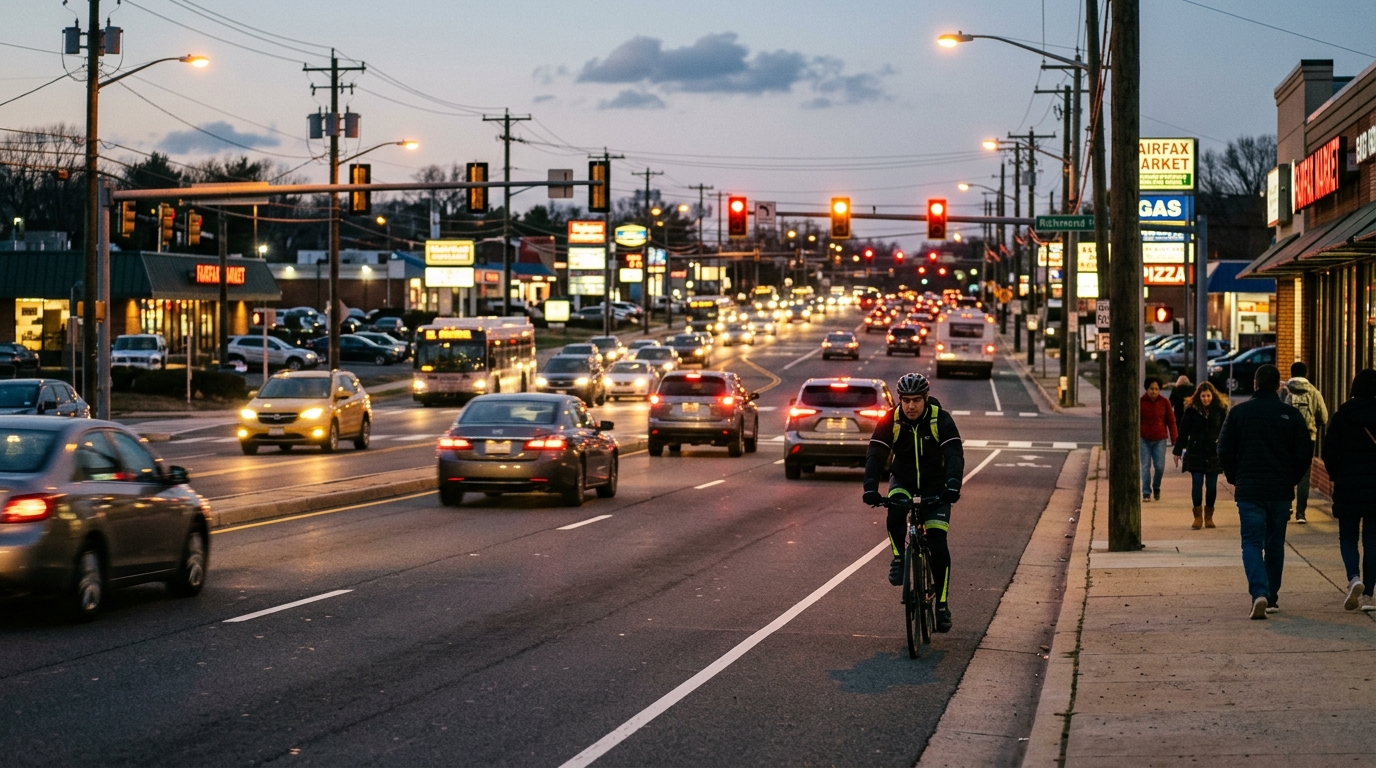
The bustling stretch of Route 1 in Fairfax County, a vital artery for commuters and local residents, is facing a troubling trend: a significant increase in crashes involving pedestrians and cyclists. A local safety group has brought this concerning spike to light, urging attention to the hazards present on this busy corridor. For anyone who navigates Route 1, whether by car, foot, or bike, the news signals a heightened risk. This thoroughfare, which cuts through communities like Hybla Valley, Fort Belvoir, and Penn Daw, is a complex environment with heavy traffic volumes, multiple intersections, and varying pedestrian infrastructure. The reported surge in incidents suggests that these existing challenges are becoming even more dangerous for vulnerable road users.
A Critical Corridor Under Scrutiny
Route 1, also known as Richmond Highway in much of Fairfax County, serves as a crucial north-south connector, linking residential areas, commercial centers, and military installations like Fort Belvoir. Its role as a multimodal corridor means it's not just for cars; thousands of people walk or bike along and across it daily to access bus stops, shops, and homes. The very nature of this road — a mix of high-speed traffic, commercial driveways, and pedestrian crossings — makes safety a perpetual concern.A safety group has identified a significant spike in pedestrian and cyclist crashes along Fairfax County's Route 1.
The warning from a local safety group underscores the urgent need to re-evaluate how people move through this dynamic environment. While specific numbers or precise dates for the "spike" haven't been detailed, the very act of a safety organization highlighting such a trend indicates a noticeable and worrying pattern. These groups typically monitor incident data, advocate for infrastructure improvements, and work to raise public awareness about road hazards. Their intervention often comes after observing a sustained period of increased danger. Understanding the Risks on Route 1
Pedestrian and cyclist safety on major roadways like Route 1 involves a confluence of factors. Infrastructure plays a huge role; are there adequate sidewalks, crosswalks, and dedicated bike lanes? Are these facilities well-maintained and clearly marked? Visibility for both drivers and those on foot or bike is also critical, especially during dawn, dusk, or inclement weather. Driver behavior, including speeding, distracted driving, and failure to yield, remains a primary cause of many such incidents. Fairfax County has long worked on improving its transportation network, including efforts to make walking and cycling safer. The Fairfax County Department of Transportation (FCDOT) is actively involved in planning and executing projects aimed at enhancing safety and connectivity for all users. Similarly, the Virginia Department of Transportation (VDOT), which manages state roads like Route 1, often undertakes studies and improvements to reduce crash rates. This latest warning from a safety group suggests that despite ongoing efforts, more immediate and targeted actions may be necessary. For residents of Fairfax County, particularly those living near or commuting via Route 1, this news means a heightened need for vigilance. Pedestrians are encouraged to use marked crosswalks, make eye contact with drivers, and avoid distractions like cell phones. Cyclists should ensure they are highly visible, follow traffic laws, and utilize any available bike facilities. Drivers, too, have a critical role to play by adhering to speed limits, avoiding distractions, and being especially attentive to pedestrians and cyclists, particularly at intersections and driveways. The announcement from the safety group serves as a stark reminder that road safety is a shared responsibility. It also puts pressure on local and state authorities to investigate the underlying causes of this spike and implement effective countermeasures. This could involve anything from enhanced enforcement campaigns to rapid infrastructure adjustments, such as improved lighting, clearer signage, or redesigned intersections. The long-term vision for Route 1, often discussed in terms of multimodal improvements and revitalization, must continue to prioritize the immediate safety of its most vulnerable users. The conversation around Route 1's safety isn't new. It's a corridor that has seen numerous proposals for upgrades and transformations over the years, all aiming to balance traffic flow with community needs and safety. This recent spike in incidents, however, brings the issue to the forefront with renewed urgency, making it clear that the current conditions are falling short for pedestrians and cyclists. What this means for Fairfax County residents going forward is that attention will likely turn to how quickly and effectively local and state agencies respond to this alarming trend. Residents should keep an eye on announcements from the Fairfax County government and VDOT regarding any new safety initiatives or public engagement opportunities. Staying informed and practicing safe habits are key steps in navigating this critical local thoroughfare.📍 Local Resources
Fairfax County Department of Transportation (FCDOT)
Information on transportation projects, planning, and safety initiatives in Fairfax County. Residents can report concerns or provide feedback on road conditions.
📞 Phone: (703) 877-5600
🌐 Website: fairfaxcounty.gov/transportation
📍 Location: 4050 Legato Rd, Fairfax, VA 22033
🕐 Hours: Mon-Fri 8am-4:30pm
Fairfax County Police Department - Non-Emergency
For reporting non-emergency traffic concerns, dangerous driving behavior, or requesting increased enforcement in specific areas.
📞 Phone: (703) 691-2131
🌐 Website: fairfaxcounty.gov/police
Virginia Department of Transportation (VDOT) - Northern Virginia District
Responsible for state roads like Route 1. Residents can report road hazards or provide feedback on state road conditions.
📞 Phone: 1-800-FOR-ROAD (1-800-367-7623)
🌐 Website: virginiadot.org/travel/nova.asp
Advertisement